Key takeaways
- Repairing a few bare patches: A manual cutter can make neat, rectangular pieces without the storage and rental logistics of a powered machine. If the patch is tiny or irregular, a sharp spade may be simpler.
- Removing a narrow path or garden-bed edge: A manual cutter is easier to maneuver around tight spaces. Mark straight lines first; cutters work best on continuous runs rather than small, intricate shapes.
- Replacing a large lawn: Choose a powered walk-behind cutter, or rent one. Its wider, consistent passes can save substantial effort across hundreds of square feet.
- Working on a sloped or confined site: Favor a lighter manual tool if it can handle the turf. Powered machines can be awkward to turn, load, or control on uneven ground; follow the manufacturer’s slope guidance.
- Using a cutter once: Compare rental cost with the price of a manual tool, and include transport and time. Buying a powered model for a single project rarely makes sense unless future use is likely.
Best Sod Cutters for Fast, Clean Lawn Removal
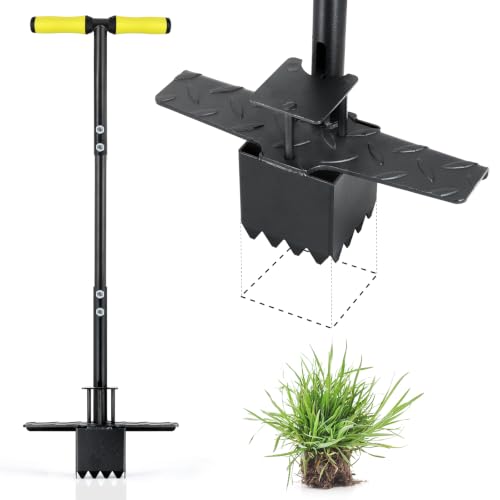
The best sod cutter depends on the job: choose a manual kick-style cutter for a small repair or occasional narrow strip, and a powered walk-behind cutter for broad removal where consistent depth and lower physical effort matter more than purchase cost and storage space.
Manual or powered: the decision in brief
A sod cutter slices beneath grass and roots so turf can be lifted in strips. Manual models use leg or arm force; powered models use an engine to drive a reciprocating blade. Neither is a substitute for a shovel on every job: a shovel is often quicker for a few small patches, while a cutter earns its keep when you need repeatable strips across a larger area.
Our top picks


As an Amazon Associate we earn from qualifying purchases at no extra cost to you. Ratings are shown as listed on Amazon.
| Cutter type | Typical cutting width | Typical depth range | Effort and control | Best fit |
|---|---|---|---|---|
| Manual kick-style | 12–18 inches | About 1–2 inches, depending on model and soil | High physical effort; straightforward depth control | Small repairs, short strips, occasional use |
| Manual rolling or push-style | About 12–18 inches | Often fixed or limited adjustment; check the specific model | Moderate to high effort; performance depends on turf and soil | Short, accessible runs where powered equipment is impractical |
| Powered walk-behind | About 12–18 inches | Commonly adjustable to roughly 1–3 inches | Lower cutting effort, but heavy to maneuver and transport | Large renovations and repeated removal jobs |
These are common category ranges, not specifications for every product. Check the manufacturer’s manual for exact width, depth settings, weight, and operating requirements before buying or renting. Soil moisture, thatch, and root density can change how cleanly any cutter performs.
Best choice by situation
- Repairing a few bare patches: A manual cutter can make neat, rectangular pieces without the storage and rental logistics of a powered machine. If the patch is tiny or irregular, a sharp spade may be simpler.
- Removing a narrow path or garden-bed edge: A manual cutter is easier to maneuver around tight spaces. Mark straight lines first; cutters work best on continuous runs rather than small, intricate shapes.
- Replacing a large lawn: Choose a powered walk-behind cutter, or rent one. Its wider, consistent passes can save substantial effort across hundreds of square feet.
- Working on a sloped or confined site: Favor a lighter manual tool if it can handle the turf. Powered machines can be awkward to turn, load, or control on uneven ground; follow the manufacturer’s slope guidance.
- Using a cutter once: Compare rental cost with the price of a manual tool, and include transport and time. Buying a powered model for a single project rarely makes sense unless future use is likely.
What matters when comparing cutters
Cutting width and strip handling
Width determines how many passes you need, but wider is not automatically better. A 12-inch strip is easier for one person to lift and roll than a much wider, heavier piece. For a large removal job, a 12–18-inch powered cutter can still cover ground efficiently because it produces regular strips. Consider where the sod will go: narrow strips may be easier to compost, dispose of, or stack.
Depth adjustment
Shallow cutting removes the turf layer while leaving more soil behind; deeper cutting takes more soil and makes each strip heavier. Adjustable depth is especially useful when the lawn has uneven areas or you need to preserve the grade. For ordinary turf removal, start with the shallowest setting that severs the roots, then increase depth only where the blade leaves roots attached. Cutting deeper than necessary adds weight to every piece and can disturb more soil than the project requires.
Effort, weight, and storage
Manual tools avoid fuel, engine maintenance, and bulky storage, but they transfer the work to the operator. Tough, dry, compacted ground can make a manual cutter frustrating. Powered models reduce the force needed to advance the blade, but their weight affects turning, loading, and transport. Check whether you have a suitable vehicle, trailer, or rental delivery option before committing to a machine.
Blade design and serviceability
The blade takes the most direct wear. Look for a replacement blade that is available, and find out how it is adjusted or changed. On powered equipment, also check the maintenance schedule for engine oil, air filters, belts, and other model-specific parts. After each use, remove packed soil and roots from the blade and moving parts; dried debris can make the next cut harder and hide damage.
How much work does width really save?
For a simple estimate, divide the lawn area by the cutter’s width. A 600-square-foot area cut in 12-inch strips needs about 600 linear feet of cutting (12 inches equals 1 foot). At 18 inches wide, it needs about 400 linear feet (18 inches equals 1.5 feet). The wider cutter reduces the distance by roughly one-third, but the strips are wider and heavier. This estimate excludes turning, overlap, obstacles, and time spent lifting and moving sod.
That trade-off is why a nominally faster machine may not be the best choice if one person must handle every strip. For a large job, plan a route that minimizes turns and arrange a staging area close to the work.
Before you cut: setup that improves the result
- Check the ground: Remove stones, branches, and irrigation markers. Locate sprinkler heads, shallow cables, and other buried utilities before cutting.
- Choose workable moisture: Very dry soil can resist the blade; saturated ground can smear, cling, and produce heavy strips. If conditions are poor, wait for the soil to become workable.
- Mark the layout: Use straight reference lines and plan strips that are manageable to lift. Cut a short test section and check whether roots are severed before proceeding.
- Set the depth conservatively: Start shallow and adjust only if the blade is leaving roots behind. This keeps the sod lighter and limits unnecessary soil removal.
- Clean and inspect afterward: Turn off and secure powered equipment according to its manual before cleaning. Clear debris, check the blade for damage, and store the machine dry.
Bottom line
For small lawn repairs, the best sod cutters are usually manual: less expensive to keep, easier to store, and practical for short runs. For a full lawn renovation or recurring turf removal, a powered walk-behind cutter is the more suitable choice because it maintains a steady cut with less pushing and kicking effort. Compare actual depth adjustment, machine weight, blade replacement, and transport needs—not width alone—and choose the shallowest effective cut for cleaner, lighter strips.