Key takeaways
- Choose propane for fast setup, clean shutdown, repeated short trips, and easier temperature changes.
- Choose charcoal for smoke flavor, high-heat searing, and a grill with no regulator or burner to maintain.
- Choose a tabletop design when vehicle space and weight are priorities.
- Choose an integrated cart when you want comfortable standing height and do not need to carry the grill far.
e camping grills for most car campers are the Weber Traveler for a balanced all-round setup, the Coleman RoadTrip 285 for group cooking, and the Weber Q 1200 for compact two-person meals; choose a charcoal or tabletop model instead when low packed size and simple transport matter more than fast setup.
The right choice depends less on maximum heat than on how you travel. A grill for a campsite beside your car can be heavier and larger than one carried to a picnic area, while a day-trip grill should pack quickly, resist spills, and use a fuel system you can manage without tools. The comparison below focuses on cooking area, packed size, fuel, weight, setup, heat control, cleaning, and long-term ownership.
Our top picks


As an Amazon Associate we earn from qualifying purchases at no extra cost to you. Ratings are shown as listed on Amazon.
Best portable camping grills compared
| Grill | Cooking area | Fuel | Approx. weight | Packed or closed size | Typical setup | Best for |
|---|---|---|---|---|---|---|
| Weber Traveler | 320 sq in | Disposable or refillable 1 lb propane cylinder | 49 lb | 43.6 × 23.5 × 37.2 in when folded/standing | About 2 minutes | Car campers wanting a full-size cooking surface |
| Coleman RoadTrip 285 | 285 sq in | Propane | 52.5 lb | Approximately 30.5 × 16.5 × 13 in folded | About 5 minutes with legs and side tables | Families and mixed-height group meals |
| Weber Q 1200 | 189 sq in | 1 lb propane cylinder; optional adapter for a larger tank | 31.3 lb | Approximately 16.5 × 40.9 × 15.5 in with lid closed and tables extended | About 1 minute on a table | Couples, balconies, and short day trips |
| Weber Go-Anywhere Gas | 160 sq in | Propane | 15.5 lb | Approximately 11.5 × 19.5 × 15 in | About 1 minute | Light packing and simple grilling |
| Weber Go-Anywhere Charcoal | 160 sq in | Lump charcoal or briquettes | 14.5 lb | Approximately 11.5 × 19.5 × 15 in | 10–20 minutes, depending on lighting method | Charcoal flavor and low purchase cost |
| Nomad by Weber | 425 sq in total when fully opened | Charcoal | 28.7 lb | Approximately 19.5 × 21 × 14.5 in closed | About 5 minutes, plus charcoal ignition | Large cooking capacity without a wheeled stand |
Dimensions and weights can vary slightly by regional version, stand, side tables, and included accessories. Treat the figures as packing guidance rather than a substitute for checking the specification sheet before purchase.
Our picks by camping situation
Best all-rounder: Weber Traveler
The Weber Traveler is the strongest general-purpose choice when the grill rides in a car and you regularly cook for two to four people. Its 320-square-inch grate can handle several burgers, chicken pieces, or vegetables at once, and the integrated cart makes loading and setup easier than placing a tabletop grill on a picnic table. Its single-burner design gives simple heat control, with one control knob and a broad grate that creates a useful indirect zone when food is moved away from the hottest area.
The trade-off is bulk. At roughly 49 pounds, it is portable in the car-camping sense, not the backpacking sense. The folding cart, wheels, and moving joints also create more places for grease and grit to collect. Clean the drip tray and wheel area before folding it into a vehicle.
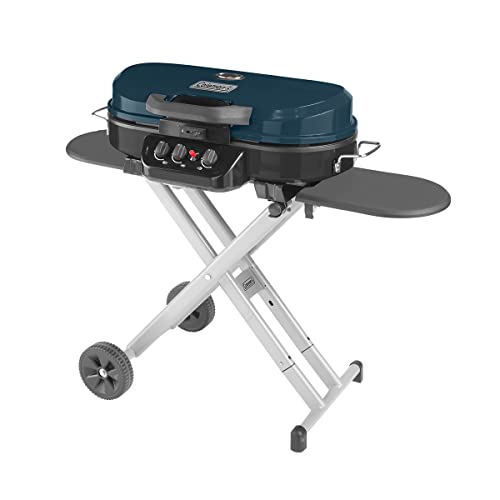
Best for families: Coleman RoadTrip 285
The RoadTrip 285 is a practical group grill because its three burners provide more independent heat control than most single-burner portable models. The 285-square-inch surface is large enough for a mixed meal, such as chicken on one side, vegetables in the middle, and buns or slower-cooking food on the other. Its scissor-style stand raises the grill to a comfortable working height and folds for transport.
It is relatively heavy, and the separate legs and side-table mechanism make setup slower than a tabletop grill. The grate and griddle accessories also need dedicated cleaning, so this is best for campers who value capacity and flexibility more than minimum packing volume.
Best compact propane grill: Weber Q 1200
The Q 1200 suits two people or a small family that already has a stable picnic table. Its 189-square-inch cast-iron cooking grate holds several burgers or a modest batch of skewers, and the cast-aluminum body is sturdier than the thin stamped steel used on many inexpensive portable grills. A built-in lid thermometer helps you repeat cooking temperatures, although the single burner means less ability to create separate hot and cool zones.
Allow room around the grill for ventilation and heat. The optional cart or stand improves usability but reduces the advantage of choosing this compact model. For frequent car camping, a larger refillable propane cylinder with the correct hose can reduce disposable-cylinder waste and running cost.
Best for light day trips: Weber Go-Anywhere Gas
At about 15.5 pounds, the Go-Anywhere Gas is easier to carry from a car park to a picnic table than the cart-style grills. Its folding legs lock the lid for transport, and gas offers quick ignition and predictable heat. The 160-square-inch grate is enough for a couple’s lunch, but crowded cooking will make temperature recovery slower when the lid is opened repeatedly.
This is a good choice when portability is more important than searing several portions simultaneously. A small grill grate also makes it easier to avoid overbuying food that cannot be cooked in one batch.
Best charcoal option: Weber Go-Anywhere Charcoal
The charcoal version weighs about 14.5 pounds and packs to nearly the same footprint as the gas model. It provides the smoky flavor and fuel flexibility charcoal users expect, with adjustable vents for basic heat control. However, it takes longer to prepare, produces ash, and must cool completely before being packed. Never place warm charcoal or ash in a vehicle, plastic container, or campsite bin.
Gas versus charcoal for portable cooking
- Choose propane for fast setup, clean shutdown, repeated short trips, and easier temperature changes.
- Choose charcoal for smoke flavor, high-heat searing, and a grill with no regulator or burner to maintain.
- Choose a tabletop design when vehicle space and weight are priorities.
- Choose an integrated cart when you want comfortable standing height and do not need to carry the grill far.
Propane is not automatically cheaper. As an example, assume a refillable 5-pound cylinder costs $25 to fill and provides about 8–10 hours of ordinary grilling. At 20 one-hour cooking sessions, fuel costs are roughly $1.25 per use before the cylinder purchase. A disposable 1-pound cylinder may provide about 1–2 hours depending on heat level, so a short cook can be convenient but creates more packaging and often costs more per hour.
How to judge cooking area in real use
Manufacturers measure the entire grate, but the useful area is smaller once food needs space for turning and safe separation. A practical estimate is to reserve about 50 square inches per adult for a comfortable mixed meal. A 160-square-inch grill therefore suits roughly two adults when cooking efficiently; a 285–320-square-inch grill is more comfortable for three or four.
Do not fill every inch with thick meat. Crowding traps steam, reduces browning, and makes it difficult to move food away from flare-ups. If you cook several courses, grate size also determines whether the first batch must be held while the second cooks.
Setup and cleaning that prevent common failures
- Choose a stable, nonflammable location. Keep the grill away from tents, vehicle panels, dry grass, and low branches. A folding cart still needs level ground.
- Inspect the fuel connection. Check the hose, regulator, cylinder seal, and burner openings. Apply soapy water to connections when investigating a suspected leak; bubbles indicate a problem that must be corrected before lighting.
- Preheat with the lid open or as directed by the manual. This burns off residue and gives the grate time to heat evenly. Avoid leaving an unattended grill on high.
- Brush loose residue after cooking. When the grate is warm but not dangerously hot, use a suitable grill brush or scraper. Excessive force can damage porcelain-coated surfaces.
- Empty the grease system. Grease trays and catch cups are among the first parts to overflow or corrode. Clean them after every substantial cook rather than waiting for buildup.
- Dry before packing. Moisture trapped under a lid encourages rust, odors, and mold on accessories. Charcoal grills must also be fully cold before ash removal.
Durability and ownership costs
On gas grills, regulators, ignition electrodes, burner ports, and grease trays usually need attention before the main body. Salt air, wet storage, and acidic marinades accelerate corrosion. Keep the grill covered only when it is dry, and store small removable parts indoors if the grill will sit unused for a season.
Cast-iron grates retain heat well but need drying and a light protective coating to reduce rust. Porcelain-coated grates resist rust better, but chips can expose the underlying metal. Avoid dropping grates and do not use aggressive metal tools on coated surfaces. Replacement grates, burners, drip trays, and propane hoses should be available before buying; a low initial price is less attractive if ordinary wear parts cannot be sourced.
Final buying decision
Choose the Weber Traveler for the best balance of capacity, setup speed, and car-camping convenience. Choose the Coleman RoadTrip 285 when multiple burners and group cooking matter most. Choose the Weber Q 1200 for sturdy compact propane cooking, or the Go-Anywhere Gas when carrying weight is the deciding factor. For charcoal, the Go-Anywhere Charcoal is the lighter simple option, while the Nomad by Weber is better when a larger charcoal cooking surface justifies its wider packed case.