Key takeaways
- Heavy-duty leveling, gravel and compacted soil: Bully Tools 16-tine bow rake or Razor-Back 60.75-inch forged bow rake.
- Large lawns and beds, wide coverage: Kobalt 60-inch bow rake (17-inch head).
- Light weight plus a smoothing side for seedbeds: Ames 57.5-inch Double Play.
- Classic wood handle, general yard work: Husky 57-inch bow rake or Ames 16-tine welded bow rake.
- Tight spaces and small raised beds: Anvil 47-inch or Truper 31353 with a 48-inch handle.
- Adjustable length for different users: WorkPro 65-inch with a segmented steel handle.
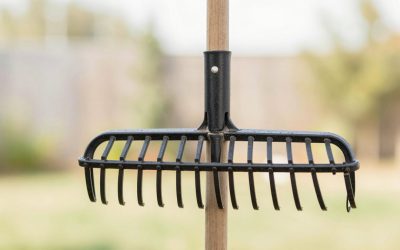
The Bully Tools 16-tine steel bow rake is the best all-round pick for leveling and soil prep, the Razor-Back 60.75-inch forged bow rake is the choice for heavy gravel and compacted fill, and the Ames 57.5-inch Double Play is the best lightweight option when you also want a smoothing side. A bow rake is a different tool from a leaf rake: it has short, rigid steel tines on a flat head, and it is built to push, pull and level soil, gravel, mulch and compost rather than to gather light debris.
This guide compares nine current bow rakes by the things that decide how a rake behaves in the ground: head width, tine count and length, welded versus forged construction, handle material and length, and total weight. It also explains when you should reach for a leaf rake instead, and includes a worked example that shows how much head width actually saves you on a real project.
Our top picks


As an Amazon Associate we earn from qualifying purchases at no extra cost to you.
Quick answer: which bow rake for which job
- Heavy-duty leveling, gravel and compacted soil: Bully Tools 16-tine bow rake or Razor-Back 60.75-inch forged bow rake.
- Large lawns and beds, wide coverage: Kobalt 60-inch bow rake (17-inch head).
- Light weight plus a smoothing side for seedbeds: Ames 57.5-inch Double Play.
- Classic wood handle, general yard work: Husky 57-inch bow rake or Ames 16-tine welded bow rake.
- Tight spaces and small raised beds: Anvil 47-inch or Truper 31353 with a 48-inch handle.
- Adjustable length for different users: WorkPro 65-inch with a segmented steel handle.
How we chose
This is a research-based comparison. No tool was physically used by us. We compared published manufacturer specifications and independent roundup write-ups, then kept only rakes whose head width, tine count, handle material and weight were stated consistently in more than one place. Where sources disagreed, we say so and describe the spec by class rather than guess. The criteria, in order of importance:
- Head construction. Forged or heavy-gauge welded steel resists bending when you drive the tines into packed soil. Thin stamped heads bend at the tine roots.
- Tine count and length. Fourteen to sixteen tines is the normal range. Tines roughly 2.5 to 3 inches long dig in enough to break crust without catching on every root.
- Head width. Wider heads cover more ground per pass but need more effort per stroke and do not fit small beds.
- Handle material and length. Fiberglass is weatherproof and stiff; hardwood feels better in the hand but needs dry storage; steel allows length adjustment but adds joints.
- Weight. From about 2.9 to 4 pounds across this group. A heavier rake does more of the work on gravel but tires you on long raking sessions.
Bow rake vs leaf rake: the short version
A leaf rake has a fan of flexible tines (plastic, bamboo or thin steel) and a wide, light head. It gathers surface debris without disturbing the ground. A bow rake has rigid steel tines set in a flat head with a curved bow where the head meets the handle. The bow lets you flip the rake and use the flat back of the head to knock soil level, and it gives the tines spring when you drag them across the surface.
| Task | Bow rake | Leaf rake |
|---|---|---|
| Leveling topsoil or compost | Best tool | Poor, tines flex and skip |
| Spreading gravel or crushed stone | Best tool | Not suitable, can break |
| Breaking surface crust before seeding | Good | Not effective |
| Gathering leaves and light debris | Slow and snags lawn | Best tool |
| Removing small rocks and clods | Good | Poor |
| Dethatching a lawn | Too aggressive | Light work only, a dethatching rake is better |
If you only want one rake and most of your work is soil and gravel, buy the bow rake. If you rake leaves every autumn, you will want a leaf rake as well; the two tools do not substitute for each other.
Spec comparison of the nine rakes
| Rake | Head width | Tines | Handle | Weight | Construction note |
|---|---|---|---|---|---|
| Bully Tools 16-tine steel bow rake | 16 in | 16 | Fiberglass, about 58 in | About 3.5 lb | Heavy-gauge steel head (sources disagree on exact gauge) |
| Razor-Back 60.75-inch bow rake | About 16 in (forged model listed at 16 3/8 in) | 15 | Fiberglass, 60.75 in | About 4 lb | Forged steel head, dual rivets |
| Kobalt 60-inch bow rake | 17 in | 15 | Fiberglass, 60 in | About 3.7 lb | Single-piece steel head |
| Ames 57.5-inch Double Play | Not consistently stated | 16 (plus scalloped smoothing side) | Fiberglass, 57.5 in | About 3 lb | Two-sided steel head |
| Ames 16-tine welded bow rake | 15.75 in | 16, each about 2.75 in | Hardwood | Light | Welded steel tines |
| Husky 57-inch bow rake | Not consistently stated | 16 | Wood, polyurethane finish, 57 in | About 3.1 lb | Steel head |
| Truper 31353 bow rake | Not consistently stated | 14 | Waxed hardwood, 48 in | Not consistently stated | Welded head |
| Anvil 47-inch bow rake | Not stated | 14 | Wood, 47 in | About 2.9 lb | Steel head |
| WorkPro 65-inch bow rake | Not stated | 17 | Segmented steel, adjustable, up to 65 in | About 3.1 lb | Steel head and handle |
Specs vary by model number and production year, so confirm head width and handle length on the product listing you actually order.
Best for heavy leveling, gravel and compacted soil
Bully Tools 16-tine steel bow rake
Spec line: 16 in head · 16 tines · fiberglass handle about 58 in · about 3.5 lb · heavy-gauge steel head
Best for: Spreading gravel, leveling a patio base, grading topsoil and breaking up hard crust on clay.
Skip if: You want fine, needle-sharp tines for seedbed finishing, or you need a very light rake for all-day use.
- Pros: The thick tines and rigid head do not flex under load, the fiberglass handle shrugs off rain, and the head width is a comfortable 16 inches.
- Cons: The tines are thick for durability, so the finish on a seedbed is coarser. Published sources disagree on the head steel gauge (10 versus 12), which tells you to check the listing for the exact model.
Razor-Back 60.75-inch forged bow rake
Spec line: about 16 in forged head · 15 tines · fiberglass handle 60.75 in · about 4 lb · dual-rivet head attachment
Best for: Tall users, long pulls across gravel drives, and anyone who wants a forged head with no weld seams to fail.
Skip if: You work in small beds or have limited grip strength; at about 4 pounds it is among the heaviest in this group.
- Pros: Forged steel resists tine bending, the long handle reduces stooping, and the rubber grips help in wet weather.
- Cons: It is heavy, and the price sits at the top end of the category.
Best for wide coverage on larger areas
Kobalt 60-inch bow rake
Spec line: 17 in head · 15 tines · fiberglass handle 60 in · about 3.7 lb · single-piece steel head
Best for: Spreading mulch, compost or topsoil across big beds and new lawn areas where coverage per pass matters.
Skip if: You want a stiff handle for prying; reviewers note the fiberglass flexes more than hardwood.
- Pros: The widest head here, a balanced feel and a rubberized grip.
- Cons: Handle flex under heavy leverage, and the wide head is awkward between plants.
Best lightweight and two-sided options
Ames 57.5-inch Double Play bow rake
Spec line: 16 tines on the rake side · scalloped smoothing side · fiberglass handle 57.5 in · about 3 lb
Best for: Seedbed preparation: rake out clods with the tines, flip the head and smooth the surface with the scalloped edge.
Skip if: You will be driving the rake into hard clay or heavy gravel every week; the head feels less substantial than the heaviest models.
- Pros: Two jobs in one head, light at about 3 pounds, comfortable length.
- Cons: Lighter head construction than the forged or thick-welded rakes.
Anvil 47-inch bow rake
Spec line: 14 tines · wood handle 47 in · about 2.9 lb · steel head
Best for: Raised beds, narrow side yards and small-space gardeners who find 60-inch handles unwieldy.
Skip if: You have a large yard or a bad back; the short handle forces more bending, and one roundup calls it undersized for bigger jobs.
- Pros: Lightest in the group and affordable.
- Cons: Unfinished wood handle needs dry storage and can swell or crack if left outside.
Best wood-handle all-rounders
Husky 57-inch bow rake
Spec line: 16 tines · wood handle with polyurethane finish 57 in · about 3.1 lb · steel head
Best for: A balanced everyday rake with the feel of hardwood and a sturdy head-to-handle joint.
Skip if: You often work with wet gloves; the sealed finish can feel slippery.
- Pros: Strong head connection, low flex, comfortable weight.
- Cons: Slick finish when wet; wood is less weatherproof than fiberglass over many seasons.
Ames 16-tine welded bow rake
Spec line: 15.75 in head · 16 tines about 2.75 in long · hardwood handle · welded steel
Best for: Value-minded buyers who want a proven design and a near-16-inch working width.
Skip if: You need forged-head toughness for constant gravel work.
- Pros: Good tine length for general soil work, light in the hand, easy to find.
- Cons: Welded tines are not as bend-resistant as a forged head; the wood handle needs care.
Truper 31353 bow rake
Spec line: 14-tine welded head · waxed hardwood handle 48 in
Best for: Smaller yards, community-garden plots and first-time buyers.
Skip if: You are tall; a 48-inch handle will make you bend.
- Pros: Compact, comfortable wax-finished handle, sensible entry-level price tier.
- Cons: Fewer tines and a shorter handle limit coverage and leverage.
Best adjustable-length option
WorkPro 65-inch bow rake
Spec line: 17 tines · segmented steel handle adjustable up to 65 in · about 3.1 lb · steel head
Best for: Households where two or more people of different heights share one rake.
Skip if: You plan heavy gravel work; the handle segments can loosen with extended use and the foam grip wears.
- Pros: The longest reach in the group, light for its length, 17 tines for fine grading.
- Cons: Joints are a failure point, and the foam grip is less durable than rubber.
Worked example: does a wider head actually save time?
Suppose you are leveling topsoil over a 20 ft by 30 ft area (600 square feet) and you need to cover the whole surface once with the rake in straight, slightly overlapping passes. The distance you walk equals the area divided by the effective width of each pass.
- 16-inch head (1.33 ft): 600 / 1.33 = about 450 ft of raking travel before overlap.
- 17-inch head (1.42 ft): 600 / 1.42 = about 423 ft.
- 14-inch head (1.17 ft): 600 / 1.17 = about 514 ft.
Going from 14 to 17 inches saves roughly 90 feet of travel, about 18 percent, which is meaningful over a day but not dramatic. Now look at the material you are moving. Spreading 2 inches of topsoil across 600 square feet is 600 x (2/12) = 100 cubic feet, or about 3.7 cubic yards. That is a lot of soil to push, and the limiting factor is arm and back effort, not coverage. A rake that flexes or bends wastes effort on every stroke.
The takeaway: Head width changes your walking distance by under 20 percent between common sizes. Head rigidity and handle length change how tired you are. Choose first for stiffness and handle length that lets you stand upright, then for width.
Decision matrix
| Your situation | Handle length | Head | Pick |
|---|---|---|---|
| Under 5 ft 6 in, small beds | 47 to 52 in | 14 tines, narrow | Anvil 47-inch, Truper 31353 |
| Average height, mixed yard work | 55 to 58 in | 16 tines, about 16 in | Bully Tools, Husky, Ames welded |
| Over 6 ft, long driveway or big lawn | 60 in and up | 15 to 17 tines, 16 to 17 in | Razor-Back, Kobalt |
| Shared by several people | Adjustable | 17 tines | WorkPro |
| Seedbed finishing | 57 in | Double-sided | Ames Double Play |
Technique tips for leveling and soil prep
- Dump, then spread. Place soil or gravel in even piles roughly every 6 to 8 feet before you rake, so you move material short distances.
- Pull for rough work, push with the back for finishing. Use the tines to drag material into low spots, then flip the head over and use the flat back to smooth and tamp.
- Use stakes and a string line. For patio bases and paths, set a level string and rake to it; the eye misjudges slopes of less than an inch.
- Work in passes. Rough level, check with a long board and a level, then fine level.
- Remove stones as you go. Rake stones to the edge of the bed and pick them up; do not bury them.
Safety and care
- Wear closed-toe boots, gloves and eye protection, especially on gravel, which can throw chips.
- Never leave a rake lying tines-up on the ground; the handle can spring up when stepped on. Store it hung head-up on a hook or with the tines facing the wall.
- Rinse soil off the head after use and dry it. Wipe a light film of oil on bare steel tines before winter storage.
- Sand and oil hardwood handles once a year; replace any handle with a split or splinter.
- Check for buried utilities and irrigation lines before working deeply into soil with tines.
Frequently asked questions
What is a bow rake used for?
A bow rake levels and spreads soil, gravel, mulch and compost, and breaks surface crust before planting. Its rigid steel tines and flat back make it a grading tool rather than a debris-gathering tool.
How wide should a bow rake head be?
A head of 14 to 17 inches suits most yards, with 16 inches the usual compromise. Wider heads cover more but need more effort per stroke and do not fit small beds.
Is fiberglass or wood better for a bow rake handle?
Fiberglass resists rain and rot, while wood absorbs vibration and feels better in the hand. Fiberglass suits outdoor storage; wood suits gardeners who keep tools dry and oiled.
How many tines should a bow rake have?
Fourteen to sixteen tines is standard; 17 tines grade more finely. Fewer tines dig in deeper per stroke and are better for crust and clods, while more tines leave a smoother surface.
Can I use a bow rake to rake leaves?
You can, but it is slow and the rigid tines can tear turf. A leaf rake with flexible tines gathers leaves faster and does not disturb the lawn.
What is the difference between a welded and a forged bow rake head?
A forged head is shaped from a single piece of heated steel, while a welded head joins separate tines to a head bar. Forged heads resist bending better; welded heads can be very good if the steel is thick and the welds are clean.
How do I level a lawn with a bow rake?
Spread a thin layer of topsoil or sand mix, no more than half an inch at a time, rake it into the low spots, and let grass grow through before adding more. Deep fill smothers turf.
How long should a bow rake last?
A forged or heavy-gauge rake used with care can last a decade or more. Clean the head, keep wood handles dry and replace a handle that splits instead of discarding the whole tool.