Key takeaways
- Young plant, about 1 to 3 feet: Elly Décor 10-inch red clay ceramic planter, or the EPFamily 10-inch ceramic planter.
- Growing plant, about 3 to 4 feet: LE TAUCI 12-inch mid-century ceramic planter or D’vine Dev 12-inch ceramic planter with wood stand.
- Mature plant, about 4 to 6 feet: Bloem Terra 14-inch resin planter (light enough to move, stable enough for a mature plant) or the Kante Natural Concrete planter.
- Style-first with a stand: La Jolie Muse 10-inch ceramic planter with bamboo stand or the Rivet Mid-Century ceramic planter with iron stand.
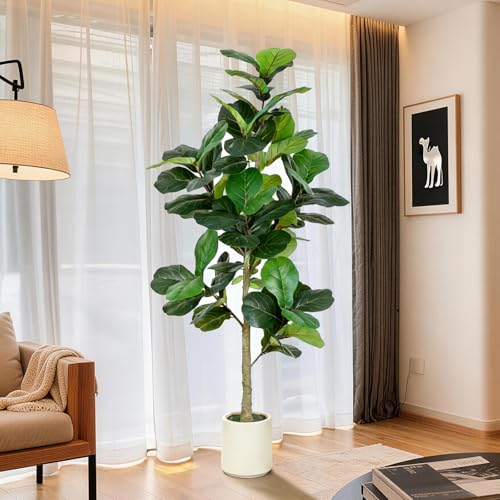
The best planters for fiddle leaf figs are heavy, rigid pots with real drainage that are only 1 to 2 inches wider than the root ball: the Bloem Terra 14-inch resin planter is a strong choice for a mature, tall plant, the LE TAUCI 12-inch ceramic planter (nearly 15 pounds empty, removable drainage plug) suits a mid-sized plant, and the Elly Décor 10-inch red clay ceramic planter with a saucer suits a younger plant. Tall, top-heavy trees tip over in pots that are light or too narrow, so weight and base width matter as much as looks.
Our top picks



As an Amazon Associate we earn from qualifying purchases at no extra cost to you.
Quick picks by plant size
- Young plant, about 1 to 3 feet: Elly Décor 10-inch red clay ceramic planter, or the EPFamily 10-inch ceramic planter.
- Growing plant, about 3 to 4 feet: LE TAUCI 12-inch mid-century ceramic planter or D’vine Dev 12-inch ceramic planter with wood stand.
- Mature plant, about 4 to 6 feet: Bloem Terra 14-inch resin planter (light enough to move, stable enough for a mature plant) or the Kante Natural Concrete planter.
- Style-first with a stand: La Jolie Muse 10-inch ceramic planter with bamboo stand or the Rivet Mid-Century ceramic planter with iron stand.
How we chose
This is a research-based guide, not a product test. We compared current planter roundups, fiddle leaf fig care guides and manufacturer descriptions, then favored pots with published diameters, a drainage method and a material that adds weight or stability. Where a spec could not be confirmed, we describe the pot by its class and say it is unverified. Our criteria:
- Diameter match. Only 1 to 2 inches wider than the root ball, so soil dries at a healthy pace.
- Depth. A tall plant needs a pot that is deep, not just wide, to anchor roots.
- Drainage. Holes big enough to drain a pot over 10 inches, or a removable plug.
- Stability. Heavy material, a wide base and a low center of gravity.
- Weight to move. Heavy enough to anchor, light enough that you can still relocate it.
- Room to grow. A size plan for the next repotting, not just today.
Pot size and depth: the numbers that matter
Fiddle leaf figs dislike sitting in wet soil, and a pot that is too large holds more water than the roots can use. The usual guidance is a modest step up of about 1 to 2 inches in diameter when you repot. Typical plant-to-pot pairings:
| Plant stage | Approx. height | Pot diameter | Pot depth | Main risk |
|---|---|---|---|---|
| Young | 1 to 3 ft | 8 to 10 in | 8 to 10 in | Overwatering in an oversized pot |
| Developing | 3 to 4 ft | 10 to 12 in | 10 to 12 in | Tipping if the pot is light |
| Mature | 4 to 6 ft | 14 to 16 in | At least 14 in | Top-heavy, needs a heavy base |
Sources vary slightly. Some suggest a small 4 to 6 inch pot for a very young plant and 8 to 9 inches for a developing floor plant. The ranges above are a middle path, so always measure your own root ball.
Drainage: holes, saucers and cache pots
How big should drainage holes be
A single half-inch hole is not enough for a pot over about 10 inches. Look for either three holes of about three-quarters of an inch, or one central hole of about 1 inch. Larger pots hold more water, and slow drainage leaves the bottom soil soggy.
Saucers
A saucer protects floors but also traps water. Empty it 15 to 30 minutes after watering. Raised feet or pot risers let air flow under the pot and stop the base staying wet.
The cache-pot method
Keep the plant in its plastic nursery liner, which has drainage, and set it inside a decorative sealed ceramic planter. To water, lift the liner out, drain it fully in a sink, then return it. This gives you design freedom and the best drainage control, and it is the safest way to use a ceramic planter that has no holes.
Material: weight, breathability and stability
| Material | Weight | Moisture behavior | Stability for tall plants | Watch out for |
|---|---|---|---|---|
| Unglazed terracotta | Heavy | Porous, dries fast | Very good | May dry out too quickly if you under-water |
| High-fired glazed ceramic | Heavy | Holds moisture longer | Very good | Chips, and may lack drainage holes |
| Concrete | Very heavy | Porous, mineral | Excellent | Hard to move; floor protection |
| Fiberglass or resin | Light to medium | Non-porous | Good if the base is wide | Can tip if narrow or very light |
The middle path for most homes is a mid-weight ceramic or a wide-base resin, heavy enough to hold a tall plant steady but still possible to rotate toward the window.
The best planters for fiddle leaf figs
1. Bloem Terra 14-Inch Resin Planter
Spec line: Resin · 14 inch diameter · drainage-ready design class · light enough to move · stable for a mature plant
Best for: A mature 4 to 6 foot plant you still want to rotate for even light.
Skip if: You want the extra anchoring of ceramic or concrete for a very tall specimen.
- Pros: Easy to move; wide base; non-porous so the surface stays clean.
- Cons: Lighter than ceramic, so a tall top-heavy plant needs a wide base and a low pot of soil; confirm the saucer and drainage details on the listing.
2. LE TAUCI 12-Inch Mid-Century Ceramic Planter
Spec line: High-fired ceramic · 12 inch diameter · nearly 15 lb empty · removable drainage plug · saucer sold separately
Best for: A developing plant of about 3 to 4 feet.
Skip if: You do not want to buy a saucer separately or cannot lift a planter this heavy once filled with soil.
- Pros: Weight adds stability; plug allows use with or without drainage; a clean modern look.
- Cons: Heavy to move once filled; with the plug in, water pools unless you use a liner; saucer cost.
3. D’vine Dev 12-Inch Ceramic Planter with Natural Wood Stand
Spec line: Ceramic · 12 inch diameter · drainage hole · natural wood stand · mesh net and scratch pad included
Best for: A medium plant on a floor where airflow under the pot and a decor stand matter.
Skip if: A tall plant is in a high-traffic area where a stand could be bumped.
- Pros: Stand lifts the pot for airflow; included mesh stops soil leaking; scratch pad protects floors.
- Cons: Stand raises the center of gravity; wood near water needs a protective surface.
4. Elly Décor 10-Inch Red Clay Ceramic Planter
Spec line: Red clay ceramic · 10 inch diameter · drainage hole · matching saucer with self-watering design
Best for: A young plant of about 1 to 3 feet.
Skip if: You tend to overwater. A self-watering saucer can keep the base wet.
- Pros: Includes a saucer; clay material; correct size class for a young plant.
- Cons: Fiddle leaf figs outgrow 10 inches fast; saucer must be emptied rather than left to hold water.
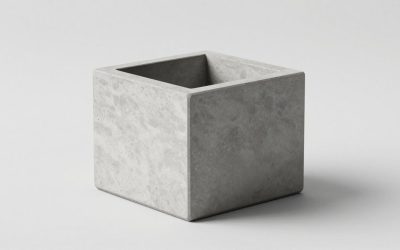
5. Kante Natural Concrete Planter
Spec line: Concrete · heavy, wide base · suited to plants up to about 4 feet in reported guidance · exact dimensions unverified
Best for: The most stability for a leggy or top-heavy plant.
Skip if: You rearrange rooms often or have delicate flooring.
- Pros: Excellent anchor; porous; very durable.
- Cons: Heavy; can scratch floors; the source recommending it is older, so check current availability.
6. La Jolie Muse 10-Inch Ceramic Planter with Bamboo Stand
Spec line: Ceramic · 10 inch diameter · about 15 inches tall with stand · drainage hole with mesh pad · bamboo stand
Best for: A young plant on a living-room floor or low table.
Skip if: The plant will soon exceed 3 feet; the planter is the small side and the stand adds height.
- Pros: Mesh pad included; stand improves airflow; attractive for small spaces.
- Cons: Higher center of gravity; limited soil volume for growth.
7. Rivet Mid-Century Ceramic Planter with Iron Stand
Spec line: Matte black ceramic · about 18.9 inches tall with stand · welded iron stand · drainage not clearly stated, diameter unverified
Best for: Design-led spaces where the plant sits within a cache-pot arrangement.
Skip if: You want to plant directly into the pot without confirming drainage.
- Pros: Strong visual presence; welded stand construction.
- Cons: Unclear drainage; tall stand raises the center of gravity for a large plant.
8. EPFamily 10-Inch Ceramic Planter
Spec line: Ceramic · 10 inch diameter class · drainage details unverified
Best for: A young plant on a budget.
Skip if: You need a pot that will last for a mature plant; it is the smaller size class.
- Pros: Appropriate size for young plants; ceramic gives weight.
- Cons: Quickly outgrown; confirm drainage before purchase.
Worked example: sizing a pot and checking stability
Imagine a 5-foot fiddle leaf fig in a 10-inch nursery pot, with a root ball about 9 inches wide. Use this logic:
- Measure the root ball. About 9 inches across and 9 inches deep.
- Step up by 1 to 2 inches. Target a 10 to 11 inch interior diameter, rounding up to a 12-inch planter if the leaves are heavy and the plant leans.
- Check depth. For a tall plant, look for at least 12 inches of depth so the roots have an anchor, not just width.
- Estimate soil volume. A 12-inch round, 12-inch deep pot holds roughly 5 gallons when full. At about 4 to 6 pounds per gallon saturated (an estimate), that is 20 to 30 pounds of soil on top of the pot weight.
- Compare base to height. A 5-foot plant in a 12-inch base has a height-to-base ratio of 5:1. Above roughly 5:1, tipping becomes a real risk, so choose a heavy ceramic or concrete pot or move up to 14 inches.
- Plan the next move. When roots circle the pot, step up again to 14 inches and keep a heavy base.
The takeaway: for tall plants, the combination of depth, base width and heavy material keeps the plant stable. A pot that looks right on the shelf may not hold a five-foot tree upright.
Matching decor sizes as the plant grows
Plan your planters in a sequence so the look stays consistent over time. A common approach is to buy the same style in two or three sizes, such as 10, 12 and 14 inches, so the pot always matches the plant. Another approach is to buy one larger decorative planter and keep the plant in a plastic nursery liner inside it. You lift the liner for watering, and when it outgrows the liner, you step up to a larger liner without replacing the decorative pot until you have to. Keep the saucer or tray the same width or slightly wider than the pot base.
Common mistakes to avoid
- Jumping to a pot much larger than the root ball. Extra soil stays wet and invites root rot.
- Choosing a decorative pot with no holes and planting directly. Use a liner instead.
- Using a light, narrow pot for a tall plant. A single bump can tip it over.
- Letting water sit in the saucer. Empty it after watering.
- Ignoring weight when moving. A filled 14-inch pot can weigh 30 pounds or more, so use a plant caddy or lift with a helper.
Frequently asked questions
What is the best planter for a fiddle leaf fig?
A heavy, rigid pot with drainage that is only 1 to 2 inches wider than the root ball, such as the LE TAUCI 12-inch ceramic or Bloem Terra 14-inch resin.
Choose by plant height: 10 inches for young plants, 12 for developing, 14 or more for mature.
What size pot does a fiddle leaf fig need?
Choose a pot 1 to 2 inches wider than the current root ball, and for a mature plant of 4 to 6 feet, about 14 to 16 inches wide and at least 14 inches deep.
Too large a pot holds extra water and risks root rot.
Do fiddle leaf figs need a pot with drainage holes?
Yes. Drainage lets excess water escape so roots do not sit in soggy soil. For pots over 10 inches, use three three-quarter-inch holes or one 1-inch hole.
If your decorative pot has no holes, use it as a cache pot around a plastic liner.
Should a fiddle leaf fig be in terracotta or plastic?
Terracotta is heavy and porous, so it dries faster and anchors tall plants. Plastic or resin holds moisture longer and is easier to move.
Choose terracotta if you tend to overwater, and resin if you prefer fewer waterings.
How do I stop a tall fiddle leaf fig from tipping over?
Use a heavy material such as ceramic or concrete, a wide and deep pot, and keep the height-to-base ratio below about 5 to 1.
Avoid light decorative pots and keep the plant out of walkways and pet routes.
Do I need a saucer for a fiddle leaf fig pot?
A saucer protects floors, but you must empty it soon after watering. Standing water leads to root rot.
Raised feet or pot risers let air circulate under the pot and keep the base from staying wet.
When should I repot a fiddle leaf fig?
Repot when roots circle the pot or poke from the drainage holes, usually every 1 to 2 years for a young plant. Step up only 1 to 2 inches.
Spring and early summer are generally the best seasons because the plant is actively growing.
Can I use a cache pot for a fiddle leaf fig?
Yes, and it is one of the safest methods. Keep the plant in its plastic nursery liner with drainage and place it inside the decorative pot.
Lift the liner to water, drain it fully, and return it. Never leave water pooled at the bottom of the outer pot.
Bottom line
Measure the root ball, step up only 1 to 2 inches, and put weight and depth ahead of decoration. Choose the Elly Décor 10-inch or EPFamily 10-inch pots for young plants, the LE TAUCI or D’vine Dev 12-inch ceramic planters for developing plants, and the Bloem Terra 14-inch resin or Kante concrete planter for mature trees. If a pot has no drainage, use it only as a cache pot around a plastic liner.