Key takeaways
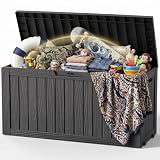
- Best Overall Four-Chair Box: Flamaker 100 Gallon Resin Deck Box
- Best Alternative at 100 Gallons: Devoko 100 Gallon Outdoor Storage Box
- Best Compact Pick: Keter Marvel Plus 71 Gallon Resin Deck Box
- Best for Large Sets: Keter Westwood 150 Gallon Outdoor Storage Box
- Best Extra-Large With Wheels: DRATO 170 Gallon Outdoor Storage Box with Wheels
- Best Zippered Bag: Uranshin 105 Gallon Patio Cushion Storage Bag
- Best Rolling Bag: NettyPro Rolling Cushion Storage Bags with Wheel and Handle
For a typical four-chair patio set, a 100-gallon resin deck box is the size to buy, and the Flamaker 100 Gallon Resin Deck Box is the budget-friendly place to start, with the Devoko 100 Gallon Outdoor Storage Box as a close alternative. If you only have a pair of chairs, the Keter Marvel Plus 71 Gallon is a smaller, well-known option, and if you have a full sectional the Keter Westwood 150 Gallon or the DRATO 170 Gallon with wheels will hold it. This guide shows you how to turn cushion dimensions into gallons so you buy the right size the first time, and it includes zippered storage bags for people who have no room for a box.
This guide is research-based. We compared listing details and maker descriptions and did not personally use these boxes or bags. Deck boxes are widely marketed as “waterproof”; resin lids and seals reduce water entry, but we do not treat any box as a guarantee against moisture, condensation or flooding, and we recommend letting cushions dry fully before storing them. Capacities below are the listing’s gallon figures, and usable cushion space is smaller.
Our top picks


As an Amazon Associate we earn from qualifying purchases at no extra cost to you.
Top Picks at a Glance
- Best Overall Four-Chair Box: Flamaker 100 Gallon Resin Deck Box
- Best Alternative at 100 Gallons: Devoko 100 Gallon Outdoor Storage Box
- Best Compact Pick: Keter Marvel Plus 71 Gallon Resin Deck Box
- Best for Large Sets: Keter Westwood 150 Gallon Outdoor Storage Box
- Best Extra-Large With Wheels: DRATO 170 Gallon Outdoor Storage Box with Wheels
- Best Zippered Bag: Uranshin 105 Gallon Patio Cushion Storage Bag
- Best Rolling Bag: NettyPro Rolling Cushion Storage Bags with Wheel and Handle
Comparison Table
| Product | Best for | Key specs (from the listing) | Watch for | Price tier |
|---|---|---|---|---|
| Flamaker 100 Gallon Deck Box | Four-chair sets | 100 gal, resin, lockable lid, wood-texture look | Assembly required | Mid-range |
| Devoko 100 Gallon Storage Box | Four-chair sets, garden tools too | 100 gal, waterproof-marketed, lockable, weather resistant | Dimensions not in title | Mid-range |
| Keter Marvel Plus 71 Gallon | Two to three chairs | 71 gal, resin, for cushions and throw pillows | Smaller interior | Mid-range |
| Keter Westwood 150 Gallon | Large seating groups | 150 gal, resin, lockable, easy-lift pistons | Heavy when moving | Premium |
| DRATO 170 Gallon with Wheels | Sectionals, bulky cushions | 170 gal, wheels, hydraulic rods, lockable | Large footprint | Premium |
| Uranshin 105 Gallon Bag | No space for a box | 105 gal, zippers, handles, 420D fabric | Fabric, not rigid | Budget |
| NettyPro Rolling Bags | Moving cushions in and out | Wheel and handle, large capacity as listed | Capacity not in title | Budget |
The Gallon Math: How Many Cushions Fit?
Deck box capacity is listed in gallons, but cushions come in inches. One US gallon equals 231 cubic inches, so you can convert. A seat cushion measuring 22 x 22 x 13 inches (a common size for a bagged deep-seat cushion) has a volume of 6,292 cubic inches, which is about 27 gallons. That means a 100-gallon box, in theory, holds around three to four of these, not the six you might guess from the box label.
Real life is less efficient than arithmetic. Cushions are squishy, so they can be compressed a little, but the interior of a box is not a perfect rectangle: it has sloped walls, molded ribs and a lid recess. A sensible planning rule is to count on 70 to 80 percent of the labeled gallons as usable space. For a 100-gallon box, that is roughly 70 to 80 gallons. A pair of 25-inch by 25-inch by 5-inch seat cushions is about 3,125 cubic inches each, around 13.5 gallons per cushion, so a 100-gallon box would hold five or six of those. Back cushions are thinner and tend to fit around the edges.
| Cushion type (example size) | Approx. volume | Approx. gallons each |
|---|---|---|
| Dining seat pad, 19 x 19 x 3 in | 1,083 cu in | about 4.7 |
| Thick seat, 19 x 19 x 5 in | 1,805 cu in | about 7.8 |
| Deep seat, 24 x 24 x 6 in | 3,456 cu in | about 15 |
| Deep-seat cushion in a bag, 22 x 22 x 13 in | 6,292 cu in | about 27 |
| Chaise pad, 72 x 21 x 3 in | 4,536 cu in | about 19.6 |
Add up your cushions, add 20 to 30 percent for the usable-space loss, and you have your target gallon size. Four 19 x 19 x 3 pads plus four matching backs come to roughly 38 gallons of cushion, so a 71-gallon box is plenty. A sofa with three deep seats and three backs at 24 x 24 inches could total more than 70 gallons, pushing you into the 100-plus range.
The “22x22x13” bag size in the search phrases you may have seen is a good reminder to also check the width and length of the box. A rigid box with an interior depth under 20 inches may not take a tall stack standing on edge, even if the gallon number looks big enough.
1. Flamaker 100 Gallon Resin Deck Box: Best Overall Four-Chair Box
- 100 gallon resin deck box, per the listing
- Marketed as waterproof and lockable
- Wood-texture lid design
- Interior dimensions and weight: not listed in the title
Best for: a four-chair patio set plus a few throw pillows. Skip if: you have deep-seat sectional cushions, which will need more space.
A 100-gallon box covers the most common patio set. The resin construction resists rust and rot, unlike wood or metal boxes, and a lockable lid keeps cushions in place and curious animals out. A wood-textured finish blends in better with garden furniture than a plain plastic look.
Think about how the lid works. Boxes that open straight up need clearance behind them; boxes with gas pistons or hydraulic rods lift more easily, which matters if the lid is heavy. Also avoid putting damp cushions in any resin box: trapped moisture leads to mildew, and a sealed box can hold humidity for days.
Pros: common size for patio sets; resin build; lockable; budget-leaning for this capacity. Cons: assembly; drainage and ventilation are your responsibility.
2. Devoko 100 Gallon Outdoor Storage Box: Best Alternative at 100 Gallons
- 100 gallon deck box, lockable
- Marketed as weather resistant and waterproof
- Listed as suitable for patio cushions and garden tools
- Material and wall thickness: check listing details
Best for: shoppers who want 100 gallons with the flexibility to store garden tools or pool accessories as well. Skip if: you need a bench you can sit on; check whether this model is rated for seating.
Devoko offers several sizes, and the 100-gallon model is its mainstream size. The listing language mentions fit for patio cushions and garden tools, which suits people who want one box for mixed storage. If you keep tools in the same box as cushions, put the tools in a separate bag so oil and dirt do not stain the fabric.
Pros: mainstream size; lockable; flexible use. Cons: specs not fully in the title; shared storage can soil cushions.
3. Keter Marvel Plus 71 Gallon: Best Compact Pick
- 71 gallon resin deck box
- Listed for outdoor cushions and throw pillows
- Established maker with a wide deck box range
- Interior size: check the maker page
Best for: a bistro set, two to three chairs, or a few loose cushions. Skip if: you need to store thick deep-seat pads.
At 71 gallons, this box is for modest patios. Using the 70 to 80 percent rule, you have around 50 to 57 gallons of usable room, which handles roughly eight to ten 19-inch seat pads of 3 to 5 inches thickness, depending on how they pack. It is also easier to move and fit in a corner than the very large boxes.
Pros: manageable size; known brand; fits small patios. Cons: limited capacity; may not fit deep cushions.
4. Keter Westwood 150 Gallon: Best for Large Sets
- 150 gallon resin outdoor storage box
- Lockable, with easy-lift pistons as stated
- Large footprint suited to patio and pool accessories
- Weight when empty: not listed in the title
Best for: large sectionals, deep-seat sets and families who also store pool toys. Skip if: your patio is small.
The pistons are the standout feature. A big resin lid is heavy, and a piston-assisted lid raises smoothly and holds open, which makes loading cushions easier. At 150 gallons, even deep-seat cushions at around 27 gallons each fit with room to spare for three or four of them. Place it on a flat, level surface; a rocking box strains the hinges.
Pros: large capacity; piston lid; lockable. Cons: takes up space; costs more.
5. DRATO 170 Gallon Outdoor Storage Box With Wheels: Best Extra-Large With Wheels
- 170 gallon resin storage box
- Wheels and hydraulic rods, as listed
- Waterproof-marketed and lockable
- Exterior dimensions: not listed in the title
Best for: large outdoor furniture sets and homeowners who want to roll the box into a garage for winter. Skip if: you have narrow gates or small decks.
Wheels are rare on deck boxes, and they change how you use one. Instead of leaving the box where it is placed, you can move it away from the patio during parties or to a shed in winter. Check how the wheels are positioned and whether the box needs to be tilted. A fully loaded box is heavy, so it is easier to roll it empty, load it where it ends up, and keep cushions dry.
Pros: large capacity; wheels; hydraulic lid. Cons: large; wheel strength unknown for heavy loads.
6. Uranshin 105 Gallon Patio Cushion Storage Bag: Best Zippered Bag
- 105 gallon capacity
- Zippers and handles, per the listing
- Heavy-duty 420D waterproof-marketed fabric
- Stiffness and bottom support: not listed
Best for: anyone who has no space for a rigid box, wants to store cushions in a garage or closet, or needs a winter solution. Skip if: you need to leave cushions outdoors year-round.
A fabric bag costs far less than a resin box, folds flat when empty and fits under beds or on shelves. The 105-gallon capacity matches a big patio set, and the handles make carrying easier. The trade-off is protection: a bag does not resist crushing, and it is not intended to stay outside through storms. Use it indoors or under cover, and make sure cushions are bone dry before zipping.
Pros: low cost; folds flat; large capacity. Cons: no rigid protection; not for permanent outdoor placement.
7. NettyPro Rolling Cushion Storage Bags: Best Rolling Bag
- Rolling storage with wheel and handle
- Outdoor patio cushion storage container for furniture and pillows
- Large container design
- Exact capacity: not listed in the title
Best for: people who need to move cushions from the patio to a basement or garage regularly. Skip if: you want to keep cushions outside.
A bag on wheels is the practical answer to the lifting problem. Instead of carrying an armful of cushions, you load them at the patio, tip the bag and roll it. If you have stairs or a long path between patio and storage, the wheel saves your back. Check the capacity on the listing before buying since it is not clear from the title.
Pros: easy to move; low price; handle and wheel. Cons: capacity unspecified; less protective than a rigid box.
Also Consider
Keter Kentwood 92 Gallon Resin Storage Box
A resin box between 71 and 100 gallons, suited to mid-size seating groups.
Bicherub Extra Large Zippered Cushion Storage Bag, 68 inch
A long, water-resistant zippered bag with handles that suits chaise pads and sofa cushions.
Shrink-Pak Hefty Outdoor Cushion Storage Cube 2-Pack
Storage cubes with a vacuum valve that reduce bulk before winter storage.
Devoko 30 Gallon Resin Deck Box
A small deck box for a few throw pillows and seat pads on a balcony.
How We Chose
This guide is research-based. We compared listings for capacity in gallons, build material, lid type, locking features and what the makers say about cushion storage. We read maker pages and general deck-box buying guidance and we did not personally use these products. We included both rigid boxes and soft bags because the keyword family includes both. We avoided relying on any waterproof claim and note that cushions should be dry before storage. Where dimensions were missing from the title, we said “not listed”.
Buying Guide
Capacity and Interior Shape
Use the gallon math above. Always check the interior length, width and height, not just the gallon number, because a box can have large capacity in the wrong shape for your cushions. Back cushions that are 25 inches or longer need an interior at least that long.
Material and Weather Resistance
Resin (polypropylene or similar) resists rust and rot and is common in mid-priced boxes. Wood looks natural but needs sealing. Metal can dent and rust. Look for UV-stabilized resin to reduce brittleness and fading from sun. Even well-sealed boxes can collect condensation, so drain holes, vents or a dry pack can help.
Lid, Pistons and Locks
Piston or hydraulic assist makes a heavy lid easier to lift and keeps it from slamming. A lockable lid is valuable if the box lives on a shared patio, and it also keeps the lid from blowing open in wind. Check the hinge material: metal pins last longer than molded plastic ones.
Seating and Load Rating
Some boxes double as a bench with a stated weight limit. Do not sit on a box unless the maker explicitly rates it for seating, and respect the stated limit.
Placement and Ventilation
Put the box on a level surface away from downspouts. Cushions should be fully dry before they go in, and a few moisture absorber packs can help in humid climates. Open the box on dry days to air it out.
Pick by Situation
| Your situation | Rough cushion volume | Box or bag size to consider | Example |
|---|---|---|---|
| Balcony with 2 bistro chairs | About 10 gal | 30 to 45 gal | Devoko 30 Gallon |
| Four-chair dining set, 3-inch pads plus backs | About 35 to 40 gal | 71 gal | Keter Marvel Plus |
| Four deep-seat chairs, seat and back | About 100 gal | 150 gal or more | Keter Westwood |
| L-shaped sectional, six seats and backs | About 120 gal | 170 gal | DRATO 170 Gallon |
| No outdoor space, winter only | Any | Bag sized to volume | Uranshin 105 Gallon bag |
Winter Storage Routine That Protects Cushions
Whichever container you choose, the routine matters more than the brand. Start by brushing off dirt and spot-cleaning stains, because stains set when stored. Let each cushion air out in shade until it is completely dry, which can take a full day or more for thick foam. Press a hand into the center of a thick cushion; if it feels cool or damp, it is not ready. Dry cushions placed in a clean, dry container will stay fresher than damp ones in the most expensive box.
Pack cushions loosely rather than cramming them, since compressing foam for months can leave permanent dents. Put heavier cushions on the bottom and softer pillows on top, and slip a moisture-absorbing packet or a sachet of silica gel into the container if your region is humid. Choose a spot off the ground, such as on pavers or a pallet, so the base does not sit in standing water. In spring, open the container on a dry day and let the cushions air out before using them.
For fabric bags, fold the bag flat when empty and store it where mice cannot reach it. If you store bags in a garage, avoid putting them directly on bare concrete in damp climates, because moisture wicks through. If you use a deck box as a seat, keep the load within the maker’s stated limit and never stand on the lid.
Cost Check: Box vs Replacement Cushions
It can be useful to compare the cost of a box with the cost of replacing cushions. If your cushion set costs a few hundred dollars to replace and a box adds years of life, the box often pays for itself within a few seasons. If your cushions are inexpensive and you only use the patio a few weeks a year, a fabric bag stored indoors may be the more economical choice. Think about how often you will actually load and unload; a container that is awkward to use tends to be left empty, which defeats its purpose.
Common Mistakes to Avoid
- Buying by gallons alone without checking interior dimensions.
- Storing damp cushions in a closed box, which invites mildew.
- Placing the box where water pools around its base.
- Overloading a bag so zippers strain and seams split.
- Assuming every deck box can be used as a bench.
Frequently Asked Questions
What size deck box do I need for patio cushions?
For a four-chair patio set a 100-gallon box is the usual choice. Add up your cushion volume, add 20 to 30 percent for unusable space, and pick the next size up.
What are the best large deck boxes for cushions?
Among the options here, the Keter Westwood 150 Gallon and the DRATO 170 Gallon with wheels suit large sets. Check interior dimensions against your deep-seat cushions.
Can I use a zippered bag instead of a deck box?
Yes, for indoor or covered storage. Bags are cheaper and fold flat, but they do not protect against crushing and are not meant to stay outside in storms.
Will a deck box keep cushions completely dry?
Not necessarily. Lids and seals reduce water entry, but condensation and humidity can still build up. Store cushions only when they are dry and open the box occasionally to air it out.
How many cushions fit in a 100-gallon deck box?
It depends on size. Using about 75 percent usable space, a 100-gallon box fits around three to four deep-seat cushions at roughly 27 gallons each, or many more thin seat pads.
Which bag size works for a 22x22x13 cushion?
A cushion that size is about 27 gallons, so a bag of roughly 100 gallons or more holds three or four, while a 68-inch long bag also holds long chaise pads. Compress them gently rather than forcing them in.
Are wheeled storage boxes a good idea?
They are useful if you move the box often, for example to a garage in winter. Check the wheel strength and move it empty or lightly loaded.
Which One Should You Buy?
Calculate your gallons first. For most four-chair sets choose the Flamaker or Devoko 100-gallon box. If you have only a bistro set, the Keter Marvel Plus 71 Gallon saves space. For sectionals pick the Keter Westwood 150 Gallon, or the DRATO 170 Gallon if you want wheels. If you do not have room for a box, the Uranshin 105 Gallon bag or the NettyPro rolling bag are cheaper alternatives for indoor or covered storage. Whichever you buy, store cushions dry and check the maker’s instructions.
Sources
- Keter deck box and storage box product pages
- Devoko and Flamaker deck box product pages
- DRATO outdoor storage box product page
- Uranshin and NettyPro cushion storage bag product pages
- Outdoor fabric care guidance from furniture and textile makers
Last updated: October 2026