Key takeaways
- Best Overall (gas): Husqvarna Z254F, a 54 inch deck with a 23 HP Kawasaki engine.
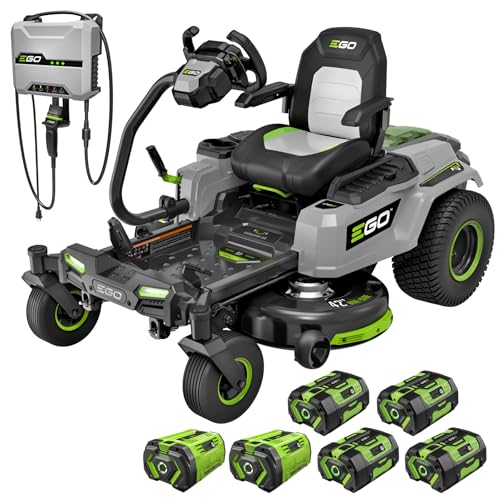
- Best Overall (battery): EGO Power+ Z6 52 inch ZT5216L, built around six 10.0Ah batteries.
- Best Value on Small Acreage: EGO Power+ Z6 42 inch ZT4214L for roughly one-acre lawns.
- Best for Large or Uneven Ground: Husqvarna MZ61 with a 61 inch deck and ROPS.
- Best Premium Gas: Ariens Zenith 60 with a 60 inch deck and 23.5 HP Kawasaki engine.
- Best High-Capacity Battery Kit: Greenworks 60V 54 inch MaximusZ with six batteries in the box.
- Most Powerful Battery Platform: Greenworks 80V 54 inch MaximusZ for heavy grass and bigger lawns.
The best zero turn mowers for most home properties of one to three acres are the Husqvarna Z254F if you want a proven gas machine with a 54 inch deck, and the EGO Power+ Z6 52 inch if you would rather skip fuel, oil changes and engine noise. The runner-up on the gas side is the Husqvarna MZ61, which adds a wider 61 inch deck and a roll-over protection structure for bigger or rougher ground. This guide sorts seven real models by lawn size, then explains the arithmetic and trade-offs that decide whether gas or battery makes more sense for you.
A quick note on how this page differs from our other mower guides: we already cover commercial-grade and residential gas zero-turns separately. Here the focus is the choice that trips most buyers up, which is gas versus battery, and how deck width, engine size and battery capacity map to the acreage you actually mow. This guide is research-based, built from manufacturer spec sheets, listing details and published reviews. We did not personally use these machines, and where a number is not published we say “not listed”.
Our top picks



As an Amazon Associate we earn from qualifying purchases at no extra cost to you.
Top Picks at a Glance
- Best Overall (gas): Husqvarna Z254F, a 54 inch deck with a 23 HP Kawasaki engine.
- Best Overall (battery): EGO Power+ Z6 52 inch ZT5216L, built around six 10.0Ah batteries.
- Best Value on Small Acreage: EGO Power+ Z6 42 inch ZT4214L for roughly one-acre lawns.
- Best for Large or Uneven Ground: Husqvarna MZ61 with a 61 inch deck and ROPS.
- Best Premium Gas: Ariens Zenith 60 with a 60 inch deck and 23.5 HP Kawasaki engine.
- Best High-Capacity Battery Kit: Greenworks 60V 54 inch MaximusZ with six batteries in the box.
- Most Powerful Battery Platform: Greenworks 80V 54 inch MaximusZ for heavy grass and bigger lawns.
Quick Comparison Table
| Product | Best for | Key specs (as listed) | Watch for | Price tier |
|---|---|---|---|---|
| Husqvarna Z254F | 1 to 4 acres, gas simplicity | 54 in deck, 23 HP Kawasaki, hydrostatic | Needs fuel, oil and seasonal service | Mid-range |
| Husqvarna MZ61 | Big or bumpy properties | 61 in deck, 24 HP Kawasaki, ROPS | Wide deck is harder to fit through gates | Premium |
| Ariens Zenith 60 | Heavy use, long-term ownership | 60 in deck, 23.5 HP Kawasaki | Highest cost of the gas group | Premium |
| EGO Power+ Z6 42 in (ZT4214L) | About 1 acre, quiet mowing | 42 in deck, six 6.0Ah batteries, up to 1.5 acres per charge (maker figure) | Smaller deck means more passes | Mid-range |
| EGO Power+ Z6 52 in (ZT5216L) | 2 to 3 acres without fuel | 52 in deck, six 10.0Ah batteries, up to 3 acres per charge (maker figure) | Runtime drops on slopes and thick grass | Premium |
| Greenworks 60V 54 in MaximusZ | Large flat lawns | 54 in deck, 2 x 20Ah plus 4 x 8Ah batteries, fast charger | Several batteries to charge and store | Mid-range to premium |
| Greenworks 80V 54 in MaximusZ | Thick grass, 80V power | 54 in deck, 2 x 16Ah plus 4 x 6Ah batteries, 1.5 kW charger | Highest cost of the battery group | Premium |
1. Husqvarna Z254F: Best Overall Gas Zero-Turn
- 54 inch deck
- 23 HP Kawasaki engine
- Hydrostatic drive with zero-turn steering
- Deck construction, top speed and weight: not listed in the product title, check the spec sheet
Best for: owners of one to four flat-to-rolling acres who want a familiar gas machine with wide dealer support. Skip if: you dislike small-engine maintenance or have narrow gates.
The Z254F pairs a 54 inch cutting width with a 23 HP Kawasaki engine, which is the sweet spot for residential zero-turns. A 54 inch deck cuts a swath of 4.5 feet, so a rectangular acre takes noticeably fewer passes than it would with a 42 inch deck. The Kawasaki engine name matters in practice because parts and service technicians for that engine family are common, and a hydrostatic drive means there is no belt-driven transmission to adjust as there is on older lawn tractors.
In ownership terms, expect to change the engine oil and filter on the maker schedule, replace the air filter, sharpen or replace blades each season and grease the fittings the manual lists. These are small, predictable jobs, but they are recurring, and they are the main thing you trade away when you move to a battery mower. If you go gas, treat the fuel as part of the machine: a stabilizer routine before winter storage saves a lot of spring carburetor trouble.
Zero-turn steering also takes practice. Each rear wheel is driven independently, so small lever movements produce big changes in direction. Plan an hour on an open patch of grass before you attempt tight work around beds and trees. The wide deck forgives sloppy overlap, but it will scalp a hump if you swing the front end carelessly.
Pros: large deck for the class; widely serviced engine brand; no batteries to manage; refuels in a minute; no range limit. Cons: noise and exhaust; yearly service; fuel storage.
2. Husqvarna MZ61: Best for Large or Uneven Properties
- 61 inch deck
- 24 HP Kawasaki engine
- Roll-over protection structure (ROPS) included per the listing
- Weight and top speed: not listed
Best for: three acres and up, or ground with rises and dips where a roll bar adds peace of mind. Skip if: your yard is cut up by beds, trees and tight gates.
A 61 inch deck is the widest on this list, a 5.1 foot swath. On open ground that cuts mowing time, but it also scalps more easily on humps and is harder to trim close around obstacles. The ROPS is the headline feature on rougher ground, though a roll bar is not a license to mow steep banks: follow the maker’s slope limit in the manual, and use the seat belt with the ROPS raised, as the instructions specify.
The 24 HP engine gives a little extra headroom for thick grass and a wide deck. If your property is mostly flat and under three acres, the Z254F is usually the better balanced purchase because it is easier to store and cheaper. If it is larger and bumpier, the MZ61 earns its higher tier. Also think about trailer or shed clearance, since a 61 inch deck machine is long and heavy to maneuver in tight storage.
Pros: widest deck here; ROPS; strong engine headroom. Cons: premium cost; trimming and gate clearance; more mower to store.
3. Ariens Zenith 60: Best Premium Gas Pick
- 60 inch deck
- 23.5 HP Kawasaki engine
- Heavier-duty positioning from the maker; frame and deck gauge: not listed here
Best for: people who mow weekly for years and want a sturdier machine. Skip if: your lawn is small enough that a 54 inch deck is already more than you need.
Ariens is a long-standing maker of outdoor power equipment, and the Zenith line targets owners who treat the mower as a work tool. The 60 inch deck and Kawasaki engine put it in the same performance bracket as the MZ61, so the choice often comes down to dealer access in your area and the feel of the controls. Because deck gauge and drive components are not in the listing we reviewed, confirm those on the maker’s page before buying.
Replacement blades are a common ownership item. For Ariens-family 52 inch decks, compatible blade sets are listed by third-party sellers (see Also Consider); always match the exact part number to your own deck size, because a 60 inch deck takes a different set.
Pros: large deck; Kawasaki engine; serious-duty positioning. Cons: highest cost in the gas group; large and heavy to move and store.
4. EGO Power+ Z6 52 Inch ZT5216L: Best Overall Battery Zero-Turn
- 52 inch fabricated steel deck, triple blade (per EGO)
- Six 56V 10.0Ah ARC Lithium batteries
- Up to 3 acres per charge, a maker best-case figure
- Up to 8 mph, three drive modes, 10 cutting heights from 1.5 to 4.5 inches
- IPX5 weather resistance per EGO; the maker also quotes a gas-equivalent power figure of 27 HP
Best for: two to three acres where you want quiet, no fuel and low routine maintenance. Skip if: you often mow wet, tall grass or steep hills where runtime will fall well below the headline figure.
This is the model that makes the gas-versus-battery question real. EGO publishes up to 3 acres per charge for the 52 inch model, but that is a best case on level ground in typical grass. Hills, dense turf and fast ground speed all draw more power. A cautious planning rule is to treat the published figure as a ceiling and size your lawn to about two-thirds of it, so a 2 acre lawn is comfortable and a 3 acre lawn may need a mid-job pause.
The ownership upside is real: no oil changes, no spark plugs, no carburetor or fuel-stabilizer routine. Blades, tires and the batteries themselves become the main items to care for. Charging six batteries takes time, so plan to recharge right after the mow rather than the morning of the next one. The three drive modes, Control, Standard and Sport, let you trade speed for precision, which helps new operators.
Pros: very quiet; no fuel handling; low routine maintenance; ample claimed range; adjustable drive modes. Cons: premium cost; runtime varies with terrain; battery lifespan is the long-term cost to plan for.
5. EGO Power+ Z6 42 Inch ZT4214L: Best for About an Acre
- 42 inch stamped steel deck, dual blade (per EGO)
- Six 56V 6.0Ah ARC Lithium batteries
- Up to 1.5 acres per charge, a maker best-case figure
- Up to 8 mph and the same three drive modes as the larger model
Best for: a one-acre yard with trees and beds, where a narrower deck fits through gates. Skip if: you have more than about an acre of open lawn; the 52 inch is the better fit then.
The 42 inch is the practical answer for suburban lots that outgrew a push mower. Its swath is 3.5 feet, so open lawn takes more passes than on the bigger models, but the footprint is easier to maneuver around swing sets, garden beds and trees. One-and-a-half acres per charge at best means a one acre property leaves plenty of margin, even if the grass is thick.
Be careful with replacement parts: some blade listings reference the older ZT4204L model number, so match your exact model and deck before ordering.
Pros: compact and quiet; same drive features as the bigger Z6; easier gate access. Cons: smaller deck; modest range margin for larger lawns.
6. Greenworks 60V 54 Inch MaximusZ: Best Large Battery Kit
- 54 inch deck
- Two 20Ah batteries plus four 8Ah batteries and a fast charger, per the listing
- 60V platform shared with other Greenworks tools
- Runtime, top speed and weight: not listed in the listing title
Best for: large, mostly flat lawns where you want a 54 inch deck without gas. Skip if: you want a published acres-per-charge figure to plan around; confirm it on the maker’s page.
The kit includes six batteries in two sizes, which gives a lot of stored energy but means more units to charge and store through winter. If you already own Greenworks 60V hand tools, the shared battery platform may be a convenience. Compared with the EGO 52 inch, you gain two inches of deck width and pay in complexity, because mixed battery sizes are harder to reason about than six identical packs.
Pros: wide deck; big battery bundle; fast charger included. Cons: mixed battery sizes; runtime not published in the listing.
7. Greenworks 80V 54 Inch MaximusZ: Most Powerful Battery Option
- 54 inch deck
- Two 16.0Ah batteries plus four 6.0Ah batteries and a 1.5 kW fast charger, per the listing
- 80V platform
- Runtime and speed: not listed
Best for: thick or fast-growing grass where higher voltage may help sustain power. Skip if: you do not need the extra headroom, since the cost is at the top of this list.
The 80V version is Greenworks’ higher-output platform, with a 1.5 kW charger that should recharge batteries faster than lower-power chargers (confirm charge times with the maker). It is the pick when you want to approach gas performance on a wide deck and are comfortable with the highest price tier among the battery models.
Pros: high-output platform; fast charger; wide deck. Cons: top cost; battery bundle is heavy to store; runtime not stated in the listing.
Electric vs Gas Zero-Turns: What Actually Differs
| Factor | Gas (Kawasaki class) | Battery (EGO, Greenworks) |
|---|---|---|
| Refueling or recharging | About a minute at the pump or can | Hours to recharge after use |
| Routine maintenance | Oil, filters, spark plugs, fuel care | Blades, tires, battery care |
| Noise | Loud; hearing protection advised | Much quieter |
| Mid-job limits | Refuel and continue | Range is finite per charge |
| Cold-weather storage | Stabilize fuel | Store batteries per maker guidance |
| Long-term cost item | Engine service and fuel | Battery replacement |
If your lawn is under two acres and you value a quiet weekend morning, battery is easy to justify. If you mow four acres in one go or live where winters are long and you want a machine that starts every time, gas remains the lower-risk choice. Many owners with mixed properties run battery for the front lawn and keep a gas machine for the back acreage, but that is a luxury, not a requirement.
Worked Example: How Much Lawn Can Each Deck Cover?
Theoretical coverage is deck width in feet times ground speed in miles per hour times 0.1212 (the conversion from foot-miles to acres), and real mowing is well below that because of turns and overlap. Assuming 6 mph and 75 percent efficiency, which are planning assumptions, not maker figures:
| Deck | Swath | Theoretical acres per hour | Planning figure at 75% |
|---|---|---|---|
| 42 in | 3.5 ft | 2.5 | About 1.9 |
| 52 in | 4.3 ft | 3.2 | About 2.4 |
| 54 in | 4.5 ft | 3.3 | About 2.5 |
| 60 in | 5.0 ft | 3.6 | About 2.7 |
| 61 in | 5.1 ft | 3.7 | About 2.8 |
So a 3 acre lawn takes roughly an hour and a quarter on a 54 inch deck at these assumptions. On the EGO 52 inch, that is about 1.3 hours, which lines up with the maker’s “up to 3 acres” claim only if conditions are ideal. A battery that must supply energy for the whole 1.3 hours at higher loads is the reason we advise leaving margin. For a one-acre lawn, the 42 inch deck needs about half an hour of mowing time, so even a modest charge covers it with room to spare.
Which Zero-Turn for Which Lawn Size
| Your lawn | Deck to look at | Gas choice | Battery choice |
|---|---|---|---|
| Up to 1 acre with obstacles | 42 in | Smaller gas zero-turns (not in our main list) | EGO Z6 42 in |
| 1 to 2 acres, open | 52 to 54 in | Husqvarna Z254F | EGO Z6 52 in |
| 2 to 4 acres, open | 54 in | Husqvarna Z254F | Greenworks 54 in (60V or 80V) |
| 4 acres and up | 60 in or wider | Husqvarna MZ61 or Ariens Zenith 60 | Consider gas for range |
| Hilly or uneven ground | Any, with slope limit checked | MZ61 for ROPS | Expect shorter runtime |
Also Consider
- Classic Accessories StormPro zero-turn mower cover: listed to fit decks up to 60 inches, a sensible add-on that protects seats and controls from weather.
- Prosentuo AB4200D replacement blades (2 pack): listed as compatible with the ZT4204L 42 inch Z6; confirm against your exact model before ordering.
- Replacement blade set for Ariens and Gravely 52 inch decks (part 04771200 class): several sellers list three-blade packs for ZT X and ZT XL decks; verify fit with the Ariens parts diagram.
How We Chose
We started from zero-turn models that are currently sold in the retail catalog behind this site, then compared manufacturer spec sheets, listing details and independent published reviews such as the written EGO Z6 review from Tool Girl’s Garage. We did not personally use these mowers and make no claim to have measured their runtime or cut quality. Where a spec was not published, the entry says “not listed”. We kept to two picks per brand in the gas group and used two EGO models and two Greenworks voltage platforms in the battery group, and we avoided price and warranty claims because both change often and vary by dealer.
Buying Guide
Match deck width to your property
For under one acre with obstacles, choose 42 inches. From one to three open acres, 52 to 54 inches is the practical middle. Beyond three acres, 60 inches and wider saves meaningful time. Measure your narrowest gate and add at least six inches for clearance, and check the machine’s overall width in the spec sheet rather than assuming it matches the deck.
Choose the engine or battery system
Gas engines in the 21 to 24 HP range, like the Kawasaki units here, are enough for residential zero-turns. For battery models, read the total amp-hours across all batteries and the maker’s best-case acreage; then discount it by a third if you mow hills or thick grass. A mower you must stop and recharge mid-lawn loses its main advantage. Compare voltage platforms only if you already own batteries and tools from that brand.
Diesel and front-mount (forward deck) designs
Diesel zero-turns and front-mount, or forward-deck, designs exist but sit in the commercial class: the deck is mounted ahead of the operator for trimming visibility, and they are priced and sized for landscaping businesses. None of those were found in the catalog this guide draws from, so we describe them by type only. For a home property, a standard mid-mount gas or battery zero-turn is the realistic category.
Cutting blades and deck care
Blades are the part you will replace most. Look for the exact part number in the manual, and replace all blades in a set at once so the deck stays balanced. Keep a spare set so a dull blade mid-season does not stop the schedule. Mulching, high-lift and standard blades cut differently: high-lift blades move more air and discharge or bag better, while mulching blades chop finer but demand more power. Clean grass buildup under the deck after every few mows, because packed clippings reduce cut quality and promote rust.
Slope and safety
Zero-turn mowers steer by wheel speed, so they can lose traction on wet grass and slopes. Read the slope limit in the manual, do not mow across steep banks, keep children and pets away, and use safety features such as the ROPS and seat belt as the maker instructs. Mow at a walking pace until you are comfortable with the levers, and never let anyone ride along.
Common Mistakes to Avoid
- Buying the biggest deck and then not being able to get it through the gate or into the shed.
- Trusting a best-case acreage figure for a hilly lawn.
- Ignoring blade fit when ordering from third-party sellers.
- Storing a gas mower with untreated fuel through winter, or leaving batteries fully drained.
- Skipping the practice hour on open grass before tackling tight areas.
Frequently Asked Questions
What are the best zero turn mowers for a 2 acre lawn?
A 52 to 54 inch deck is the best fit. The Husqvarna Z254F on the gas side and the EGO Power+ Z6 52 inch on the battery side are both well matched, with the EGO offering comfortable margin on its published range.
Are electric zero turn riding lawn mowers worth it?
They can be if you value quiet operation and low maintenance and your lawn fits inside the real-world battery range. They are less attractive on very large, hilly or heavily overgrown properties, where gas refuels faster.
Are commercial zero turn mowers necessary at home?
Usually not. Commercial models are built for many hours of use each week. A residential 54 inch gas or 52 inch battery zero-turn suits most homeowners. If you mow several acres weekly for years, a heavier model like the Ariens Zenith 60 is reasonable.
What about diesel zero turn mowers?
Diesel units are mainly a commercial choice, valued for torque and fuel economy at high hours. They cost more and are rarely needed for home lawns, so none are in our picks.
What are front mount or forward deck zero turn mowers?
These put the deck in front of the operator, which improves visibility around trees and obstacles. They are a commercial category, and we describe them by type because none were found in the catalog behind this guide.
How do I choose cutting blades for a zero turn mower?
Match the exact part number or deck size from your manual, then pick the blade type for your goal: standard for general cutting, high-lift for bagging or discharge, mulching for fine clippings. Replace blades as a set and sharpen at least once per season.
How often should I service a gas zero-turn?
Follow the maker’s schedule in the manual, typically oil and filter changes at set hour intervals plus an annual air filter and blade check. Use the manual for the exact numbers.
Which One Should You Buy?
If you want gas and have one to four acres, choose the Husqvarna Z254F. If your property is bigger or rougher, step up to the MZ61, or to the Ariens Zenith 60 if you want a heavier-duty feel. If you want to avoid fuel entirely, take the EGO Z6 52 inch for two to three acres, or the 42 inch for about one acre. Pick a Greenworks MaximusZ if you want a 54 inch battery deck and are happy to manage a larger battery set. Confirm fit, range and service support with a local dealer before you buy.
Sources
- EGO Power+ official product pages for the Z6 42 inch and 52 inch zero-turn mowers
- Husqvarna zero-turn mower product information
- Ariens Zenith zero-turn product information
- Greenworks MaximusZ zero-turn product information
- Tool Girl’s Garage, EGO Z6 zero-turn mower review
Last updated: October 2026