Key takeaways
- Pros: Washable pads eliminate ongoing refill costs; spray trigger allows precise moisture control on water-sensitive wood.
- Con: The flat head can struggle on heavily textured grout or deeply recessed tile lines.
Floor mops for home buyers face a crowded market where the cheapest option might leave streaks across your kitchen tile and the most expensive might be overkill for a studio apartment. The real question is what your flooring actually demands. Hardwood, tile, marble, and laminate each respond differently to moisture, pressure, and pad material, and the wrong mop can cause more damage than it prevents.
The eight products in this roundup span from a basic string mop designed for commercial spaces to an electric spray mop that eliminates the bucket entirely. What separates a good floor mop from a disappointing one is rarely the headline feature. It is pad quality, wringing mechanism, water control, and whether the refill or replacement cost locks you into an expensive ecosystem. We compared published specifications, listed prices, and aggregated owner feedback to identify where each mop actually performs and where it falls short.
Our top picks


As an Amazon Associate we earn from qualifying purchases at no extra cost to you.
Quick Picks
| Product | Best for | Price |
|---|---|---|
| Spray Mop for Hardwood Tile | Budget hardwood and tile cleaning | $18.98 |
| Swiffer PowerMop Mopping Kit | No-bucket convenience and multi-surface homes | $29.49 |
| O-Cedar EasyWring Spin Mop & Bucket | Thorough wet mopping with controlled moisture | $44.96 |
| BPAWA Microfiber Flat Mop | Hardwood floors needing gentle care | $21.99 |
| Spray Wet Mop for Floor Cleaning | Dry and wet dual use at the lowest cost | $16.99 |
| CLEANHOME Floor Mop | Homes mixing hardwood, marble, and tile | $21.89 |
| JOYMOOP Wall Mop and Bucket Set | Hands-free wringing for large or commercial floors | $31.59 |
| KeFanta Commercial Mop | Industrial spaces and high-traffic wet areas | $19.95 |
How We Picked
We evaluated each mop on four criteria: water control (how precisely the mechanism regulates moisture reaching the floor), pad material quality and availability of replacements, ergonomic design that reduces strain during extended use, and long-term cost of ownership including refill prices. A mop that feels great in the store but requires proprietary solution refills at a steep markup loses ground to one using standard microfiber pads you can buy in bulk. We also weighed owner feedback on durability, since a mop that bends, leaks, or degrades within months is a poor value regardless of its upfront price.
The 8 Best Floor Mops For Home in 2026
Spray Mop for Hardwood Tile Floor Cleaning with Microfiber Washable Pads
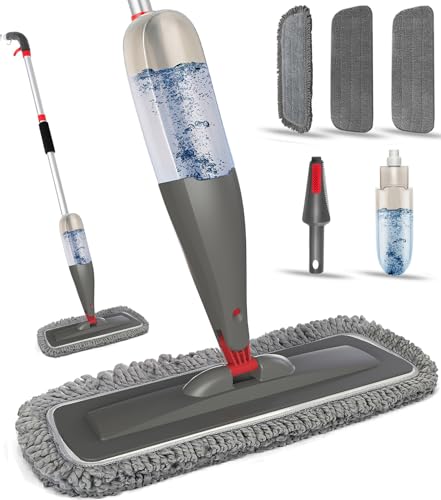
This is the entry-level spray mop for someone with mostly sealed hardwood and ceramic tile who wants a no-fuss solution. The trigger sprays a fine mist directly onto the floor, letting you control moisture without a bucket in tow. The microfiber pads are washable and reusable, which keeps long-term costs low. Owners praise the lightweight handle and the fact that it reaches under furniture without disassembly.
- Pros: Washable pads eliminate ongoing refill costs; spray trigger allows precise moisture control on water-sensitive wood.
- Con: The flat head can struggle on heavily textured grout or deeply recessed tile lines.
Skip it if your floors are predominantly stone or unsealed concrete that needs aggressive scrubbing rather than a light mist-and-wipe approach.
Swiffer PowerMop Mopping Kit
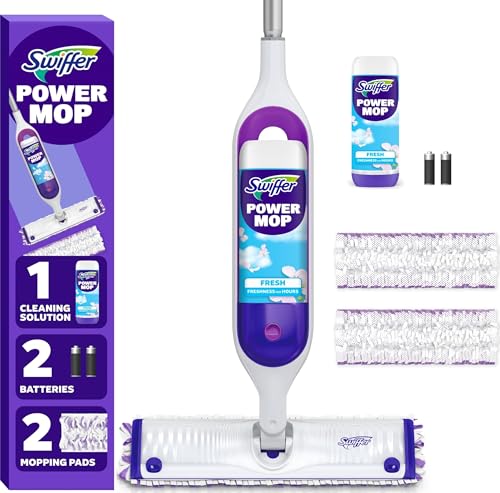
Swiffer’s electric option targets homeowners who want a single tool for kitchen, hallway, and bathroom floors without the chore of wringing. The motorized pad vibrates to lift grime, and the kit includes batteries, solution, and two replacement pads. Its no-bucket design is genuinely convenient for quick daily passes across mixed surfaces including sealed wood and vinyl. The brand ecosystem means refills are widely stocked at grocery and big-box stores.
- Pros: No bucket or hand-wringing needed; multi-surface versatility from tile to sealed wood.
- Con: Ongoing cost of proprietary liquid refills and disposable pads adds up over months of use.
Skip it if you prefer washable pads and want to minimize recurring supply expenses after the initial purchase.
O-Cedar EasyWring Microfiber Spin Mop & Bucket System + 2 Extra Refills
This is the traditionalist pick for thorough wet mopping. The spin bucket lets you control saturation with a foot pedal, and the microfiber mop head absorbs significantly more liquid than flat pads. The inclusion of two extra refills in the set means you are covered for an extended period without a separate purchase. Owners report it handles large tile and laminate floors efficiently, especially after cooking splatter or pet accidents.
- Pros: Foot-pedal wringing keeps hands dry and moisture level adjustable; extra refills included in the box.
- Con: The bucket adds bulk and requires storage space that smaller apartments may lack.
Skip it if you need something compact for quick spot cleaning or if you dislike the two-step bucket-and-mop workflow.
BPAWA Microfiber Mops for Floor Cleaning: Flat Mop for Hardwood Tile Wood
The BPAWA flat mop is designed for households where floor finish integrity matters. The microfiber head is gentle enough for oiled hardwood and engineered wood, and the slim profile slides under beds, sofas, and low shelving. Owners appreciate the swivel joint that makes corner coverage painless. At its price point, it competes directly with the Spray Mop above but without the trigger mechanism.
- Pros: Slim head reaches under furniture easily; gentle on finished and oiled wood surfaces.
- Con: Without a spray function, you must pre-wet the pad or manage moisture separately.
Skip it if you want integrated water delivery or plan to mop heavily soiled tile with embedded grime.
Spray Wet Mops for Floor Cleaning: Hardwood Floor Mop Refillable Dust Mop
At the lowest price in this roundup, this dual-purpose mop handles dry dusting and wet cleaning from the same head. The refillable reservoir accepts water or mild cleaner, and the microfiber pad captures fine particulate during dry passes. It is ideal for renters or anyone who wants a single mop that tackles both sweeping and mopping duties without switching tools.
- Pros: Most affordable option in the group; doubles as a dust mop for daily maintenance.
- Con: Build quality reflects the price, and the joint may loosen with heavy use over time.
Skip it if your primary need is deep wet cleaning on stubborn tile or stone, where a dedicated spin mop delivers better results.
CLEANHOME Mops for Floor Cleaning for Hardwood, Marble, Tile Floor Mopping
This mop markets itself to homes with varied flooring, and its pad material is soft enough for marble and polished stone without risking micro-scratches. The telescoping handle adjusts to user height, reducing back strain during longer sessions. Owners with mixed tile-and-wood layouts report it handles transitions well without leaving wet streaks on porous stone surfaces.
- Pros: Telescoping handle accommodates different user heights; pad safe for sensitive stone surfaces.
- Con: Replacement pads are less universally available than those for established brands like Swiffer.
Skip it if you want the easiest possible refill sourcing at a local store without ordering online.
JOYMOOP Wall Mop and Bucket Set, Hands-Free Flat Floor Mop
Originally designed for wall and vertical surface cleaning, this set adapts well to large floor areas. The hands-free bucket wrings the flat pad without bending or squeezing, making it a strong choice for people with mobility concerns or those tackling commercial-sized floors. Three washable microfiber pads support alternating wet and dry use within a single cleaning session.
- Pros: Hands-free wringing eliminates physical strain; three included pads cover wet and dry cycles.
- Con: The flat pad covers less area per pass than a string or spin mop on wide open floors.
Skip it if you primarily clean small or medium rooms where the bucket-and-wring workflow is overkill.
KeFanta Commercial Mop Heavy Duty Industrial Mop, 60″ String Wet Cotton Mops
This is the outlier in a home-focused roundup. The 60-inch cotton string head absorbs enormous volumes of liquid and is built for gymnasium floors, restaurant kitchens, and warehouse aisles. For a typical household it is oversized, but for owners with large attached garages, barn conversions, or open-plan commercial spaces, no other mop here matches its capacity per dip.
- Pros: Exceptional liquid absorption for large-area wet mopping; built to withstand commercial wear.
- Con: Far too large and heavy for standard residential rooms or tight maneuvering around furniture.
Skip it unless your cleaning area genuinely exceeds typical home floor sizes or you need industrial-grade durability.
Buying Guide
Water Control and Moisture Management
The single most important factor when choosing among floor mops for home use is how well you can regulate the amount of moisture hitting your surface. Hardwood and laminate swell and warp with over-saturation, while sealed tile and marble tolerate more liquid. Spray mechanisms and foot-pedal wring buckets give you the finest control. If your home mixes materials, prioritize a mop where you can dial moisture down for wood and up for tile without switching tools.
Pad Material and Replacement Economics
Microfiber pads outperform cotton for trapping fine dust and absorbing liquid, but their longevity depends on washing frequency and quality. Before purchasing, check whether replacement pads are proprietary or universal. Proprietary pads from major brands are widely stocked but cost more per unit. Universal or washable pads keep your ongoing budget low. Calculate the annual refill cost, not just the sticker price, when comparing mops that are within a few dollars of each other.
Ergonomics and Storage Footprint
A mop with a bucket requires more storage than a spray model, and the wringing mechanism determines whether you are bending, squeezing, or stepping on a pedal. For anyone with knee, back, or grip concerns, a hands-free bucket or trigger-spray design matters more than pad size. Measure your available closet or pantry depth before committing to a system with a tall spin bucket, especially in apartments where vertical storage is limited.
Our Verdict
The O-Cedar EasyWring Spin Mop & Bucket takes the top pick for most households. Its foot-pedal wringing gives the best moisture control of any product here, the included extra refills offset part of its premium price, and the microfiber head performs well on tile, laminate, and sealed hardwood without streaking.
For the tightest budget, the Spray Wet Mop at the lowest price delivers both dry dusting and wet mopping in a single tool, and its refillable reservoir means you are not buying proprietary solution.
If your home is a large open-plan layout or a commercial-adjacent space, the JOYMOOP Wall Mop and Bucket Set wins on ergonomic grounds because its hands-free wringing and multiple washable pads reduce fatigue across hundreds of square feet in a single session.
FAQ
Can I use a spray mop on unsealed concrete?
Spray mops are designed for sealed or finished surfaces where a controlled mist is appropriate. Unsealed concrete absorbs liquid unevenly and may require a heavier wet mop with a string head, such as the KeFanta Commercial Mop, to distribute moisture and cleaner evenly across the porous surface.
How often should microfiber mop pads be replaced?
Most quality microfiber pads last several months of regular washing at high temperature without losing absorbency. Owners should replace them once the fibers mat down or the pad no longer rinses clean, typically after many wash cycles depending on use frequency and pad construction.
Do electric mops clean better than manual ones?
Electric vibrating pads can lift dried-on grime with less physical pressure, which benefits users with limited grip strength. For routine cleaning of well-maintained floors, a good manual microfiber mop with proper moisture control achieves equivalent results at a lower long-term cost without dependence on batteries or proprietary solutions.
Is a spin bucket mop worth the extra space?
If you mop frequently and deal with larger tile or laminate areas, the spin bucket’s ability to rinse and adjust saturation between passes makes the cleaning noticeably faster and more consistent. For small apartments or occasional quick touches, a spray or flat mop without the bucket is more practical and stores easily.