
Key takeaways
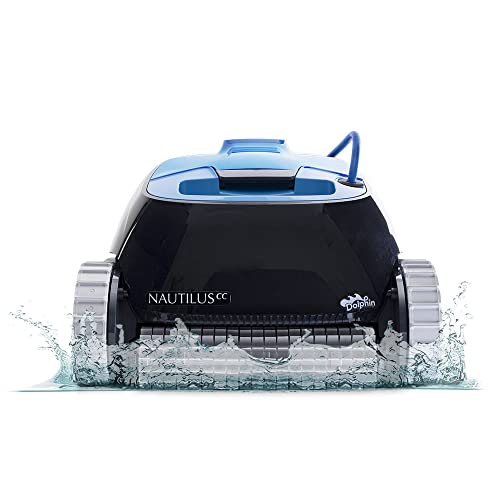
- Best corded wall climber: Dolphin Nautilus CC Plus
- Best cordless overall: Beatbot AquaSense 2 Pro
- Best premium smart cordless: Beatbot AquaSense 2 Ultra
- Best value cordless wall and waterline: Aiper Scuba S1
- Best premium Aiper: Aiper Scuba X1 Pro Max
- Best self-charging solar option: Wybot S2 Solar
- Best mid-range cordless alternative: Wybot C2
The best wall-climbing pool cleaner with waterline cleaning for most inground pools is the corded Dolphin Nautilus CC Plus, while the Beatbot AquaSense 2 Pro is the strongest cordless pick, the Aiper Scuba S1 is the value cordless option, and the Beatbot AquaSense 2 Ultra, Aiper Scuba X1 Pro Max and Wybot S2 Solar are the premium cordless choices. The Wybot C2 sits in the middle. Which one fits depends less on brand than on your pool surface, your outlet position and how much you care about the waterline.
Almost every robotic pool cleaner will pick up debris from the floor. The hard part is the walls and the waterline, where scum, oils, pollen and sunscreen build a ring that the floor-only machines never touch. Cleaners that can climb tile, vinyl or plaster and scrub that ring are a different class, and they cost more, so it pays to know what you are buying. This guide covers how climbing works on different surfaces, which brush types matter, how cable length and swivel affect tangling, and how cordless models change the equation.
Our top picks


As an Amazon Associate we earn from qualifying purchases at no extra cost to you.
Quick picks
- Best corded wall climber: Dolphin Nautilus CC Plus
- Best cordless overall: Beatbot AquaSense 2 Pro
- Best premium smart cordless: Beatbot AquaSense 2 Ultra
- Best value cordless wall and waterline: Aiper Scuba S1
- Best premium Aiper: Aiper Scuba X1 Pro Max
- Best self-charging solar option: Wybot S2 Solar
- Best mid-range cordless alternative: Wybot C2
How we chose
This guide is research-based. We compared manufacturer specifications, published product pages and what buyers and reviewers repeatedly report about wall climbing, waterline cleaning and reliability. We did not run our own measurements. Many of the sources we read carry affiliate links, so we weighted points where they agree and treated single-source claims cautiously. Specs for the newest models change quickly, so confirm cable length, battery life and surface compatibility on the current product page. Criteria, in order of weight:
- Genuine waterline cleaning. Does it scrub the line at the water surface, or merely skim along it?
- Wall climbing by surface. Tile, plaster, fiberglass and vinyl grip differently.
- Brush type. Brush material decides scrubbing and grip.
- Power and cable. Cable length, swivel quality and, for cordless units, battery runtime and charging.
- Filtration. Basket or cartridge capacity and how easy it is to empty.
- Pool fit. Pool size, shape, steps, and any cover or automation you use.
Waterline cleaning: what it really means
Product pages often say a robot “cleans the waterline.” That phrase covers three very different behaviors, and understanding them saves you money.
- Climbing to the waterline: The robot climbs the wall and reaches the surface line but turns away quickly. It brushes the line briefly at most.
- Hugging the waterline: The robot travels along the water line for a set time, scrubbing as it goes. This is real waterline cleaning, and it is what you want.
- Skimming the surface: Some units float and skim surface debris, but do not scrub the wall at the line. That removes leaves and pollen, not the oily ring.
Look for descriptions that say the robot travels along the waterline with its brush in contact, and for reviewer comments that confirm the ring actually disappears. If the oily ring is your main complaint, treat waterline scrubbing as a core requirement, not a bonus.
Climbing by surface
| Surface | Climbing behavior | What to look for |
|---|---|---|
| Tile | Smooth and slippery when wet, so grip relies on the brush and drive tracks | Rubber or PVA brushes, strong drive, good suction or water flow |
| Plaster or pebble | Rough, so grip is easy but wear on brushes is higher | Durable brushes, replaceable parts |
| Fiberglass | Smooth gel coat, can be slippery | Rubber or PVA brushes and gentler scrubbing |
| Vinyl liner | Flexible and delicate, wrinkles can stall a robot | Soft brushes, no aggressive scrubbing, avoid sharp edges |
Many reviewers say budget cleaners without strong wall systems struggle on tile and vinyl. Models marketed as floor-only should not be expected to climb. For vinyl, confirm that the manufacturer approves its use on liners.
Brush types
- PVA or foam rollers: Soft and absorbent. They grip smooth surfaces such as tile and fiberglass and polish slime without scratching. They wear faster on rough plaster.
- Rubber (fin or paddle) brushes: Good for scrubbing and removing debris from rough surfaces. They work well on vinyl and plaster, and can be a little less grippy on slick tile.
- Bristle or active brushes: Stiffer and more aggressive. They scrub algae film but are harder on soft liners.
- Dual brush setups: Combine a roller with an active brush. Better for stubborn dirt but heavier and more expensive.
Match brush to surface first, then to the type of dirt. For a liner, avoid stiff brushes. For plaster, plan on replacing brushes on schedule.
Cable length and swivel: avoiding tangles
Corded robots use a floating power cable with a swivel that rotates so the cable does not twist as the robot turns. A good swivel and a tidy cable are the difference between a robot that works unattended and one that gets stuck every few cycles.
- Length: The cable must reach from the power supply to the farthest point in the pool. Short cables stall the robot at the end, and excessive length coils and tangles.
- Swivel: A swivel at the robot, and ideally another at the cable’s midpoint or at the power supply, reduces twisting.
- Floating cable: A floating design keeps the cable at the surface so it does not catch on steps or ladders.
- Layout: Place the power supply so the cable runs across the pool, not around the corners.
Cordless models remove the cable problem entirely, but replace it with battery runtime and charging. They are especially appealing for pools without a conveniently placed outlet.
The cleaners, one by one
1. Dolphin Nautilus CC Plus: best corded wall climber
Spec line: Corded · floor, wall and waterline cleaning · swivel floating cable (length in the 50 ft class, confirm on the listing) · cartridge-style filtration · inground pool focus
Best for: Inground pool owners with an outlet nearby who want the proven, no-fuss approach to walls and waterline.
Skip if: Your outlet is far from the pool, or you want smartphone control and a no-cord design.
- Pros: Frequently singled out for strong climbing and waterline coverage, no battery to degrade, simple operation.
- Cons: Cord to manage, heavier to lift out of the water, and fewer smart features than the newest cordless models.
2. Beatbot AquaSense 2 Pro: best cordless overall
Spec line: Cordless · floor, wall and waterline cleaning · rechargeable battery · app control and smart path planning · premium cost tier
Best for: Owners who want corded-class wall and waterline performance without a cable.
Skip if: You are on a tight budget, or your pool is very large and you need long uninterrupted runtime.
- Pros: Highlighted in reviews as one of the first cordless units to approach corded wall and waterline performance, no cable to tangle.
- Cons: Premium cost, battery life limits cycle length, and charging is required between cleans.
3. Beatbot AquaSense 2 Ultra: best premium smart cordless
Spec line: Cordless · multi-surface cleaning including floor, walls, waterline and surface · AI-assisted mapping and path planning · premium cost tier
Best for: Buyers who want the most automation and the widest cleaning coverage in one unit.
Skip if: A simpler, cheaper cordless unit meets your needs, since the extra cost buys features beyond waterline scrubbing.
- Pros: Top of the range with smart features and broad coverage.
- Cons: Highest cost tier, and added complexity means more to learn and maintain.
4. Aiper Scuba S1: best value cordless wall and waterline
Spec line: Cordless · floor, wall and waterline cleaning · rechargeable battery with a runtime of roughly 180 minutes as listed by one major review · app support
Best for: Owners who want genuine wall and waterline cleaning without a cable, at a mid-range cost.
Skip if: You have a very large or heavily shaded pool with heavy debris, where a corded or higher-end unit may be more capable.
- Pros: Delivers wall and waterline cleaning at about half the cost of premium cordless options, per several roundups.
- Cons: Not as feature-rich as premium models, and battery life limits cleaning of large pools in one pass.
5. Aiper Scuba X1 Pro Max: premium Aiper
Spec line: Cordless · floor, wall, waterline and surface cleaning · smart control · premium cost tier
Best for: Owners who want the top Aiper with smart features and extra coverage.
Skip if: You mainly want waterline scrubbing on a budget. The S1 covers that for less.
- Pros: Frequently ranked among the best premium cordless smart cleaners.
- Cons: High cost, and some of the extras are beyond what a typical pool needs.
6. Wybot S2 Solar: best self-charging option
Spec line: Cordless · solar-assisted self-charging · floor, wall and waterline cleaning · premium cost tier
Best for: Sunny locations where a pool robot can float and recharge itself between cleans, reducing manual charging.
Skip if: Your pool is shaded for much of the day, or you want the lowest possible cost.
- Pros: Self-charging reduces how often you must handle it, and it is well regarded in ranking comparisons.
- Cons: Premium cost, and solar charging depends on sunlight.
7. Wybot C2: mid-range cordless alternative
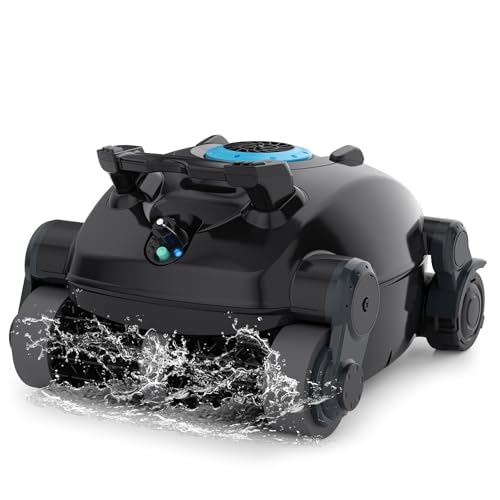
Spec line: Cordless · gyroscope-based navigation · dual filtration · wall and floor cleaning
Best for: Buyers who want a cordless unit from a different brand at a more moderate cost.
Skip if: Strong waterline scrubbing is your top requirement. Confirm that waterline cleaning is supported on the exact model before buying.
- Pros: Cordless convenience with navigation and filtration features.
- Cons: Waterline capability and runtime vary by model and listing, so verify.
Models to skip for walls
Budget cordless units in the entry-level tier, such as the Aiper Scuba SE and Seagull SE class, are marketed mainly for floor cleaning. Several reviewers advise not expecting wall climbing or waterline scrubbing from them. If walls and waterline are your priority, spend more or choose a corded model.
Comparison table
| Model | Power | Waterline | Smart features | Best for | Cost tier |
|---|---|---|---|---|---|
| Dolphin Nautilus CC Plus | Corded | Yes | Basic | Proven wall and waterline cleaning | Mid-range to premium |
| Beatbot AquaSense 2 Pro | Cordless | Yes | App and path planning | Cordless with corded-class cleaning | Premium |
| Beatbot AquaSense 2 Ultra | Cordless | Yes | AI mapping | Maximum automation | Premium |
| Aiper Scuba S1 | Cordless | Yes | App | Value cordless wall and waterline | Mid-range |
| Aiper Scuba X1 Pro Max | Cordless | Yes | Smart control | Premium Aiper | Premium |
| Wybot S2 Solar | Cordless, solar-assisted | Yes | Smart features | Self-charging in sunny spots | Premium |
| Wybot C2 | Cordless | Confirm on listing | Gyroscope navigation | Mid-range alternative | Mid-range |
Feature sets and revisions change often, so confirm the exact capabilities on the current listing.
Worked example: will the cable reach, and will the battery cover the pool
Take a 16 x 32 ft rectangular inground pool, 5 ft deep at the center, with the outlet placed 12 ft from the nearest corner.
- Longest straight path in the pool: The diagonal is the square root of (16 squared plus 32 squared), which is the square root of 1,280, about 35.8 ft.
- Add the distance from the outlet to the pool edge: 12 ft. The power supply should sit as far from the water as the manual requires, so the cable needs to cover that gap too.
- Add depth for climbing: If the robot climbs a 5 ft wall near the far corner, add roughly 5 ft.
- Total cable needed: 35.8 + 12 + 5 is about 53 ft. A cable in the 50 ft class could leave the far corner at its limit, so either move the outlet or power supply closer, or choose a longer cable.
- Cordless check: Surface area is 16 x 32 = 512 sq ft, and wall plus waterline area adds another 2 x (16 + 32) x 5 = 480 sq ft of walls. That is nearly 1,000 sq ft of surface to cover. If a cordless robot’s listed runtime is around 180 minutes, check that its cycle covers floor, walls and waterline in one charge. If not, plan on floor-and-wall cycles on alternate days.
Decision rule: if the cable math leaves less than a few feet to spare, or the pool is large and the outlet is awkward, favor cordless. If the pool is moderate and the outlet is close, a corded unit avoids battery concerns.
Decision matrix
| Your situation | Best choice | Why |
|---|---|---|
| Inground pool, outlet close, want proven performance | Dolphin Nautilus CC Plus | Corded, strong wall and waterline record |
| No convenient outlet | Beatbot AquaSense 2 Pro or Aiper Scuba S1 | Cordless with wall and waterline cleaning |
| Want the most automation | Beatbot AquaSense 2 Ultra | AI mapping and wide coverage |
| Sunny site, want to handle it less | Wybot S2 Solar | Self-charging |
| Tight budget but still want waterline | Aiper Scuba S1 | Value cordless option |
| Vinyl liner pool | Any model confirmed safe for liners | Use soft brushes and confirm compatibility |
Setup and care tips
- Clean the filter after every cycle. A clogged filter cuts suction and climbing power.
- Check brushes regularly. Worn brushes lose grip and scrubbing power, and replacing them is cheaper than replacing the robot.
- Balance the water. Robots work best when the water is clean and chemistry is stable. Heavy algae blooms can overwhelm a robot.
- Remove it between cycles. Do not leave a robot in the pool all season. Lift it out, rinse it and store it out of the sun.
- Straighten the cable. For corded models, lay the cable out straight before each cycle and check the swivel.
- Charge cordless units properly. Follow the manufacturer’s guidance on charging and storing the battery.
- Remove obstacles. Pool toys, hoses and covers can trap a robot.
Safety notes
- Corded robots must be plugged into a GFCI-protected outlet, and the power supply should stay out of the water and at the distance the manual specifies from the pool edge, which is often around 10 ft or more.
- Unplug a corded robot, or power down a cordless one, before lifting it out of the water or touching the brushes.
- Do not swim while a robot is running.
- Charge cordless batteries as directed, away from water and heat, and never use a damaged battery or charger.
- Robots can be heavy when wet and full of water, so let them drain and lift with both hands.
- Keep pool chemicals sealed and separate, and avoid running a robot while shock treatment is high, unless the manual allows it.
Common mistakes
- Assuming every robot climbs. Entry-level units often do not.
- Confusing skimming with scrubbing. Check that the robot brushes the waterline.
- Underestimating cable length. Do the math before you buy.
- Ignoring the surface. A brush that suits plaster may be wrong for vinyl.
- Neglecting maintenance. Full filters and worn brushes kill performance.
Frequently asked questions
Which robotic pool cleaner climbs walls and cleans the waterline best?
The Dolphin Nautilus CC Plus is a frequent pick for corded wall and waterline cleaning, and the Beatbot AquaSense 2 Pro leads cordless picks.
Confirm that the exact model scrubs the waterline, not just climbs to it.
Can budget robotic pool cleaners climb walls?
Most entry-level robots are built for floors and do not climb walls reliably. Several reviewers advise against expecting wall climbing from them.
If walls and waterline matter, plan to spend more or choose a corded model with a proven wall system.
Corded or cordless: which is better?
Corded robots avoid battery limits and have a long record on walls, while cordless models remove cable tangles and need no outlet nearby.
Choose corded if the outlet is close and the pool is large, and cordless if cables are a hassle or the outlet is far.
Will a robot damage my vinyl liner?
Not if the manufacturer approves it for liners and you use soft brushes. Aggressive brushes and sharp edges can mark or snag vinyl.
Check compatibility on the product page and remove wrinkles or obstacles that could trap the robot.
What brush is best for tile?
PVA or foam rollers and rubber brushes both grip tile well. PVA tends to polish slime without scratching.
Check wear and replace brushes on schedule, since worn brushes lose grip on smooth surfaces.
How long should the cable be?
The cable should reach the farthest point of the pool from the power supply, including the diagonal, the distance to the outlet and any wall climb.
Measure the pool, add the outlet distance, and leave a few feet to spare so the robot is not pulled short.
How often should I run a robotic pool cleaner?
Many owners run it two to four times a week in swim season, and more after storms or heavy use.
Empty the filter after each cycle and run more often if the pool is under trees or in heavy use.
Does a robot replace brushing and chemicals?
No. A robot reduces manual brushing and vacuuming, but it does not balance water or sanitize.
You still need to test water and manage chemistry, and occasionally brush areas the robot misses, such as steps and corners.
Final recommendation
Pick the Dolphin Nautilus CC Plus if you have an outlet nearby and want the proven route, the Beatbot AquaSense 2 Pro if you want a cordless unit with corded-class wall and waterline work, and the Aiper Scuba S1 if you want cordless wall and waterline cleaning at a more modest cost. Step up to the AquaSense 2 Ultra, Scuba X1 Pro Max or Wybot S2 Solar only if you want extra automation or self-charging. Whichever you choose, do the cable and runtime math for your own pool, match the brush to your surface and keep the filter and brushes in good shape.


