Key takeaways
- It adds relaxing sound. The steady splash can soften traffic, neighbor, and HVAC noise. A tiered fountain usually produces more audible water than a small bubbling bowl, although the sound depends on water level, pump setting, and surrounding surfaces.
- It creates a focal point quickly. A fountain can make a plain patio, entryway, or garden bed feel more finished without a major landscape project. Decorative styles range from rustic barrels to faux stone and contemporary geometric designs.
- Installation is usually simpler than a built-in feature. Self-contained models generally require placement, assembly, water, and electricity rather than excavation or professional plumbing. That makes them practical for renters and homeowners who do not want permanent construction.
- There are options for different budgets. Basic tabletop or small floor fountains often cost roughly $40 to $100. More substantial multi-tier models commonly fall around $150 to $350, while premium stone, metal, or professionally installed features can cost much more.
- Moving water can make a small outdoor space feel more special. On a balcony, porch, or compact courtyard, a fountain may provide the sensory effect of a garden without requiring much planting space.
- Some models improve evening ambiance. Integrated LEDs, such as the white lighting described on the 40-inch Alpine model, add visibility and decoration after dark. Lighting is an enhancement, not a substitute for safe outdoor electrical setup.
- It can support a more restful routine. A fountain near a seating area may encourage you to spend more time outside. That lifestyle benefit is subjective, but it is often the main reason people remain happy with the purchase.
The Short Answer
Yes, a garden fountain is worth it if you want the sound and look of moving water and are willing to refill it, clean it, and protect the pump. That maintenance condition matters: a fountain is not a set-it-and-forget-it decoration. For the right patio, porch, or garden, it can add atmosphere for a reasonable price; for a hands-off homeowner, it can become one more outdoor chore.
What You Actually Get
A garden fountain is a self-contained water feature with a basin, pump, tubing, and one or more surfaces where water spills or bubbles. The pump recirculates the same water, so you do not need a permanent plumbing connection. Most residential models plug into a nearby outdoor-rated electrical outlet.
Our top picks
 Alpine Corporation 27" Tall Rustic Outdoor 2-Tier
- Enhance your outdoor space with the Alpine Corporation…
- This charming garden fountain features realistic faux wood…
- DURABLE and WEATHER RESISTANT: Crafted from durable, weather…
 Alpine Corporation
- This 4 Tier Rock Water Fountain features a…
- With a realistic gray stone finish, the Alpine…
- Enhance the beauty of your outdoor water fountain…
As an Amazon Associate we earn from qualifying purchases at no extra cost to you.
The experience depends heavily on scale. A compact fountain may work on a porch or small patio table, while a floor model needs a stable, level location and enough visual clearance to look intentional. A 27-inch Alpine Corporation rustic two-tier barrel fountain, listed at about $57.98, is the kind of relatively approachable option suited to a modest outdoor area. Its cascading flow is likely to be more decorative than room-filling.
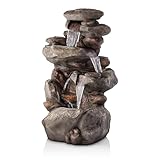
A taller 40-inch Alpine Corporation four-tier rock floor fountain, listed at $229, makes a stronger statement. Its multiple tiers create more visible movement, and its white LED lights can make it useful after sunset. The trade-off is a higher purchase price, a larger footprint, and more surfaces to keep free of mineral buildup and debris.
Before buying, measure three things: the available floor or tabletop area, the distance to the outlet, and the amount of clearance needed to fill and service the fountain. Also check the product specifications for the actual footprint, cord length, pump wattage, and weight. Height alone does not tell you whether a fountain will fit safely.
Pros
- It adds relaxing sound. The steady splash can soften traffic, neighbor, and HVAC noise. A tiered fountain usually produces more audible water than a small bubbling bowl, although the sound depends on water level, pump setting, and surrounding surfaces.
- It creates a focal point quickly. A fountain can make a plain patio, entryway, or garden bed feel more finished without a major landscape project. Decorative styles range from rustic barrels to faux stone and contemporary geometric designs.
- Installation is usually simpler than a built-in feature. Self-contained models generally require placement, assembly, water, and electricity rather than excavation or professional plumbing. That makes them practical for renters and homeowners who do not want permanent construction.
- There are options for different budgets. Basic tabletop or small floor fountains often cost roughly $40 to $100. More substantial multi-tier models commonly fall around $150 to $350, while premium stone, metal, or professionally installed features can cost much more.
- Moving water can make a small outdoor space feel more special. On a balcony, porch, or compact courtyard, a fountain may provide the sensory effect of a garden without requiring much planting space.
- Some models improve evening ambiance. Integrated LEDs, such as the white lighting described on the 40-inch Alpine model, add visibility and decoration after dark. Lighting is an enhancement, not a substitute for safe outdoor electrical setup.
- It can support a more restful routine. A fountain near a seating area may encourage you to spend more time outside. That lifestyle benefit is subjective, but it is often the main reason people remain happy with the purchase.
Cons
- Maintenance is unavoidable. Leaves, pollen, insects, dust, and algae eventually enter the basin. You will need to top off evaporated water and periodically empty, wipe, and rinse the fountain.
- The pump can clog or wear out. Small debris and mineral deposits reduce water flow. A pump may also become noisy if the water level drops too low. Follow the manufacturer’s cleaning and winter-storage instructions rather than assuming the pump is maintenance-free.
- Evaporation can be surprisingly fast. Sun, heat, wind, and exposed tier surfaces all increase water loss. During hot weather, a fountain may need checking every day or every few days. Letting the pump run dry can shorten its life.
- Hard water leaves visible residue. White mineral deposits can build up around the spillways and basin. Cleaning with an appropriate descaling method takes time, and frequent residue may influence which finish you choose.
- Electricity and water require careful placement. Use a properly rated outdoor outlet and keep connections protected from standing water. Avoid extension cords that are not intended for outdoor use, and follow local electrical guidance. A fountain should sit on a level, stable surface where it cannot be easily tipped.
- Some fountains are louder than expected. The sound may be pleasant near a chair but irritating outside a bedroom window or beneath a covered porch. Splashing can also stain nearby walls or flooring if the basin is overfilled or the water is diverted by wind.
- Seasonal weather creates extra work. In freezing climates, water left inside can expand and damage the basin, tubing, or pump. You may need to drain and store removable components before hard freezes.
- Large decorative fountains are not especially portable. A 40-inch model may be awkward to move after filling, and the water adds substantial weight. Decide on the location before assembly and keep access available for cleaning.
Who Should Buy It
Buy a garden fountain if you enjoy outdoor ambiance and will realistically maintain it. It is particularly suitable for someone with a level patio, porch, deck, or garden corner near a safe outlet. Buyers who want an affordable test should consider a smaller model in the roughly $50 to $100 range, such as the 27-inch barrel-style option. It offers a visible water feature without committing to the size or price of a larger rock fountain.
A bigger multi-tier fountain makes sense when the feature needs to serve as a visual centerpiece. Choose one with lighting if you regularly use the space in the evening and have room to leave it in place. Before ordering, confirm the footprint, materials, pump information, cord requirements, and whether the basin is designed for outdoor exposure year-round.
Who Should Skip It
Skip a fountain if you travel frequently, dislike routine cleaning, or do not have a convenient and safe power source. It is also a poor choice for a location where children or pets could knock it over, where freezing weather is severe and storage is unavailable, or where water splashing could damage wood, masonry, or electrical equipment.
If you mainly want visual decoration rather than sound, a dry planter, birdbath, or solar-free sculpture may deliver the look with less maintenance. Likewise, a built-in water feature may be a better long-term investment for a large landscape, but only if you are prepared for installation and ongoing service costs.
Cheaper Alternatives
| Option | Cost | Trade-off |
|---|---|---|
| Tabletop bubbling fountain | $25–$60 | Lowest commitment, but less water sound and a smaller visual impact. |
| Small solar bubbling feature | $30–$90 | No standard outlet required, but flow can weaken or stop in shade and cloudy weather. |
| DIY glazed-pot fountain | $40–$120 | Can be customized, but you must source the container, pump, tubing, and safe electrical setup. |
| Repurposed basin with a small pump | $35–$100 | Potentially inexpensive, but waterproofing, stability, and appearance depend on your materials. |
| Simple birdbath without a pump | $30–$100 | No electricity or pump cleaning, but it does not provide continuous water movement or sound. |
FAQ
Does a garden fountain use a lot of electricity?
Usually not compared with major outdoor appliances, but consumption varies by pump size and whether lights are included. Check the listed wattage and estimate cost using your local utility rate. LED lighting generally adds less energy use than traditional bulbs, but the pump may run for many hours. A timer can reduce operating time, provided the manufacturer allows timed operation.
How often do you need to clean a garden fountain?
Inspect the water every few days during hot or dusty weather and top it off before the pump intake is exposed. A more thorough cleaning may be needed every few weeks to every month, depending on debris, algae, minerals, and water temperature. Clean the pump intake and tubing whenever flow becomes weak or uneven.
Can a garden fountain stay outside in winter?
That depends on the construction and your climate. In areas with freezing temperatures, the safest general approach is to drain the fountain, remove the pump if possible, and store vulnerable parts in a dry location. Never assume that a heavy-looking faux-stone fountain is freeze-proof; check its care instructions first.
Are garden fountains safe around pets?
Use caution. Pets may drink from the basin, chew cords, or climb on an unstable fountain. Keep electrical connections protected, choose a tip-resistant location, and use clean water. If your pet has access to the fountain, confirm that any cleaning products are safe and discourage drinking if the manufacturer does not recommend it.