Key takeaways
- Creates instant atmosphere. The sound and movement of water can make an ordinary seating area feel more intentional and relaxing. Even a compact fountain can give a blank porch or patio a clear focal point.
- Adds height and texture. A 27-inch or 40-inch feature breaks up flat planting beds and helps draw the eye upward. Tiered designs are especially effective because the water remains visible from multiple angles.
- Requires less installation than a pond. Most freestanding fountains can be placed on a stable surface without digging or hiring a landscaper. Setup is generally a matter of positioning the unit, filling the basin, and connecting the pump according to the instructions.
- Can work in small spaces. You do not need a large yard. A compact model can fit near a door, along a wall, or beside outdoor seating, provided the surface is level and strong enough to support it.
- Offers flexible style choices. Rock-look, barrel, urn, and modern geometric designs can complement different homes. Integrated lights, such as the white LEDs on the Alpine four-tier model, make the feature more noticeable after sunset.
- May provide pleasant background sound. Cascading water can soften the perceived noise of nearby traffic or neighbors. It will not eliminate loud sounds, but it can add a consistent layer of white noise.
- Is easier to change than permanent landscaping. If you rearrange your patio or move homes, a freestanding fountain can usually move with you, assuming its size and weight are manageable.
The Short Answer
Yes, a garden fountain is worth it if you want a low-effort focal point and are willing to handle basic cleaning, refilling, and seasonal care. It is not the best buy if you want a completely maintenance-free decoration or expect it to transform a large yard on its own.
For 2026, outdoor fountains range from simple solar or tabletop pieces to substantial floor models costing several hundred dollars. The value comes less from the water itself than from the atmosphere: moving water adds sound, motion, and visual interest to a patio, porch, deck, or garden bed. Before buying, confirm that you have a level location, a nearby outdoor outlet if the fountain is electric, and enough time to keep the basin free of leaves, algae, and mineral buildup.
Our top picks
 Alpine Corporation
- This 4 Tier Rock Water Fountain features a…
- With a realistic gray stone finish, the Alpine…
- Enhance the beauty of your outdoor water fountain…
 Alpine Corporation 27" Tall Rustic Outdoor 2-Tier
- Enhance your outdoor space with the Alpine Corporation…
- This charming garden fountain features realistic faux wood…
- DURABLE and WEATHER RESISTANT: Crafted from durable, weather…
As an Amazon Associate we earn from qualifying purchases at no extra cost to you.
What You Actually Get
A freestanding fountain typically combines a water reservoir, a small pump, a decorative body, and sometimes lighting. The pump circulates the same water through the feature, so you are not continuously running a hose. You will still need to top it off because water evaporates and can splash out, especially in hot or windy weather.
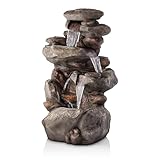
The experience depends heavily on scale. A small fountain may provide a gentle trickle and work well beside a front door or on a compact patio. A taller floor fountain creates more visible movement and can be heard from farther away. For example, the Alpine 40-inch, four-tier rock floor fountain is a substantial vertical feature with cascading water and white LED lights. Its listed price is $229, placing it in the midrange for a decorative floor fountain.
A smaller option, such as Alpine’s 27-inch rustic two-tier barrel fountain, costs $57.98. It takes up less visual and physical space and offers a lower-cost way to test whether you enjoy owning a water feature. Its shorter height and simpler two-tier design will generally make it more suitable for a porch, small patio, or modest garden corner than for anchoring a large landscape.
Neither type should be confused with a pond or a professionally installed water garden. A fountain is usually a self-contained accent. It does not provide the same habitat, planting area, or broad sound coverage as a larger installation, but it also avoids excavation, filtration systems, and major landscape work.
Pros
- Creates instant atmosphere. The sound and movement of water can make an ordinary seating area feel more intentional and relaxing. Even a compact fountain can give a blank porch or patio a clear focal point.
- Adds height and texture. A 27-inch or 40-inch feature breaks up flat planting beds and helps draw the eye upward. Tiered designs are especially effective because the water remains visible from multiple angles.
- Requires less installation than a pond. Most freestanding fountains can be placed on a stable surface without digging or hiring a landscaper. Setup is generally a matter of positioning the unit, filling the basin, and connecting the pump according to the instructions.
- Can work in small spaces. You do not need a large yard. A compact model can fit near a door, along a wall, or beside outdoor seating, provided the surface is level and strong enough to support it.
- Offers flexible style choices. Rock-look, barrel, urn, and modern geometric designs can complement different homes. Integrated lights, such as the white LEDs on the Alpine four-tier model, make the feature more noticeable after sunset.
- May provide pleasant background sound. Cascading water can soften the perceived noise of nearby traffic or neighbors. It will not eliminate loud sounds, but it can add a consistent layer of white noise.
- Is easier to change than permanent landscaping. If you rearrange your patio or move homes, a freestanding fountain can usually move with you, assuming its size and weight are manageable.
Cons
- It is not maintenance-free. Leaves, pollen, insects, and dust eventually enter the basin. Expect to remove debris, wipe surfaces, and clean the pump as needed. Neglect can lead to cloudy water, odors, algae, or reduced flow.
- Water must be replenished. Evaporation increases during hot, dry, or windy weather. A fountain that runs low can become noisy or damage its pump, so checking the water level needs to become part of your outdoor routine.
- Electric models need a safe power source. You will need an appropriate outdoor outlet and a cord arrangement that does not create a tripping hazard. Avoid relying on a distant indoor outlet or running an unsecured extension cord through a walking path.
- Winter can be a problem. Freezing water can damage reservoirs, tubing, or pumps. In cold climates, owners may need to drain, clean, and store the fountain or pump before freezing weather arrives. A large model may be inconvenient to move.
- Mineral deposits can affect appearance. Hard water may leave white scale on tiers and around the pump. Regular cleaning can reduce buildup, but it adds another ownership task.
- Sound levels are difficult to predict. A fountain advertised as soothing may be barely audible outdoors, while water splashing onto an uneven surface can become irritating. Placement and water level make a significant difference.
- It can attract unwanted attention from pets or children. Open basins may interest curious animals, and lightweight models can be vulnerable to being bumped. Consider stability and supervision before placing one in a busy family area.
- The total cost is higher than the purchase price. You may also spend on water, cleaning supplies, replacement pump parts, electricity, or a cover and storage solution. These costs are usually modest, but they should be part of the decision.
Who Should Buy It
Buy a garden fountain if you regularly use your outdoor space and want a decorative feature you can enjoy from a chair, dining table, or nearby window. It is a particularly good choice for renters or homeowners who want the effect of a water feature without building a pond. A freestanding design also makes sense when you want to finish a patio makeover quickly.
Choose the size based on the setting rather than the product photo. A 27-inch fountain may be proportional beside a porch chair or in a compact planting bed. A 40-inch, four-tier model can better anchor a larger patio or garden, but it will demand more visual attention and may be harder to move. In either case, measure the intended area first and leave enough clearance to access the basin and pump.
Who Should Skip It
Skip a fountain if you travel frequently, dislike routine cleaning, or live somewhere that freezes and have no practical storage space. It may also be a poor choice for a very windy location, where water loss and splash are likely to be constant. If your main goal is wildlife habitat, a planted birdbath or properly designed pond may serve you better. If your main goal is privacy or cooling, a fountain is unlikely to deliver enough coverage to replace screening plants, shade, or a fan.
Cheaper Alternatives
| Option | Cost | Trade-off |
|---|---|---|
| Simple birdbath | $20–$60 | Much cheaper and easy to place, but it does not provide continuous sound or circulating water. |
| Solar tabletop fountain | $25–$90 | Lower operating cost and no outlet required, but flow can be weak or inconsistent in shade and cloudy weather. |
| Decorative urn or planter without a pump | $30–$120 | Adds height and style with almost no mechanical maintenance, but lacks movement and water sound. |
| DIY bowl-and-pump feature | $40–$150 | Can be customized to fit your space, but requires more assembly and careful waterproofing. |
| Alpine 27-inch two-tier barrel fountain | $57.98 | A relatively affordable ready-made option, though its smaller height and two-tier design have less presence than a larger floor fountain. |
FAQ
How much does it cost to run a garden fountain?
The purchase price is usually the largest expense. Ongoing costs depend on the pump, how long you run it, local electricity rates, and how often you need to replace lost water. Check the product’s electrical specifications before buying rather than assuming every pump has the same energy use. Running the fountain only when you are using the patio can reduce operating time.
How often should a garden fountain be cleaned?
Inspect it weekly during the season and remove leaves or insects whenever you notice them. A deeper cleaning is needed when water becomes cloudy, flow slows, or mineral deposits appear. Follow the manufacturer’s instructions for removing and cleaning the pump. The exact schedule depends on weather, shade, debris, and water quality.
Are garden fountains noisy?
Most residential fountains are designed for a gentle trickle or cascade, not a loud rush. The sound changes with the water level, pump setting, tier design, and surface beneath the falling water. Place the fountain closer to your seating area if you want to hear it, and adjust the water level if splashing becomes excessive.
Should I leave my fountain running all the time?
Not necessarily. Continuous operation can provide consistent sound, but it also increases evaporation and gives debris more time to collect. Turning it off when you are away or during extreme weather is sensible. In freezing conditions, drain the fountain and protect the pump according to the manufacturer’s guidance.
Bottom line: A garden fountain is worth it when the mood, movement, and focal-point effect justify a small but recurring maintenance commitment. Start with a $57.98 compact model if you are uncertain; choose a larger $229 feature when you have the space and want the fountain to be a major part of the landscape.