Key takeaways
- No transformer information: A fixture-only listing may be inexpensive but incomplete for a first installation.
- Unclear voltage: Do not assume a 12V fixture works with a 24V transformer without explicit compatibility information.
- Unusually high lumen claims: Compare wattage, optics, and beam angle rather than trusting a large headline number.
- Very thin stakes or loose connectors: These are common failure points and can make alignment difficult.
- No IP rating or warranty: Outdoor suitability should be documented, not implied by words such as “waterproof.”
- Mixed color temperatures: Fixtures from different batches or brands may look noticeably different when installed together.
Choosing low voltage lights looks simple until you compare transformer capacity, cable length, beam spread, housing materials, and installation methods. Many shoppers focus on the fixture’s brightness or the number of lights in the box, then discover that the set does not cover the intended area, the cable is too short, or the transformer cannot support future additions.
The most common mistake is treating every “12V” landscape light as interchangeable. Some kits are designed for pathways, some for highlighting trees and walls, and others for mounting beneath steps or retaining walls. A 7W spotlight may be useful for a small tree but excessive for a narrow walkway, while a 3W hardscape fixture may disappear when aimed across a broad patio. Use the following guide to compare the parts that affect appearance, reliability, installation time, and total cost.
Our top picks
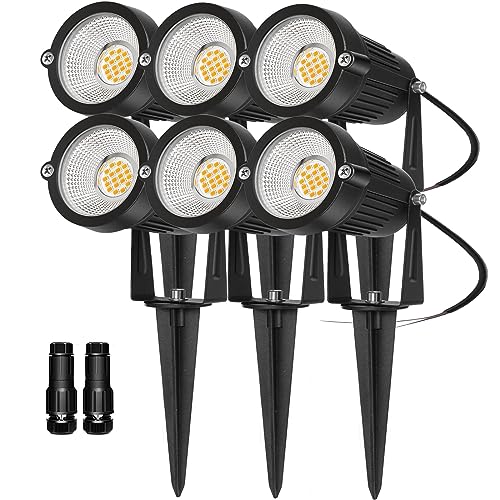 REEGOLD Low Voltage Landscape Lights Outdoor: 7W
- 12V 24V Low Voltage Landscape Lights: Low voltage…
- High Performance & Long Service Life: We used…
- IP65 Waterproof Rating: This pathway light has excellent…
 SUNVIE LED Low Voltage Landscape Lighting 12V
- ⭐8 PATHWAY LIGHTS + 4 SPOTLIGHTS - This…
- ⭐EASY AND QUICK INSTALLATION - DIYers friendly
- ⭐DURABLE QUALITY - These low voltage pathway lights…
| Product | Key specs | |
|---|---|---|
| REEGOLD Low Voltage Landscape Lights Outdoor: 7W | 12V 24V Low Voltage Landscape Lights: Low voltage… High Performance & Long Service Life: We used… IP65 Waterproof Rating: This pathway light has excellent… | Check price |
| SUNVIE LED Low Voltage Landscape Lighting 12V | ⭐8 PATHWAY LIGHTS + 4 SPOTLIGHTS - This… ⭐EASY AND QUICK INSTALLATION - DIYers friendly ⭐DURABLE QUALITY - These low voltage pathway lights… | Check price |
 Gardencoin Solid Brass Outdoor Landscape Spotlights Gardencoin Solid Brass Outdoor Landscape Spotlights | Check price | |
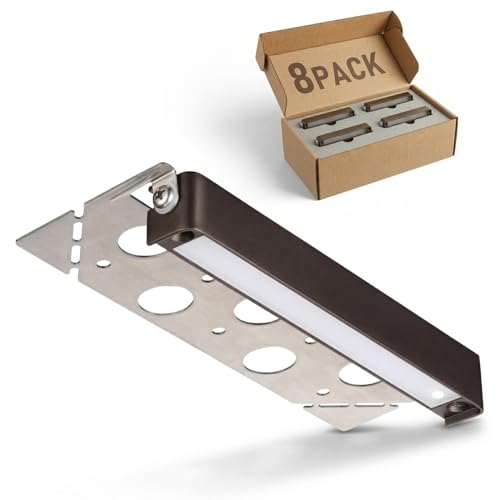 LEONLITE 8-Pack 7 Inch LED Hardscape Lighting LEONLITE 8-Pack 7 Inch LED Hardscape Lighting | Check price |
As an Amazon Associate we earn from qualifying purchases at no extra cost to you.
Decide These 3 Things First
- What are you lighting? Choose pathway fixtures for walking routes, spotlights for trees and architectural features, and hardscape lights for steps, walls, fences, and deck edges.
- How much coverage do you need? Measure the cable run and count fixture positions before shopping. A 50-foot run with eight lights may require more cable and connectors than a starter kit includes.
- Will you expand later? Add up the wattage of every fixture and leave roughly 20% to 30% transformer capacity unused. For example, eight 5W lights use 40W, so a 60W transformer gives useful headroom for voltage drop and future additions.
Size and Light Distribution
Fixture size affects both coverage and visual balance. Pathway lights commonly stand about 12 to 24 inches tall, with shades roughly 4 to 8 inches wide. Space them approximately 6 to 10 feet apart, adjusting for the path’s width and how much overlapping light you want. Shorter fixtures are less noticeable, while taller fixtures can spread light over planting beds and uneven ground.
Spotlights are usually 4 to 8 inches long and 2 to 4 inches wide. A compact 3W to 5W spotlight works for shrubs, small trees, address signs, or low garden walls. A 7W to 10W fixture is better suited to a mature tree trunk, a two-story facade, or a wide planting bed. Instead of judging by lumens alone, check the beam angle: approximately 15 to 30 degrees creates a narrow accent, while 35 to 60 degrees produces broader wash lighting.
Hardscape fixtures are often about 7 inches long and 1 to 2 inches deep. The LEONLITE eight-pack, for example, uses 3W, 4W, or 5W settings and a 2700K color temperature, making it more appropriate for steps, walls, and edges than for illuminating a large lawn. Plan the mounting surface first; a fixture that projects too far can catch feet, tools, or lawn equipment.
Material and Finish
Material is one of the clearest differences between inexpensive and premium landscape lighting. Aluminum fixtures are light, affordable, and easy to install. They are a practical choice for a seasonal display or a garden where fixtures may be repositioned frequently. Look for powder-coated finishes and stainless-steel hardware, since thin painted steel can rust at scratches and connection points.
Brass costs more but is valued for its weight, corrosion resistance, and ability to develop a natural patina. A brass spotlight is less likely to tip in loose soil than a very lightweight aluminum model. The Gardencoin solid-brass spotlight set is an example of this category; it is sold without an MR16 bulb, so the bulb cost and compatibility must be included in the budget.
Plastic housings can keep prices low, but they are more vulnerable to cracking, fading, and brittle stakes. Plastic is not automatically a poor choice for a low-risk location, but it is less attractive for permanent installations exposed to sprinklers, freezing weather, or accidental contact. For any material, inspect the stake, threaded connections, lens, and cable entry—not just the housing.
Construction and Weather Protection
For outdoor use, look for an IP rating. IP65 indicates protection from dust and water jets, which is generally suitable for rain and normal garden exposure. It does not mean the fixture should be submerged or placed in a location that regularly floods. IP67 provides stronger protection against temporary immersion, but the entire system—including connectors and transformer—must be rated appropriately.
Examine how the fixture joins its stake and how the wire enters the housing. A metal threaded stake and strain-relieved cable entry are preferable to a thin plastic joint. Quick connectors save time, but they should close firmly and be positioned above low spots where water can collect. For a more permanent installation, waterproof wire nuts, gel-filled connectors, or listed landscape-lighting connectors may offer better protection than loose push-fit contacts.
Also check whether bulbs are replaceable. Integrated LEDs can be slimmer and efficient, but a failed LED may require replacing the entire fixture. Fixtures using replaceable MR16 bulbs allow changes in brightness, beam angle, and color temperature, though they add a separate bulb purchase and another potential failure point.
Comfort, Color, and Performance
Most residential landscape lighting looks comfortable at 2700K to 3000K. A 2700K lamp produces a warm, amber-white appearance that works well with brick, wood, stone, and planting. Around 3000K looks cleaner and slightly whiter without becoming distinctly blue. Avoid choosing a fixture based only on maximum lumens; excessive brightness can create glare and make adjacent areas look darker.
For reference, a 3W LED landscape fixture may provide roughly 200 to 350 lumens, while a 5W fixture may provide about 350 to 500 lumens. A 7W fixture advertised at 700 lumens, such as the REEGOLD six-pack, can be useful for trees and focused accents. Actual results depend on optics, lens design, mounting height, and beam angle, so advertised lumens should be treated as a comparison point rather than a guarantee of usable light at a particular distance.
Choose 12V systems for the widest selection of residential accessories and straightforward compatibility. Some products support both 12V and 24V, but verify the transformer output and fixture requirements before mixing components. Keep cable runs as short as practical, use the correct wire gauge, and account for voltage drop on long runs. A timer, photocell, or smart transformer can improve convenience, but confirm that its rated load exceeds the system’s total wattage.
Price Tiers and Total Cost
Budget kits generally cost about $30 to $80 for four to eight aluminum fixtures, often using 3W to 7W lamps. The REEGOLD six-pack listed at $35.99 sits in this range and includes connectors, but buyers should verify whether a transformer, extension cable, and mounting accessories are included.
Midrange systems commonly cost $90 to $180 for eight to 12 fixtures, with better stakes, more consistent finishes, and more complete connector packages. The SUNVIE 12-pack at $149.99 is an example of a larger kit aimed at paths and mixed garden coverage. Price per fixture is not enough for comparison: a kit with a transformer and long cable may be a better value than a cheaper fixture-only bundle.
Premium sets often run from $150 to $300 or more for four to eight heavy-duty brass fixtures, higher-grade aluminum housings, or specialized hardscape lights. The six-pack Gardencoin brass set is listed at $159.99, but its bulb-free design means the final cost depends on the MR16 bulbs selected. The LEONLITE eight-pack at $99.89 occupies a midrange position for integrated hardscape lighting.
Include $15 to $50 for extra cable and connectors, $20 to $80 for a suitable transformer, and potentially $50 to $200 for professional installation, depending on trenching and access.
Warranty and Replacement Support
Look for at least a one-year warranty on budget fixtures and two to five years on better-built systems. A longer warranty is useful only if the manufacturer clearly identifies what it covers: LEDs, finish, cable, transformer, and connectors may have different coverage periods.
Before purchasing, check whether replacement stakes, lenses, bulbs, connectors, and individual fixtures are available. A 12-pack is less appealing if one damaged light requires replacing the entire system. Keep the receipt, installation instructions, and product specifications, especially when combining fixtures from different brands.
Delivery, Assembly, and Installation
Count the assembly steps before ordering. A plug-and-play kit may require attaching stakes, connecting cables, and setting the transformer timer. A bulb-based system may also require inserting bulbs, sealing lenses, and adjusting beam direction. Allow 30 to 60 minutes for a small kit on prepared ground; larger installations can take several hours once measuring, shallow trenching, and cable concealment are included.
Check package dimensions and weight if carrying boxes across a yard or up steps. A six-light aluminum kit may weigh under 8 pounds, while a brass set can weigh 10 to 20 pounds or more depending on the stake and accessories. Confirm that the transformer is included, that the plug is suitable for an outdoor receptacle, and that the cable length reaches the farthest fixture without stretching.
Spec Checklist
| Spec | Budget | Mid | Premium |
|---|---|---|---|
| Typical price | $30–$80 | $90–$180 | $150–$300+ |
| Fixture wattage | 3W–7W | 3W–8W | 5W–12W |
| Light output | 200–700 lumens | 300–800 lumens | 500–1,200 lumens |
| Housing | Plastic or aluminum | Powder-coated aluminum | Solid brass or heavy-duty aluminum |
| Color temperature | 2700K–3000K | 2700K–3000K | 2700K–3000K, sometimes adjustable |
| Weather rating | IP44–IP65 | IP65 | IP65–IP67 |
| Warranty target | 1 year | 2–3 years | 3–5 years |
Red Flags
- No transformer information: A fixture-only listing may be inexpensive but incomplete for a first installation.
- Unclear voltage: Do not assume a 12V fixture works with a 24V transformer without explicit compatibility information.
- Unusually high lumen claims: Compare wattage, optics, and beam angle rather than trusting a large headline number.
- Very thin stakes or loose connectors: These are common failure points and can make alignment difficult.
- No IP rating or warranty: Outdoor suitability should be documented, not implied by words such as “waterproof.”
- Mixed color temperatures: Fixtures from different batches or brands may look noticeably different when installed together.
FAQ
Are low voltage lights safe to install myself?
Many 12V landscape systems are designed for homeowner installation and do not require the same wiring work as line-voltage lighting. Use a transformer rated for outdoor use, plug it into a properly protected outdoor receptacle, and follow local electrical requirements. Shut off power before changing connections, and call a qualified electrician for line-voltage work or uncertain wiring.
How many low voltage lights can one transformer run?
Add the wattage of every fixture, then keep the total below the transformer’s rated capacity. For example, ten 5W lights require 50W, but a 75W transformer provides more practical headroom than a 50W model. Leave room for future fixtures and account for accessories that also draw power.
Should I choose 12V or 24V landscape lighting?
Choose 12V when you want broad compatibility with residential kits, bulbs, connectors, and replacement parts. A 24V system can be useful for longer runs because it may reduce voltage-drop problems, but every fixture, connector, and transformer must support 24V. Do not mix voltage ratings casually.
What color temperature is best for a yard?
For most homes, 2700K is the safest starting point because it creates a warm, relaxed appearance and limits harsh glare. Choose 3000K when you want a cleaner look for concrete, gray stone, or modern architecture. Keep the color temperature consistent throughout connected views for a more intentional result.