Key takeaways
- Choosing between concrete vs resin garden fountains is less about finding a universally better material and more about matching the fountain to your space, climate, budget, and willingness to maintain it. A concrete fountain can provide substantial weight, timeless character,…
What's inside
Choosing between concrete vs resin garden fountains is less about finding a universally better material and more about matching the fountain to your space, climate, budget, and willingness to maintain it. A concrete fountain can provide substantial weight, timeless character, and a permanent focal point. Resin, often made from fiberglass-reinforced plastic or a similar composite, is easier to move, usually less expensive, and often simpler to install.
The real buyer decision is practical: do you want a fountain that feels built into the landscape, or one you can reposition, replace, or take with you? Concrete may suit a long-term home with a strong foundation and classic landscaping. Resin may be the smarter choice for a balcony, rental, small patio, or anyone concerned about lifting and winter damage. Here is how the two materials compare in 2026.
As an Amazon Associate we earn from qualifying purchases at no extra cost to you. Product prices and availability are accurate as of the date shown and are subject to change.


Quick Verdict
Choose concrete if you want a heavy, traditional fountain that resists tipping and looks increasingly natural as it ages. It is particularly appealing for large yards, formal gardens, and homeowners who plan to stay in the same property for many years. Expect more difficult installation, a heavier base, and greater care in freeze-thaw climates.
Choose resin if you want lower upfront cost, easier handling, and more flexibility. Resin fountains can imitate stone, metal, or wood while weighing a fraction of comparable concrete models. They work well on patios, decks, apartments, and rental properties, although finishes may fade or scratch sooner and lightweight units can require anchoring in windy locations.
Side by Side
| Factor | Concrete fountains | Resin fountains |
|---|---|---|
| Comfort and handling | Heavy and difficult to lift; installation may require two or more people | Lightweight and easier to assemble, move, and store |
| Durability | Very sturdy, but porous and vulnerable to cracking from severe freeze-thaw cycles | Resists chips and moisture well, but can dent, crack, or become brittle after prolonged sun exposure |
| Price range | About $150-$2,000 or more, depending on size and detailing | About $60-$700, with larger decorative models costing more |
| Maintenance | Needs cleaning, sealing or surface care, and winter protection in cold regions | Usually needs routine cleaning and finish protection; pumps and tubing require the same care as concrete units |
| Space needed | Often 24-60 inches wide; requires a firm, level base | Commonly 16-40 inches wide; suitable for smaller patios and balconies where permitted |
| Look | Authentic stone appearance with substantial texture and visual weight | Can convincingly mimic stone, bronze, slate, or wood, but some finishes look less natural up close |
| Resale and longevity | May add landscape character and remain attractive for decades with proper care | Usually treated as a replaceable decor item rather than a permanent landscape feature |
| Best for | Permanent gardens, traditional homes, windy yards, and large landscapes | Rentals, apartments, small patios, frequent movers, and modest budgets |
Where Concrete Wins
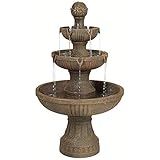
Concrete’s biggest advantage is stability. A two-tier fountain weighing 150-400 pounds is far less likely to shift when children brush against it, pets investigate it, or strong wind hits a tall upper tier. That weight also gives a concrete fountain a built-in sense of permanence. It looks like part of the garden rather than an accessory placed on top of it.
Concrete also offers authentic texture. Cast stone develops subtle weathering, mineral variation, and moss growth that many homeowners find attractive. Traditional urns, cherubs, basins, and tiered designs are especially convincing in concrete. For a formal entry, courtyard, or symmetrical planting bed, the material’s mass can balance shrubs and mature trees better than a lightweight fountain.
Repairability is another advantage. Small surface chips and hairline cracks can often be patched with a masonry repair product, although structural cracks or leaks may require professional attention. A level foundation is essential. A compact unit may need a 24-by-24-inch pad, while a large fountain may require a wider reinforced slab or professionally prepared base. If you are setting the fountain in soil, do not assume the ground will remain level after rain or frost.
Concrete is not maintenance-free. Its porous surface can absorb water, and repeated freezing and thawing can cause cracking or flaking. In regions with hard winters, drain the basin, disconnect the pump, remove standing water, and use a breathable cover. Avoid sealing in moisture with an unsuitable plastic cover. Any electrical connection should use a weather-rated outdoor outlet with ground-fault protection.
For a permanent installation, anchoring can add peace of mind. A quick-setting product such as Instant Anchoring Cement, 10 Pound Bag, Quick Setting, Anchoring Mix, priced at $21.99, may be useful for securing compatible bases or hardware when the manufacturer permits anchoring. Follow the fountain instructions and local requirements rather than bonding the basin in a way that prevents future repairs.
Where Resin Garden Fountains Wins
Resin wins on convenience. A 24-inch resin fountain may weigh roughly 15-35 pounds, compared with well over 100 pounds for a similarly sized concrete design. One person can often carry it through a doorway, place it on a patio, or move it into storage before a storm. That makes resin a practical choice when stairs, narrow gates, or upper-level outdoor spaces make heavy installation difficult.
Lower weight also reduces the structural demands on a deck or balcony, though you should still check the building’s load rules. Remember to calculate the fountain’s operating weight: water adds approximately 8.3 pounds per gallon, and a basin holding 3 gallons adds about 25 pounds before accounting for the fountain itself.
Resin is generally less porous than concrete, so it does not absorb water in the same way. Many models are molded with faux-stone or metallic finishes and include a recirculating pump. A small unit may use a 12- to 20-watt pump, while a taller multi-tier model may use 25-45 watts. Actual consumption depends on the pump and how many hours it runs.
The trade-off is a less substantial feel. Lightweight fountains can wobble or tip in exposed yards, particularly if the top tier is tall or the basin is narrow. Place the fountain on a level surface, keep it filled to the recommended line, and consider a discreet anchor or weighted base in windy locations. Avoid dragging resin across concrete, because molded finishes can scratch.
Sun exposure deserves attention. Direct ultraviolet light can fade darker finishes over time, while extreme heat and cold may make some plastics more brittle. Positioning the fountain in partial shade and applying a manufacturer-approved exterior protectant can extend its appearance. Resin is usually the better value when you want the sound of water and decorative impact without making a decades-long landscape commitment.
Cost Over 5 Years
A realistic five-year comparison includes more than the purchase price. For a medium fountain, assume a resin model costs $80-$300 and a comparable concrete model costs $250-$900. A small decorative resin fountain can fall near the lower end; a substantial cast-stone fountain with multiple tiers can exceed the upper end.
Electricity is usually modest. A 20-watt pump running 10 hours per day uses about 73 kilowatt-hours per year. At $0.16 per kilowatt-hour, that is approximately $12 annually, or $60 over five years. A 40-watt pump used on the same schedule costs about $23 per year, or $115 over five years. Water replacement varies by heat and splash, but budgeting $2-$8 per month for makeup water and occasional cleaning supplies is reasonable, adding roughly $120-$480 over five years.
That puts a typical five-year operating budget, excluding repairs, around $180-$575 for either material. Resin may have lower initial and moving costs, while concrete may justify higher spending if it lasts for decades. Budget another $10-$50 for a cover, cleaning supplies, replacement tubing, or a small pump. For crack and joint work around a properly installed base or nearby hardscape, SIKA Closed Cell Foam Backer Rod, Gray, 3/4-inch Diameter x 20 feet, priced at $9.99, can be used as a filler before compatible sealant; it is not a substitute for repairing a cracked fountain basin.
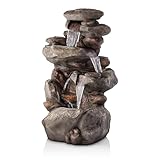
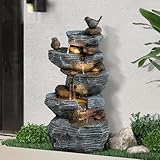
For price context, entry-level resin designs can resemble the Alpine Corporation 27-inch Tall Rustic Outdoor 2-Tier Barrel Pump Water Fountain, listed at $57.98, while larger decorative resin-style cascades can approach the $79.99 price of the Dephet 5-Tiers Cascading Rock Water Fountain Outdoor. These examples illustrate the broad entry-level market rather than a guarantee of material, pump performance, or long-term durability.
Which One for Your Home
Small apartment
Choose resin, provided your building permits outdoor water features and the surface can support the filled weight. Look for a unit no more than 24-30 inches wide, with a 1-3 gallon basin and a quiet pump. Place it where splashing will not damage walls, flooring, or neighbors’ spaces. Concrete is usually too heavy and cumbersome for this setting.
Family with kids or pets
Concrete is preferable when tipping is the main concern, especially for a low, wide basin. Avoid sharp edges, deep open bowls, and unstable tall designs. Resin can still work if it has a broad footprint and is secured properly. Keep electrical cords protected, use a ground-fault circuit interrupter outlet, and supervise children around standing water.
Rental
Resin is the clear choice. You can take it with you, avoid permanent foundations, and replace a scratched or faded unit without altering the property. Choose a modest fountain that can be moved without a hand truck, and use removable stabilization methods rather than drilling or pouring concrete without written permission.
Long-term home
Concrete makes more sense for a permanent landscape plan, particularly near an entry path, courtyard, or established planting bed. Spend time on the foundation, drainage, pump access, and winterization plan. If you may redesign the yard within a few years, resin gives you similar water sounds with less commitment.
FAQ
Which material lasts longer outdoors?
Well-maintained concrete can last for decades, but freeze-thaw cycles, poor drainage, and structural movement can cause cracking. Resin may last many years when shaded and protected, but its finish and plastic components generally have a shorter visual lifespan. Climate and installation matter as much as material.
Are concrete fountains safe in freezing weather?
They can be, but never allow water to freeze inside the basin or pump housing. Drain the fountain completely, disconnect and store the pump, remove drain plugs if the manufacturer recommends it, and cover the unit with a breathable protective cover.
Can a resin fountain stay outside all year?
Often yes, if the manufacturer rates it for outdoor use. Clean it regularly, protect it from severe weather, and inspect it for fading, cracks, and loose tubing. In areas with harsh winters, storing it indoors is the safest option.
Do concrete fountains use more electricity?
No. Electricity use depends primarily on the pump’s wattage and operating schedule, not the basin material. A 20-watt pump generally costs much less to run than a 40-watt pump, whether it circulates water through a concrete or resin fountain.