Key takeaways
- The listing gives only the outside dimensions and omits the clear walking width.
- The advertised height includes finials, but the usable opening is below 6.5 feet.
- No tubing diameter, wood-post dimensions or material thickness is provided.
- The product includes short stakes but gives no guidance for wind, concrete or hard surfaces.
- Photos show mature vines, lights or fabric that are not included.
- Wood is described as “outdoor” without a species, treatment or finish specification.
- Reviews repeatedly mention missing bolts, misaligned holes, bent tubing or unclear instructions.
- The warranty excludes nearly every weather-related issue and replacement parts are unavailable.
- A very wide arbor has a narrow base and no cross-bracing.
What's inside
- Decide These 3 Things First
- Size: Measure the Usable Opening, Not Just the Overall Height
- Material: Match the Arbor to Weather and Plant Weight
- Construction: Look at Tubing, Joints and Anchoring
- Comfort and Performance: Plan for Clearance, Shade and Plants
- Price Tiers: Know What Your Budget Buys
- Warranty: Treat Coverage as a Clue, Not a Guarantee
- Delivery and Assembly: Confirm the Real Installation Work
- Spec Checklist
- Red Flags
- FAQ
Choosing a garden arbor looks simple until you compare actual dimensions, anchoring methods, materials and assembly requirements. Many shoppers focus on the silhouette or the lowest price, then discover that a lightweight metal arch shifts in wind, a wooden arbor is too narrow for a path, or the listed height includes decorative finials that reduce usable clearance.
- Decide These 3 Things First
- Size: Measure the Usable Opening, Not Just the Overall Height
- Material: Match the Arbor to Weather and Plant Weight
- Construction: Look at Tubing, Joints and Anchoring
- Comfort and Performance: Plan for Clearance, Shade and Plants
- Price Tiers: Know What Your Budget Buys
- Warranty: Treat Coverage as a Clue, Not a Guarantee
- Delivery and Assembly: Confirm the Real Installation Work
- Spec Checklist
- Red Flags
- FAQ
The right arbor should fit the space, support the plants you want to grow and remain stable through your local weather. It should also arrive with hardware that matches the surface beneath it. This guide explains how to choose a garden arbor in 2026, with practical measurements and price expectations instead of vague style advice.
As an Amazon Associate we earn from qualifying purchases at no extra cost to you. Product prices and availability are accurate as of the date shown and are subject to change.


Decide These 3 Things First
- Where will it go? Measure the total opening, available depth and overhead clearance. Note whether it will sit on soil, turf, gravel, pavers or concrete.
- What must it do? A purely decorative arch has different requirements from an entryway, wedding backdrop or trellis carrying roses, grapes, beans or wisteria.
- How permanent should it be? A seasonal metal arch can be inexpensive and easy to store. A permanent arbor needs stronger posts, corrosion protection and a reliable anchoring plan.
These decisions narrow the field before you compare colors and decorative details. They also prevent the most common mistake: buying a product based on its advertised height without checking its usable width, depth and installation method.
Size: Measure the Usable Opening, Not Just the Overall Height
Most garden arches measure between 6.5 and 8 feet tall, while larger wooden arbors may reach 8 to 10 feet. For a comfortable walking path, look for at least a 36-inch clear opening. A 42- to 48-inch opening is more forgiving when carrying tools, pushing a mower or walking beside a child. If two people should pass through together, target 60 inches or more.
Check the inside width, not the product’s outside-to-outside measurement. Posts, side panels and brackets can reduce the opening by 6 to 14 inches. Also check the depth: narrow arches may be only 12 to 18 inches deep, while substantial arbors can extend 24 to 36 inches. Greater depth generally provides more planting surface and visual presence, but it needs more space and may catch more wind.
Allow room for growth. A climbing rose or clematis can spread 12 to 24 inches beyond its initial support, while vigorous vines such as wisteria can become much heavier. For a seating or entry arbor, leave at least 12 inches of clearance above the tallest expected person and consider the height of any raised path or edging.
Material: Match the Arbor to Weather and Plant Weight
Powder-coated steel is common in budget arches because it is relatively light, affordable and easy to shape. Typical small metal arches cost about $18 to $60 and weigh roughly 8 to 20 pounds. They work well for annual vines, lightweight decorations and seasonal events, but thin tubing can bend or move unless it is deeply anchored.
Aluminum resists rust and is easier to carry than steel, though it can dent or flex under heavy loads. Expect roughly $60 to $180 for a decorative aluminum arbor, depending on size and detailing.
Pressure-treated wood offers a traditional appearance and can support heavier plants. It commonly costs $90 to $250 for a residential arbor. It may arrive with a greenish or brown finish and should be kept off constantly wet soil when possible.
Cedar and redwood naturally resist decay and usually look more refined, but prices often begin around $180 and can exceed $600 for large, thick-section structures. Wood requires periodic cleaning and may need stain or exterior sealant every one to three years, depending on exposure and the product’s finish.
For coastal or humid locations, prioritize galvanized or stainless fasteners and a documented rust-resistant finish. For freezing climates, inspect how posts are anchored and avoid assuming that a lightweight decorative arch can withstand frost-heaved soil.
Construction: Look at Tubing, Joints and Anchoring
A good-looking frame can still be poorly constructed. For metal, inspect the tubing diameter and wall thickness when listed. Tubing around 0.5 to 0.75 inch is common for light decorative arches; 0.75 to 1 inch generally feels more substantial. The exact number matters less than whether the frame includes cross-braces, ground stakes and secure joints.
Arbors assembled from several short sections are convenient to ship, but every connector is a potential weak point. Prefer bolted or screwed joints over parts that merely press together. For wood, look for posts at least 2.5 to 4 inches thick on a medium-size arbor, with diagonal braces or a top beam that resists side-to-side movement.
Anchoring is often the deciding factor. Basic metal stakes may extend only 6 to 12 inches into soil, which may be adequate for calm, sheltered areas but not exposed lawns. For a permanent installation, use longer stakes, ground anchors or concrete-set posts according to local conditions. Never rely on decorative feet alone if the arbor will carry dense vines or sit where children may pull on it.
Comfort and Performance: Plan for Clearance, Shade and Plants
An arbor should be comfortable to walk through and practical to maintain. Choose a clear height of at least 78 inches for a standard pedestrian passage; 84 to 96 inches is better if the structure will be covered with foliage. A curved top can make the listed height look generous while leaving less headroom at the center or sides, so check the lowest overhead point.
Consider how the trellis is spaced. Open grids with gaps of 4 to 8 inches suit many climbing roses and clematis. Smaller openings around 2 to 4 inches provide more attachment points for thin tendrils and annual vines. Very smooth, widely spaced bars may require ties or netting.
Dense greenery adds wind resistance and weight. An arch that is stable when bare may move after a season of growth. If you live in a windy area, choose a wider base, a heavier frame and an anchoring system designed for soil or hardscape. Keep irrigation from constantly splashing wooden posts, and leave enough access to prune, paint or replace plants.
Price Tiers: Know What Your Budget Buys
Under $50: Expect a lightweight metal frame, basic stakes and a simple finish. Examples such as the approximately $19.99 Adorox 7.8-foot arch and $17.99 RUBFAC 7.8-foot arch illustrate this category. These are useful for seasonal displays, pumpkins, lightweight vines and party décor, but verify the opening width, tubing size and anchoring details before using them as permanent garden structures.
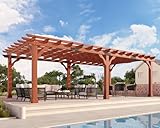
$50 to $150: This is the practical middle tier. You may find thicker metal, better bracing, larger dimensions or an entry-level wooden arbor. The approximately $102.99 Outvita dark-brown wooden arbor and $99.99 VINGLI 85-inch wooden arbor fit the general price range. Expect more visual substance than a minimalist metal arch, but confirm whether the finish is weather-treated and whether ground anchors are included.
$150 to $400: Arbors in this range often offer heavier wood, cedar, more substantial posts, integrated benches or improved hardware. They are a better choice for permanent landscaping, especially when the arbor is a focal point rather than a temporary trellis.
Above $400: Custom, oversized or premium hardwood structures become common. The extra cost should buy stronger joinery, thicker components, better finishing and clearer installation instructions—not merely more ornament.
Warranty: Treat Coverage as a Clue, Not a Guarantee
Budget garden arches may offer a 30-day to one-year limited warranty, while established wood or outdoor-furniture brands may provide one to five years on manufacturing defects. Read exclusions carefully. Rust caused by scratches, storm damage, improper anchoring, wind, plant growth and normal fading are frequently excluded.
Look for a warranty that explains who pays return shipping, whether replacement parts are available and whether the coverage applies to the finish as well as the frame. A warranty cannot compensate for an arbor installed on unsuitable ground, but vague coverage can signal that replacement hardware or support may be difficult to obtain.
Delivery and Assembly: Confirm the Real Installation Work
Lightweight arches often arrive in one box and require 15 to 45 minutes of assembly. Larger wooden arbors may arrive flat-packed and take two people two to four hours, especially if posts must be set in concrete. Add time for leveling, measuring and curing if you are installing permanent footings.
Before ordering, check the package dimensions, shipping weight and number of boxes. A 7- to 8-foot arbor may fit in a long carton but still weigh 40 to 100 pounds when made from wood. Confirm that all bolts, caps, stakes and brackets are included. If the product is being delivered to a walkway or backyard gate, measure those access points too.
Spec Checklist
| Spec | Budget | Mid | Premium |
|---|---|---|---|
| Typical price | $18–$50 | $50–$150 | $150–$600+ |
| Overall height | 6.5–8 ft | 7–9 ft | 8–10 ft |
| Clear opening | 28–40 in. | 36–48 in. | 42–60+ in. |
| Typical material | Light steel | Thicker steel, aluminum or treated wood | Cedar, redwood or heavy-gauge metal |
| Typical weight | 8–20 lb. | 20–60 lb. | 50–150+ lb. |
| Best use | Seasonal décor and light vines | Entry paths and moderate vines | Permanent focal points and heavy growth |
| Assembly expectation | 15–45 minutes | 45–120 minutes | 2–4 hours or professional installation |
Red Flags
- The listing gives only the outside dimensions and omits the clear walking width.
- The advertised height includes finials, but the usable opening is below 6.5 feet.
- No tubing diameter, wood-post dimensions or material thickness is provided.
- The product includes short stakes but gives no guidance for wind, concrete or hard surfaces.
- Photos show mature vines, lights or fabric that are not included.
- Wood is described as “outdoor” without a species, treatment or finish specification.
- Reviews repeatedly mention missing bolts, misaligned holes, bent tubing or unclear instructions.
- The warranty excludes nearly every weather-related issue and replacement parts are unavailable.
- A very wide arbor has a narrow base and no cross-bracing.
FAQ
What is the best width for a garden arbor?
A 36-inch clear opening is a workable minimum for a walking path. Choose 42 to 48 inches for easier everyday use, and 60 inches or more if two people should pass through together. Always measure the opening between the inside edges of the posts.
Are metal or wooden arbors better?
Metal is usually lighter, less expensive and easier to move, while wood offers a warmer appearance and can support a heavier permanent planting. Choose metal for seasonal use or light vines; choose thicker treated wood, cedar or redwood for a long-term focal point.
How do I keep a garden arbor from blowing over?
Use all supplied stakes, place them deeply in firm soil and add longer ground anchors where needed. For a permanent arbor, anchor posts to concrete footings or a suitable hardscape system. Prune dense vines and do not assume a bare frame will perform the same way once fully covered.
Can an arbor support roses or grapes?
It can, provided the frame is strong enough and well anchored. Roses are generally manageable on a properly braced arbor, while grapes and vigorous vines become substantially heavier. For these plants, favor thicker posts, cross-bracing, a 42-inch-or-wider opening and a permanent anchoring method.