
Key takeaways
- Small pool, up to about 6,000 gal, cartridge filter: Intex C1000 Krystal Clear (1,000 GPH).
- Mid pool, about 5,000 to 14,000 gal, sand filter set: Intex SX2100 (2,100 GPH), Bestway 2,200 GPH sand filter pump, or Bestway 2,500 GPH cartridge pump for cartridge fans.
- Large pool, 10,000 to 19,000 gal, complete set: Intex 26651EG (3,000 GPH).
- Plumbed above-ground pool with a separate filter: Hayward PowerFlo LX 1.5 HP (80 GPM).
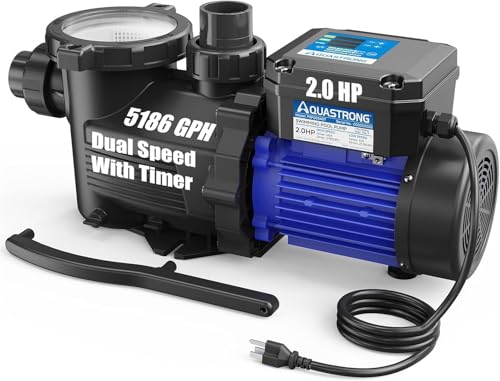
- Quieter running or lower energy use: AQUASTRONG 1.5 HP dual-speed pump (4,975 GPH high, 2,400 GPH low).
- Big pool, big sand filter: AQUASTRONG 18-inch sand filter pump (1.5 HP, 8,100 GPH, pools up to 28,000 gal).
The Hayward PowerFlo LX 1.5 HP (W3SP1580X15) is the best replacement pump for above-ground pools that use standard plumbed fittings, the Intex 26651EG 3,000 GPH sand filter pump is the best complete pump-and-filter set for larger Intex-style pools, and the Intex SX2100 (2,100 GPH) or Bestway 2,200 GPH sand filter pump covers mid-size pools. For small inflatable pools, the Intex C1000 cartridge pump is enough. Choose by pool volume, filter type, and fitting size: match the pump’s real flow to your gallons so the water turns over once every 8 to 10 hours, then confirm the hose or plumbing connection before you buy.
Our top picks


As an Amazon Associate we earn from qualifying purchases at no extra cost to you.
Quick answer: pick by pool size and setup
- Small pool, up to about 6,000 gal, cartridge filter: Intex C1000 Krystal Clear (1,000 GPH).
- Mid pool, about 5,000 to 14,000 gal, sand filter set: Intex SX2100 (2,100 GPH), Bestway 2,200 GPH sand filter pump, or Bestway 2,500 GPH cartridge pump for cartridge fans.
- Large pool, 10,000 to 19,000 gal, complete set: Intex 26651EG (3,000 GPH).
- Plumbed above-ground pool with a separate filter: Hayward PowerFlo LX 1.5 HP (80 GPM).
- Quieter running or lower energy use: AQUASTRONG 1.5 HP dual-speed pump (4,975 GPH high, 2,400 GPH low).
- Big pool, big sand filter: AQUASTRONG 18-inch sand filter pump (1.5 HP, 8,100 GPH, pools up to 28,000 gal).
How we chose
This guide is built from manufacturer specifications and the model lists that recur in 2026 pool-pump buying guides, and not from any work on our part with the products. We kept a pump only if it is a current model from a known pool brand or a widely sold above-ground brand, if its flow and pool-size ratings were published, and if it filled a distinct need. The criteria we weighted, in order:
- Pool volume. Rated flow must turn the water over in 8 to 10 hours.
- Filter compatibility. Sand, cartridge, or an existing plumbed filter.
- Fitting size. 1.25 in. or 1.5 in. hose fittings, or 1.5 in. and 2 in. plumbed ports.
- Horsepower and voltage. A 1 to 1.5 HP, 115 V pump runs on a standard outlet.
- Noise. Quieter pumps run longer without annoying neighbors or yourself.
- Warranty. Two years is common on sets; plumbed pumps vary.
How above-ground pool pumps work
Rated flow versus real flow
Manufacturers list a pump’s maximum flow with no resistance. Once you add a filter, hoses, and fittings, the flow drops. Intex makes this visible: its SX2100 lists 2,100 GPH but a system flow of 1,600 GPH, and its C1000 lists 1,000 GPH but a system flow of 750 GPH. Use the lower system figure when sizing.
Hose-connected versus plumbed
Many inflatable and soft-sided pools use flexible hoses with 1.25 in. or 1.5 in. fittings to a pump and filter set. Larger steel-wall pools often use rigid plumbing and separate pumps with 1.5 in. or 2 in. ports. Check what your pool uses before buying, because adapters help only to a point.
Sand versus cartridge filters
Sand filters, such as the Intex 26651EG, use No. 20 silica sand (about 120 lb for that unit) and need backwashing, but they handle more flow and last longer between cleanings. Cartridge filters, such as the Intex C1000, are simpler: rinse or replace the cartridge. They suit small pools.
Single-speed versus dual or variable speed
A single-speed pump runs at one rate. A dual-speed or variable-speed pump can run slower for most of the day, which cuts noise and electricity use. Small pools turn over quickly, so the savings from variable speed are modest; the benefit grows with larger pools and longer run times.
Comparison table
| Pump | Rated flow | Power | Filter | Pool size (maker) | Connection |
|---|---|---|---|---|---|
| Hayward PowerFlo LX W3SP1580X15 | 80 GPM (about 4,800 GPH) | 1.5 HP · 115 V · single speed | Works with sand filters and plumbing | 15×30 to 18×33 ft pools | 1.5 in. ports |
| Intex 26651EG | 3,000 GPH | 120 V · single speed | Sand, No. 20 silica, about 120 lb | Up to 19,600 gal | 1.5 in. hoses |
| Intex SX2100 | 2,100 GPH (system 1,600) | 120 V · single speed | Sand, about 110 lb | 4,800 to 12,800 gal | Hoses |
| Intex C1000 | 1,000 GPH (system 750) | 120 V · single speed | Cartridge Type A | Up to 6,000 gal | 1.25 in. hoses |
| Bestway 2,200 GPH sand | 2,200 GPH | Single speed | Sand, 44.1 lb | 300 to 14,400 gal | 1.25 or 1.5 in. adapters |
| Bestway 2,500 GPH cartridge | 2,500 GPH | Single speed | Cartridge Type IV-B | 300 to 16,400 gal | 1.25 and 1.5 in. adapters |
| AQUASTRONG 1.5 HP dual speed | 4,975 GPH high, 2,400 GPH low | 1.5 HP · dual speed | External filter | Above or inground | 1.5 or 2 in. adapters |
| AQUASTRONG 18 in. sand | 8,100 GPH | 1.5 HP · single speed | Sand, 150 lb | Up to 28,000 gal | 1.25, 1.5, or 2 in. adapters |
The eight best pool pumps for above-ground pools
1. Hayward PowerFlo LX 1.5 HP (W3SP1580X15)
Spec line: 1.5 HP · 115 V · 80 GPM · single speed · 1.5 in. ports · works with sand filters and standard plumbing
Best for: Plumbed above-ground pools, from about 15×30 ft to 18×33 ft, that need a dependable replacement for an older pump, and owners who care about low noise.
Skip if: Your pool uses flexible hoses and an all-in-one set; the plumbing connections will not match without adapters.
- Pros: Described by reviewers as an exceptionally quiet motor; common footprint and parts; strong flow for its class.
- Cons: Single speed; needs a separate filter and plumbing; priced above the all-in-one sets.
2. Intex 26651EG 3,000 GPH sand filter pump
Spec line: 3,000 GPH · 120 V · single speed · 1.5 in. hoses · No. 20 silica sand, about 120 lb · pools up to 19,600 gal · 2-year warranty
Best for: Large inflatable or frame pools, roughly 10,000 to 15,000 gal, that want complete filtration in one purchase.
Skip if: Your pool is small; this is more filter than you need, and the sand is heavy to move.
- Pros: Complete set; strong flow; the sand filter polishes water well; two-year warranty.
- Cons: Sand is bought separately and is heavy; backwashing is required; large footprint.
3. Intex SX2100 Krystal Clear sand filter pump
Spec line: 2,100 GPH (1,600 GPH system flow) · 120 V · single speed · about 110 lb sand · pools 4,800 to 12,800 gal · 2-year warranty
Best for: Mid-size Intex-style pools, roughly 8,000 to 12,000 gal, where sand filtration is wanted but the 3,000 GPH unit is too large.
Skip if: Your pool is near the top of its size range and sees heavy use; the lower system flow can struggle to keep up.
- Pros: Balanced size; sand filtration; common parts.
- Cons: System flow is well below the rated figure; sand must be purchased separately.
4. Intex C1000 Krystal Clear cartridge filter pump
Spec line: 1,000 GPH (750 GPH system flow) · 120 V · single speed · Type A cartridge · 1.25 in. hoses · pools up to 6,000 gal
Best for: Small round pools, 10 to 15 ft across, and anyone who wants the simplest maintenance.
Skip if: Your pool is larger than 6,000 gal or holds many swimmers; flow will be too low.
- Pros: Easy to maintain; light and small; low cost class.
- Cons: Limited flow; cartridges need regular rinsing and replacement.
5. Bestway 2,200 GPH sand filter pump
Spec line: 2,200 GPH · single speed · 44.1 lb sand · pools 300 to 14,400 gal (ideal 5,000 to 10,000) · 1.25 or 1.5 in. adapters
Best for: Bestway pools and mid-size pools that want a lighter sand filter requiring less sand than Intex’s sets.
Skip if: You need a documented warranty or voltage figure, because these were not stated in the sources we checked.
- Pros: Smaller sand load; adapters included; broad pool-size range.
- Cons: Smaller filter means more frequent backwashing for heavy use; unverified voltage and warranty.
6. Bestway 2,500 GPH cartridge filter pump
Spec line: 2,500 GPH · single speed · Type IV-B cartridge · pools 300 to 16,400 gal · 1.25 and 1.5 in. adapters
Best for: Owners who prefer cartridges to sand and want a higher flow than the smallest sets.
Skip if: The pool collects heavy debris, where cartridges clog quickly and a sand filter is easier.
- Pros: Simple maintenance; wide pool-size range; two adapter sizes.
- Cons: Cartridge replacement costs add up; unverified voltage and warranty.
7. AQUASTRONG 1.5 HP dual-speed pump
Spec line: 1.5 HP · 4,975 GPH high, 2,400 GPH low · 1.5 or 2 in. adapters · works with external filters
Best for: Owners who want to run the pump at low speed most of the day for quiet and lower power use, then boost it for cleaning or heavy use.
Skip if: Your pool uses an integrated pump-and-filter set; this is a pump only.
- Pros: Two speeds; high flow at the top setting; fits pools of many sizes.
- Cons: Needs a separate filter and plumbing; voltage and warranty were not stated in the sources we checked.
8. AQUASTRONG 18-inch sand filter pump
Spec line: 1.5 HP · 8,100 GPH · single speed · sand, 150 lb · pools up to 28,000 gal · 1.25, 1.5, or 2 in. adapters · 2-year warranty
Best for: Big pools that need a large sand filter and strong flow.
Skip if: Noise matters, since reviewers describe it as somewhat noisy at full output.
- Pros: Large filter capacity; three adapter sizes; two-year warranty.
- Cons: Heavy and loud; more than most above-ground pools need.
Worked example: sizing a pump from your pool’s gallons
This is the step-by-step method. The pool in the example is a round frame pool holding 12,000 gal.
- Pick the turnover goal. A common target is one full turnover in 8 to 10 hours. Use 8 hours for a pool with heavy use or warm water.
- Find the flow needed. 12,000 gal divided by 8 hours is 1,500 gal per hour of real system flow, or 25 gal per minute.
- Convert the rated flow. Real flow runs lower than the label. Intex lists a system flow of 1,600 GPH for its 2,100 GPH SX2100 and 750 GPH for its 1,000 GPH C1000, which is about 75 percent of the label. Divide the need by 0.75 to find the label: 1,500 divided by 0.75 is 2,000 GPH.
- Add margin. Dirty filters and long hoses reduce flow further. Choose the next size up, so the SX2100 is borderline and the 3,000 GPH Intex 26651EG has comfortable margin.
- Check the filter’s pool rating. Make sure 12,000 gal falls within the maker’s range: the SX2100 covers up to 12,800 gal and the 26651EG up to 19,600 gal.
- Check the connections. Make sure the hoses or fittings match, and the plug fits a grounded, ground-fault protected outlet.
Result: for a 12,000 gal pool, the 3,000 GPH set has margin, and the 2,100 GPH set works only if the pool is lightly used and you run the pump longer than 8 hours.
1 HP versus 1.5 HP on a plumbed pool
For plumbed pools, horsepower is a rough guide. A 1 HP pump moves less water but runs quieter and cheaper; a 1.5 HP pump such as the Hayward PowerFlo LX moves about 80 GPM, enough for pools up to 18×33 ft. For a 20,000 gal pool turned in 8 hours, you need about 42 GPM of real flow, so a 1.5 HP pump with throttled plumbing is more than enough, and you can run it fewer hours. Pumps above 1.5 HP are rarely needed above ground and use more electricity.
Installation, safety, and maintenance
- Use a ground-fault circuit interrupter (GFCI) outlet. Keep the pump and cord out of standing water and follow the manual for the minimum distance from the pool.
- Do not use extension cords unless the manual allows it.
- Prime the pump with water before starting it. Never run it dry, because the seal can overheat and fail.
- Turn the pump off before you change the multiport valve on a sand filter, and backwash when the pressure gauge rises by about 8 to 10 psi above the clean reading, following the manual.
- Close the valves on the pool wall before opening the pump or filter on a hose-connected pool, so water does not flood out.
- Keep children and pets away from the equipment pad, and disconnect power before any service.
- Do not mix pool chemicals near the pump, and follow label safety rules for any chemical you add.
- Before winter, drain the pump, filter, and hoses to prevent freeze damage, as the manual directs.
Common mistakes
- Judging by the label flow. Real flow is lower; use the system flow figure when it is given.
- Buying a bigger filter than the pump supports. Match the pump and filter as a set.
- Ignoring the fitting size. A 1.25 in. hose and a 1.5 in. port do not connect without adapters, which restrict flow.
- Running the pump too few hours. A pool needs at least one full turnover daily, and more in hot weather.
- Using the wrong sand. Use the grade the manufacturer lists, such as No. 20 silica sand, not play sand.
Frequently asked questions
What size pump do I need for an above-ground pool?
Divide your gallons by 8 to 10 hours to get the flow needed per hour, then pick a pump whose real system flow meets it.
For a 12,000 gal pool, that is about 1,200 to 1,500 GPH of real flow, so look for a 2,000 to 3,000 GPH rated set.
Is a 1 HP or 1.5 HP pump better for an above-ground pool?
A 1 HP pump suits smaller pools and uses less power. A 1.5 HP pump suits larger pools or long plumbing runs.
For pools up to about 18×33 ft, a 1.5 HP pump such as the Hayward PowerFlo LX is enough and is quiet.
Do I need a sand filter or a cartridge filter?
Sand filters handle more water and need backwashing; cartridge filters are simpler but need regular cleaning or replacement.
Choose a sand filter for pools above about 10,000 gal or heavy debris, and a cartridge for small, lightly used pools.
Why is my pool pump so loud?
Common causes are air in the system, a clogged skimmer basket or intake, a dry seal, or a worn bearing.
Check the water level and baskets first. A quieter pump, such as a dual-speed model run on low, also helps.
How long should I run my above-ground pool pump?
Run it long enough to turn over the pool’s volume at least once a day, which is usually 8 to 12 hours.
Run longer in hot weather or after heavy use, and use a timer to avoid forgetting.
Can I use a variable-speed pump on an above-ground pool?
Yes, if it matches your plumbing and voltage. Some 1.5 HP variable-speed models run on a standard 115 V outlet.
The savings are modest for small pools that turn over quickly, so compare the extra cost with the electricity you would save.
Will an inground pump work on my above-ground pool?
It can, but it may be too strong for the plumbing and filter, which can raise pressure and cause leaks.
Use a pump rated for above-ground pools or match the pump’s flow to the plumbing and the filter’s maximum rating.
How often should I replace my pool pump?
Many last several years with proper care, and the motor seal and bearings are the usual wear items.
Replace it when it is noisy, leaks at the seal, or no longer circulates enough water. Warranties on sets are commonly two years.


