Key takeaways
- Full sun: coneflower + salvia + catmint + a switchgrass clump — blooms June to October with one spring cutback per year.
- Part shade: panicle hydrangea + hosta + heuchera + astilbe — four plants, three seasons of interest.
- Shade: hellebore + Japanese forest grass + ferns — nearly evergreen in mild zones and near-zero work.
What's inside
- Match the Bed to Your Yard First
- Full-Sun Front Yard Garden Bed Ideas (6+ Hours of Light)
- Part-Shade Beds (3–6 Hours, Mostly Morning Sun)
- Shade Beds (Under 3 Hours of Direct Sun)
- Small-Space and Budget Builds
- Raised Bed Materials: Lifespan and Cost Compared
- Low-Maintenance Plant Combinations by Sun
- Mulch Depth: Get the Numbers Right
- Mistakes That Make Front Beds Look Cheap
- FAQ
The best front yard garden bed is the one whose shape suits your house style and whose plants match your sun exposure — full-sun fronts earn layered perennials and gravel gardens, while shaded facades do better with hydrangeas, hostas, and woodland textures. Below are 18 front yard garden bed ideas sorted by light level, with low-maintenance plant pairings, raised-bed options, and the mulch depths that actually perform.
- Match the Bed to Your Yard First
- Full-Sun Front Yard Garden Bed Ideas (6+ Hours of Light)
- Part-Shade Beds (3–6 Hours, Mostly Morning Sun)
- Shade Beds (Under 3 Hours of Direct Sun)
- Small-Space and Budget Builds
- Raised Bed Materials: Lifespan and Cost Compared
- Low-Maintenance Plant Combinations by Sun
- Mulch Depth: Get the Numbers Right
- Mistakes That Make Front Beds Look Cheap
- FAQ
As an Amazon Associate we earn from qualifying purchases at no extra cost to you.


Match the Bed to Your Yard First
Sun is the non-negotiable starting point for any front garden bed design: on a free day, note how many hours of direct light each spot gets between 8 a.m. and 6 p.m. Then use this matrix to jump to the numbered ideas that fit.
| Your situation | Best ideas | DIY budget range | Upkeep level |
|---|---|---|---|
| South- or west-facing, traditional house | 1, 2, 4, 7 | $150–$500 | Low–medium |
| Full sun, modern or farmhouse exterior | 3, 5 | $200–$700 | Low |
| East-facing or filtered light (3–6 hrs) | 8–12 | $150–$450 | Low |
| North-facing wall or under big trees (<3 hrs) | 13–15 | $100–$350 | Very low |
| Small yard, narrow strip, or mailbox spot | 6, 16 | $40–$150 | Low |
| Renting or shoestring budget | 17, 18 | $30–$120 | Low |
Full-Sun Front Yard Garden Bed Ideas (6+ Hours of Light)
1. Layered foundation border. The classic layout: a 5–8 ft deep bed along the facade with evergreens (boxwood or dwarf spruce) at the back, mid-height perennials, and a low edging plant. Suits colonial, cape, and craftsman homes. Keep it at least 5 ft deep — anything under 3 ft reads as a skimpy stripe.
2. Island bed. A free-standing kidney or oval bed set 10+ ft into the lawn, sized 8×12 ft or larger so a small tree (serviceberry, redbud) plus perennials fit. Best on ranch and mid-century lots with open lawns.
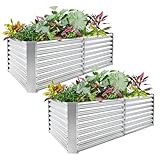
3. Steel raised bed row. Two or three galvanized raised beds, 17 in tall, aligned with the walkway — clean lines for modern farmhouses and contemporary builds. Modular kits from brands like Vego Garden run roughly $100–$250 per bed in the current market; fill with ornamental grasses, lavender, and salvia rather than vegetables for a tidier winter look.
4. Cottage picket-border bed. A 6-ft deep flower garden for the front yard behind a low picket or wattle fence: catmint, salvia, coneflower, and shasta daisies in repeating drifts. Loose, romantic, and forgiving of imperfect weeding.
5. Gravel or dry-creek bed. For southwest, stucco, or drought-prone regions: 2 in of pea gravel or decomposed granite planted with agastache, yarrow, and grasses. Stone mulch never needs re-topping — the tradeoff is that fallen leaves show against it.
6. Mailbox flower garden. The cheapest small flower garden idea for a front yard: a 3-ft circle or half-moon around the mailbox post with a clematis vine and tough perennials like daylilies and black-eyed susans. Budget $40–$80.
7. Driveway-corner triangle. A triangular bed anchoring the driveway–lawn junction softens hard lines. Use boulders plus one upright juniper or grass clump — plants here must tolerate reflected heat and road salt, so skip delicate annuals.
Part-Shade Beds (3–6 Hours, Mostly Morning Sun)
8. Hydrangea-and-hosta foundation bed. The most forgiving front bed going: a hedge row of panicle or smooth hydrangeas with hostas and heuchera beneath. Suits nearly every house style and thrives on east-facing walls where harsh afternoon sun never lands.
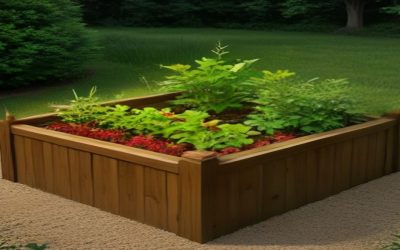
9. Cedar raised herb bed. A 4×8 ft cedar bed (11–15 in tall) near the entry for herbs, greens, and trailing nasturtiums — useful and handsome on craftsman and cottage homes. Cedar kits typically run $80–$150 and last 10–15 years before the bottom boards soften.
10. Tree-ring woodland bed. A 6–10 ft ring under a mature shade tree planted with ferns, astilbe, and woodland phlox. Build it as a raised bed with 4–6 in of soil on top of the roots — never dig into the root zone — and keep soil 6 in off the trunk.
11. Curved walkway border. A flowing 3–4 ft bed hugging the walk to your door — one of the simplest ideas for decorating a front yard because it literally leads guests in. Edge with brick or steel; plant heuchera, bleeding heart, and dwarf hydrangea.
12. Entry-flank beds. Matching 4×4 ft beds on both sides of the porch steps: one evergreen (dwarf boxwood or inkberry), two perennials, and a seasonal pot each. Symmetry flatters formal facades; staggered beds suit modern homes.
Shade Beds (Under 3 Hours of Direct Sun)
13. Dry-shade eave bed. The strip under roof overhangs gets little rain and little sun — plant hellebores, epimedium, and Japanese forest grass, and water weekly the first year. These beds outlast flashy sun plantings that scorch and fail here.
14. Moss-and-groundcover tapestry. For mid-century and minimalist homes: sweeping beds of sedum, lamium, or sweet woodruff with stepping stones — zero mowing and zero edging once the groundcover knits together (about two seasons).
15. Single-specimen mulch bed. A front yard mulch bed done right: one sculptural plant — a Japanese maple, dwarf pine, or even a large boulder — on a clean 3-in mulch field. Cheap to install, near-zero care, and striking against modern architecture.
Small-Space and Budget Builds
16. Walkway ribbon bed. Even an 18–24 in strip between sidewalk and lawn carries a narrow flower garden: dwarf catmint, creeping thyme, or alliums in a single-file row. Stick to one or two species — narrow beds look messy with mixed heights.
17. Reclaimed-brick raised bed. Salvaged brick or second-hand pavers stacked two courses high make a raised bed for roughly $30–$80 in materials. Dry stacking (no mortar) lets you reshape it later — a genuinely movable front yard raised bed idea for renters.
18. No-dig lasagna bed. The cheapest possible start: mow the grass short, lay overlapping cardboard, wet it, then top with 4 in of compost plus 3 in of mulch. Plant into pockets immediately. A 50 sq ft bed often costs under $60, and the cardboard smothers turf in 8–12 weeks.
Raised Bed Materials: Lifespan and Cost Compared
If raised beds make your shortlist, material drives both cost and longevity:
| Material | Typical lifespan | Materials cost, 4×8 ft bed | Watch out for |
|---|---|---|---|
| Cedar boards | 10–15 yrs | $80–$150 | Bottom boards rot first; grays in one season |
| Galvanized steel kit | 15–25 yrs | $100–$250 | Soil warms and dries faster — plan extra summer watering |
| Composite/timber kit | 20–25 yrs | $150–$300 | Heavy; corners can bow if not staked |
| Concrete block or brick | 30+ yrs | $120–$250 | Raises soil pH slightly; avoid next to azaleas and blueberries |
For front yards, 11–17 in tall beds suit most plants; go 20–24 in for waist-high, no-bend gardening.
Low-Maintenance Plant Combinations by Sun
- Full sun: coneflower + salvia + catmint + a switchgrass clump — blooms June to October with one spring cutback per year.
- Part shade: panicle hydrangea + hosta + heuchera + astilbe — four plants, three seasons of interest.
- Shade: hellebore + Japanese forest grass + ferns — nearly evergreen in mild zones and near-zero work.
The low-maintenance rule: repeat three to five species in drifts rather than planting one of everything, favor perennials over annuals, and let perennials fill at least 70% of the bed.
Mulch Depth: Get the Numbers Right
Recommended depth depends on the material — too thin grows weeds, too thick suffocates roots:
| Mulch type | Depth | Coverage per 2 cu ft bag | Refresh cycle |
|---|---|---|---|
| Shredded hardwood | 3 in | ~8 sq ft | Top up yearly |
| Pine bark nuggets | 3 in | ~8 sq ft | Every 2–3 yrs |
| Compost (as mulch) | 2 in | ~12 sq ft | Yearly — doubles as soil food |
| Stone/gravel | 2 in | ~8 sq ft (sold by weight) | 5+ yrs; leaf litter shows |
| Rubber mulch | 1.5 in | ~16 sq ft | 8–10 yrs; keep away from edibles |
Worked example: a 10×6 ft front bed is 60 sq ft. At 3 in deep you need 60 × 0.25 = 15 cu ft — about eight 2 cu ft bags, roughly $30–$50 at typical big-box pricing (Vigoro and Scotts are the common bagged brands). Past ten bags, bulk delivery wins: one cubic yard (27 cu ft) covers about 108 sq ft at 3 in and usually costs less than its bagged equivalent.
Three mulch rules prevent most front-bed failures: pull mulch back 3–4 in from every stem and trunk (volcano mulching rots bark), keep it 4–6 in below the siding line (termites and trapped moisture), and skip landscape fabric under organic mulch — it degrades, weeds root on top anyway, and removing it later is misery.
Mistakes That Make Front Beds Look Cheap
- Beds under 3 ft deep — go 5–8 ft along foundations for proper layering.
- No edging — lawn grass creeps in within one season; steel edging or a brick soldier course pays for itself in saved weeding.
- Ignoring mature size — a one-gallon hydrangea becomes 4 ft wide; space per the tag, not the pot.
- Planting too deep — set root balls level with or slightly above soil, especially in clay.
FAQ
How deep should a front yard garden bed be?
Minimum 3 ft for a single plant row, and 5–8 ft for layered foundation beds. Island beds work best at 8 ft wide or more so a shrub or small tree fits without crowding the lawn edge.
Can I put a raised bed on grass in the front yard?
Yes — mow short, lay cardboard inside the frame, and fill. At 11 in or more of soil depth you don’t need to remove turf; roots grow down as the cardboard breaks down.
What does a DIY front yard bed cost?
A 50–60 sq ft bed typically runs $100–$300 all-in: $30–$50 for mulch, $40–$150 for five to eight perennials, and $15–$40 for edging. Raised kits add $80–$250 depending on material.