Key takeaways
- Plastic at $2.50/ft: $180 in materials, likely replaced twice in 15 years = $540 total
- Aluminum at $10/ft: $720 in materials, no replacement needed
- Corten 14-gauge at $12/ft: $864 in materials, no replacement needed
- Corten 10-gauge at $18/ft: $1,296 in materials, no replacement needed
What's inside
- How Much Does Corten Edging Cost Per Foot vs. Alternatives?
- Steel Gauge Choices: 16, 14, 11, and 10 Explained
- The Rust Patina Timeline: What to Expect Month by Month
- Preventing Runoff Stains on Concrete, Pavers, and Stone
- Installation Basics That Prevent Bowing and Heaving
- Decision Matrix: Should You Choose Corten, Aluminum, or Plastic?
- Durability and Ownership Realities
- Frequently Asked Questions
Corten steel garden bed edging costs $8 to $22 per linear foot for materials in 2026, with 14-gauge (1.9mm) the best all-around choice for most raised beds and lawn borders, and you should expect a full rust patina to develop in 3 to 9 months while planning to prevent orange runoff from staining adjacent concrete or pavers.
- How Much Does Corten Edging Cost Per Foot vs. Alternatives?
- Steel Gauge Choices: 16, 14, 11, and 10 Explained
- The Rust Patina Timeline: What to Expect Month by Month
- Preventing Runoff Stains on Concrete, Pavers, and Stone
- Installation Basics That Prevent Bowing and Heaving
- Decision Matrix: Should You Choose Corten, Aluminum, or Plastic?
- Durability and Ownership Realities
- Frequently Asked Questions
As an Amazon Associate we earn from qualifying purchases at no extra cost to you.


How Much Does Corten Edging Cost Per Foot vs. Alternatives?
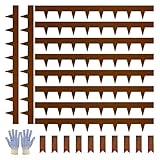
Price varies by gauge, height, and whether the edge is straight or has folded tops and stake pockets. Corten is a mid-to-premium priced edging, more expensive than plastic but competitive with heavy-gauge aluminum when you factor in lifespan.
| Edging Type | Typical Height | Material Thickness | Material Cost Per Linear Foot (2026 Range) | Expected Lifespan |
|---|---|---|---|---|
| Plastic / Polyethylene Roll Edging | 4″ – 6″ | 0.06″ – 0.10″ (1.5-2.5mm) | $1.50 – $4.00 | 3 – 7 years |
| Aluminum Landscape Edging | 4″ – 6″ | 0.08″ – 0.125″ (2.0-3.2mm) | $6.00 – $14.00 | 15 – 25+ years |
| Corten Steel (14-Gauge) | 4″ – 12″ | 0.074″ (1.9mm) | $8.00 – $16.00 | 15 – 30+ years |
| Corten Steel (10-Gauge) | 6″ – 16″ | 0.134″ (3.4mm) | $14.00 – $22.00 | 25 – 40+ years |
| Pre-Rusted Corten with Folded Edge | 6″ – 8″ | 0.074″ – 0.105″ (1.9-2.7mm) | $12.00 – $20.00 | 15 – 30+ years |
Installation doubles the total project cost if you hire a landscaper. Most pros charge $12 to $28 per linear foot installed for Corten, including stakes and base prep. DIY installation only adds $1 to $3 per foot for 15-inch steel stakes, a rubber mallet, and crushed gravel if needed for leveling.
Worked Calculation: Cost For Three Typical Beds
Take a common layout of three 4×8 foot rectangular beds using 6-inch tall edging. Each bed needs 24 linear feet (8+8+4+4). Three beds = 72 linear feet.
- Plastic at $2.50/ft: $180 in materials, likely replaced twice in 15 years = $540 total
- Aluminum at $10/ft: $720 in materials, no replacement needed
- Corten 14-gauge at $12/ft: $864 in materials, no replacement needed
- Corten 10-gauge at $18/ft: $1,296 in materials, no replacement needed
Over 15 years, Corten and aluminum cost less per year than budget plastic because you are not re-buying and re-installing. Corten justifies the premium if you want the rust aesthetic and stronger soil retention than plastic can provide.
Steel Gauge Choices: 16, 14, 11, and 10 Explained
Gauge numbers are counterintuitive: lower numbers mean thicker steel. Thickness determines rigidity, how well it holds soil back, and whether you can bend it into curves by hand. Corten is sold as hot-rolled weathering steel, typically ASTM A588 or A606 Type 4, which is what forms the stable patina.
| Gauge | Actual Thickness | Weight Per Linear Foot (6″ Tall Strip) | Flexibility by Hand | Best For |
|---|---|---|---|---|
| 16-Gauge | 0.059″ / 1.5mm | ~1.2 lbs / 0.54 kg | Flexible, easy to curve to 18″ radius | Decorative lawn borders, low 4″ edging with minimal soil load |
| 14-Gauge | 0.074″ / 1.9mm | ~1.5 lbs / 0.68 kg | Moderate, curves to 24″-30″ radius with effort | Most garden beds, 6″-8″ height, straight runs and gentle curves |
| 11-Gauge | 0.119″ / 3.0mm | ~2.5 lbs / 1.13 kg | Stiff, requires stakes/tools to bend | Taller 10″-12″ raised beds, holding back 8″+ of soil or gravel |
| 10-Gauge | 0.134″ / 3.4mm | ~2.8 lbs / 1.27 kg | Very stiff, essentially rigid | Structural raised beds 12″-16″, commercial installs, straight lines |
For most home gardens, 14-gauge is the sweet spot. It is thick enough to stay straight and hold 6 to 8 inches of soil without bowing, yet thin enough that two people can still form a soft curve. Choose 16-gauge only if you need tight curves and very little soil retention. Choose 11- or 10-gauge if the edging is acting as a true retaining wall or you want a perfectly crisp, non-flexing line alongside a patio.
Also consider the top edge. Raw sheared Corten has a sharp 90-degree edge. If the bed borders a lawn, play area, or walkway, look for strips with a 0.5-inch to 0.75-inch folded or rolled top hem. It adds 20-30% to the price but eliminates the cut hazard and adds rigidity so longer spans stay straight between stakes.
The Rust Patina Timeline: What to Expect Month by Month
Corten does not arrive rusty unless you pay for pre-weathered stock. Bare Corten ships as dull blue-grey steel with a faint oily film. Once exposed to moisture and air, it rusts intentionally and then stabilizes. The rust is the protection, not the failure.
- Weeks 1-2: Light orange flash rust appears, uneven and dusty. Rubs off easily on hands and clothes.
- Month 1-3: Color darkens to mottled orange-brown. Surface still sheds rusty dust when touched or after heavy rain. This is the peak runoff-staining period.
- Month 3-6: Coverage becomes more uniform. Texture shifts from powdery to slightly rough and adherent. Runoff reduces significantly.
- Month 6-9: Classic deep reddish-brown patina. Surface is largely stable and no longer transfers easily. Minor variation remains, which is normal.
- Year 1-2: Patina deepens to dark chocolate-brown with subtle tonal texture. At this point the oxide layer slows further corrosion to less than 0.002 inches per year in most climates.
Two factors accelerate or delay this timeline. Wet, humid climates and frequent irrigation can cut it to 3 to 5 months. Arid or coastal-sheltered spots under eaves may take 9 to 12 months. Do not seal, paint, or oil Corten if you want the patina. Sealers trap moisture and prevent the stable oxide from forming correctly. If you want instant color, buy pre-rusted panels that have been accelerated at the factory, but expect to pay $4 to $6 more per foot.
Preventing Runoff Stains on Concrete, Pavers, and Stone
This is the most common ownership complaint. During the first 6 months, every rain washes dissolved iron oxide off the steel and onto whatever is below it, leaving permanent orange streaks on light-colored concrete, limestone, and porcelain pavers if you do not plan for it.
- Keep a gap: Leave at least 0.5 to 1 inch between the base of the steel and adjacent hardscape where possible, so water drains into soil or gravel, not across the slab. Install a narrow 2- to 3-inch strip of crushed granite or pea gravel between edging and patio to act as a trap.
- Seal the hardscape first: Apply a penetrating silane/siloxane concrete sealer to any concrete or natural stone within 2 feet of the edging before installation. Sealer does not make concrete stain-proof, but it makes early rinsing far more effective.
- Rinse after rain for the first season: Hose down adjacent surfaces within 24 hours of rain during months 1-4. Dried rust quickly binds to porous concrete; fresh rust rinses away easily.
- Consider a drip edge or inner liner: For beds right against a house foundation or white paver patio, use a plastic root barrier or pond liner on the inside hardscape-facing side for the first year, tucked just below the soil line, to direct backside drainage away from the slab.
- If staining occurs: Use an oxalic acid-based concrete rust remover, not muriatic acid. Follow the product dwell time, scrub lightly, and rinse thoroughly. Test in an inconspicuous area first. On pavers, avoid pressure washing at close range, which can etch sealer.
After the patina stabilizes, runoff staining drops by 80-90%. Most owners report no noticeable new stains after month 9, even against light concrete, as long as water is not ponding at the base of the steel.
Installation Basics That Prevent Bowing and Heaving
Corten will look wavy and fail early if it is simply pushed into topsoil. Proper base and staking matter more than gauge.
Step-by-Step Setup
1. Mark and excavate a trench. Use a string line for straight runs. Dig a 4- to 6-inch deep x 2-inch wide trench. For 6-inch tall edging, bury one-third of the height (about 2 inches). For 12-inch tall edging, bury 3 to 4 inches. This buried depth is what resists frost heave and lawn mower kick.
2. Create a level base. Tamp the trench bottom and add 1 inch of compacted crushed fines or coarse sand if your soil is soft or uneven. Do not set steel directly on loose mulch or organic soil; it will shift as the soil decomposes and settles.
3. Set panels and overlap correctly. Place strips in the trench with a 2- to 3-inch overlap at joints, not butt joints. Overlaps keep the line continuous as steel expands and contracts slightly with temperature. Keep the top level with a straight board and level across multiple panels.
4. Stake every 3 to 4 feet. Use 12- to 18-inch steel stakes or L-brackets supplied with the system. Drive stakes on the soil side, not the lawn side, so outward soil pressure pushes the panel into the stake. On curves, stake every 24 inches. Leave stake tops 0.5 inches below the finished soil/mulch line.
5. Backfill and compact. Backfill the lawn side with native soil and tamp firmly. Backfill the bed side after filling the bed. Water the trench zone to settle soil, then check level again. Top-dress the bed so soil sits 0.5 to 1 inch below the steel top to prevent wash-over during heavy rain.
Common mistakes to avoid: installing with less than 2 inches buried, spacing stakes more than 4 feet apart on straight runs, and butting panels end-to-end without overlap, which creates gaps as panels shift.
Decision Matrix: Should You Choose Corten, Aluminum, or Plastic?
| Your Situation | Best Choice | Why |
|---|---|---|
| You want the warm rust look and have concrete nearby you can protect | Corten 14-gauge, pre-rusted if budget allows | Gets the aesthetic without the worst staining period |
| You need tight curves around trees and beds on a budget | Plastic or thin aluminum (0.08″) | Far easier to bend by hand and 60-70% cheaper per foot |
| You need tall (10″+) soil retention on a slope | Corten 10- or 11-gauge or heavy aluminum (0.125″) | Required rigidity to hold back significant soil pressure |
| You want zero maintenance and no rust near a pool or white patio | Aluminum with powder coat | No oxide runoff, will not stain, stays silver or colored |
| You want the longest lifespan with minimal upkeep | Corten 11-gauge or aluminum 0.125″ | Both exceed 20 years; Corten will outlast plastic by 3x-4x |
| Rental property or temporary garden | Plastic roll edging | Lowest upfront cost and removable without tools |
Durability and Ownership Realities
Properly installed Corten improves with age. The stable patina acts as a barrier that dramatically slows corrosion, unlike plain mild steel which flakes and pits through. In most temperate garden soils with good drainage, 14-gauge Corten loses less than 0.01 inches of thickness per decade after the first year. Constantly wet, acidic clay or direct contact with de-icing salts will accelerate corrosion along the buried edge. In those conditions, choose 11-gauge or ensure the trench base drains freely.
What wears first is not the face of the panel but the bottom 1 to 2 inches buried in moist soil. Inspect that zone in spring. If you see deep pitting or thinning after 5 to 7 years, improve drainage with a gravel base rather than replacing the entire run.
Consumables are minimal: replacement stakes if heaved by frost, and the occasional re-leveling after a hard winter. Cleaning requires nothing more than rinsing soil off the face. Do not wire-brush the patina once formed. Avoid placing Corten directly against galvanized steel or aluminum edging without a separation, as dissimilar metals in wet soil can cause galvanic corrosion at the contact point.
If the rust aesthetic is the priority and you can manage the first-season runoff, Corten is the most durable and visually distinctive edging for permanent beds. If a clean, stain-free edge next to light hardscape is the priority, powder-coated aluminum gives you 90% of the durability with none of the runoff management.
Frequently Asked Questions
Will Corten steel stain my plants or vegetable garden soil?
No, the iron oxide is not harmful to ornamental plants and is present in small amounts. Corten is widely used for vegetable raised beds. The patina is inert after stabilization. If you are concerned, line the inside of a food bed with a food-safe pond liner, leaving the exterior exposed for the look.
Can I speed up the patina?
Yes. Repeatedly misting bare Corten with water plus a small amount of vinegar and salt will accelerate initial rusting to 2 to 4 weeks, but it produces a less uniform finish than natural weathering. Many suppliers sell an accelerator spray, or you can simply let nature take its course for a more even, natural tone.
Does Corten ever stop rusting?
It slows dramatically but never stops at a microscopic level. The protective oxide reforms if scratched. Unlike untreated steel, it will not rust through under normal garden conditions for decades. Surface rubbing after month 9 should leave little to no orange dust on your hand.