Key takeaways
- Best AR Glasses for Gaming and Media in 2026 The best AR glasses for most gaming and media use are the XREAL One Pro if you want a sharper, more immersive picture and can pay a premium; choose the VITURE…
Best AR Glasses for Gaming and Media in 2026
The best AR glasses for most gaming and media use are the XREAL One Pro if you want a sharper, more immersive picture and can pay a premium; choose the VITURE Pro XR for a bright, compact alternative, or the XREAL One for a better-value all-rounder. The right pick depends less on a headline brightness figure than on how the glasses fit your face, whether your device can power them, and how long you expect to watch without a break.
At a glance: leading options
These are personal-display glasses: they place a virtual screen in your view rather than projecting a room-scale image onto every surface. Most connect to a compatible phone, computer, handheld gaming PC, or console through USB-C DisplayPort. For consoles with HDMI output, you may need a compatible adapter. Manufacturers’ measurements can use different methods, so treat brightness and field-of-view figures as useful comparisons—not guarantees of how large or vivid the image will look to you.
Our top picks
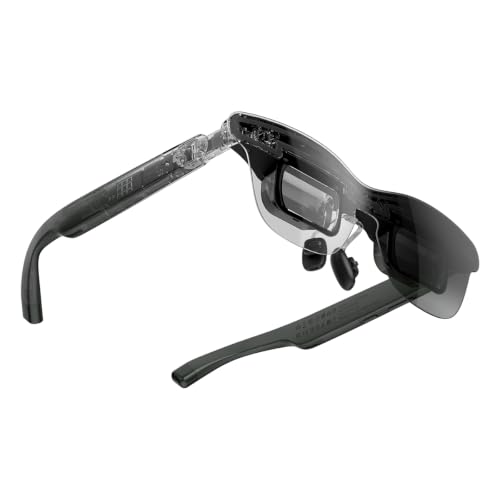


As an Amazon Associate we earn from qualifying purchases at no extra cost to you. Ratings are shown as listed on Amazon.
| Model | Claimed brightness | Claimed field of view | Weight | Power and battery | Best fit |
|---|---|---|---|---|---|
| XREAL One Pro | Up to 700 nits | 57° | 87 g | Wired; no built-in battery | Premium gaming and large virtual screen |
| XREAL One | Up to 600 nits | 50° | 84 g | Wired; no built-in battery | Value-focused all-round use |
| VITURE Pro XR | Up to 1,000 nits | 46° | 77 g | Wired; no built-in battery | Bright image and lightweight frame |
| Rokid Max | Up to 600 nits | 50° | 75 g | Wired; no built-in battery | Lightweight viewing and adjustable focus |
Figures above are manufacturer-published specifications; included cables, regional versions, and software features can vary. These glasses do not have independent runtimes: they draw power from the connected device or an external power source. In practice, handheld gaming battery life is usually set by the handheld’s battery, not by a battery inside the glasses.
Which one should you buy?
Choose the XREAL One Pro for a more immersive, premium screen
The One Pro’s wider claimed 57-degree field of view is its main advantage over the other picks here. A wider view can make games and films feel more enveloping, though it still does not fill your entire natural field of vision. Its higher claimed brightness than the XREAL One is helpful in brighter indoor settings, but these are not a substitute for a monitor outdoors or in direct sunlight. Consider it if you watch often, want a larger-feeling image, and have confirmed that your main device supports video output over USB-C.
Choose the XREAL One for a balanced price and feature set
The XREAL One trades some field of view and claimed brightness for a lower position in the range. It is the sensible starting point for someone who wants glasses for films, travel, and occasional gaming without paying for the top-tier model. Its 84-gram weight is close to the One Pro’s, so it is not a featherweight option; check the fit before committing to long sessions.
Choose the VITURE Pro XR for brightness and a lighter frame
At 77 grams, the VITURE Pro XR is lighter than the two XREAL models listed here, and its claimed 1,000-nit brightness is the highest in this comparison. Its 46-degree field of view is narrower, however. If your priority is a bright-looking image and a relatively light frame rather than the broadest view, it is a strong candidate. Confirm prescription-lens options and device compatibility for your region before buying.
Choose the Rokid Max when weight and focus adjustment matter
The Rokid Max weighs 75 grams and includes diopter adjustment for users who need a degree of near-sighted focus correction. That adjustment is not the same as custom prescription lenses, and it will not suit every prescription or vision need. Its 50-degree field of view and claimed 600-nit brightness put it in the middle of this group. Compare its nose-pad fit with the alternatives: a light frame can still feel uncomfortable if it presses in the wrong places.
How to match the specs to your situation
| Your situation | What to prioritize | Shortlist |
|---|---|---|
| Frequent films or gaming at home | Field of view, stable fit, and comfort over an hour | XREAL One Pro; compare with XREAL One for value |
| Travel with a handheld gaming PC | Frame weight, cable routing, and handheld runtime | VITURE Pro XR or Rokid Max |
| Bright indoor rooms | Brightness plus lens shading and a secure fit | VITURE Pro XR |
| Prescription glasses wearer | Prescription insert availability, fit, and return policy | Check compatible inserts for each model before choosing |
| First pair or occasional use | Device compatibility and moderate price before premium specs | XREAL One |
Brightness, field of view, and battery: what the numbers leave out
Brightness: A higher advertised number can help the image look vivid, but perceived brightness also depends on the lenses, your surroundings, and how well the display aligns with your eyes. Darker lens covers or shades can improve contrast in a bright room; they also reduce awareness of your surroundings, so use them with care.
Field of view: A larger figure generally means the virtual screen can occupy more of your view. It does not tell you whether the image will be sharp at the edges or whether the screen will feel correctly positioned. Facial shape, eye position, and how the frame sits all affect the usable image. If possible, buy from a seller with a clear return policy.
Battery: The models in the table are wired glasses, not standalone headsets. Your source device supplies the picture and typically supplies power as well. For a rough planning estimate, if a handheld lasts three hours while gaming without glasses, expect the glasses to draw from that same limited battery rather than adding their own hours. A power bank can extend a trip, but adds a cable and something else to carry.
Fit, prescriptions, and ownership costs
Weight is only one part of comfort. Nose-pad pressure, temple length, frame balance, and whether the image stays centered can matter more than a difference of a few grams. Try the included nose pads and adjust the arms as the manufacturer allows; do not bend the frame beyond its intended adjustment. If you wear prescription lenses, check whether the exact model supports a prescription insert, what prescriptions are accommodated, and whether the insert is sold separately. A built-in focus adjustment is not a universal replacement for corrective lenses.
For gaming, check whether your device outputs video over USB-C DisplayPort; a USB-C charging port alone does not guarantee compatibility. For a console, account for any required HDMI-to-USB-C adapter and its power needs. Before purchase, add the glasses, any prescription insert, adapter, and protective case to your budget. General market pricing varies by promotions and region: expect mainstream wired glasses to fall broadly in the few-hundred-dollar range, with premium versions and accessories costing more.
Keep the lenses away from grit before wiping them, since dry rubbing can scratch coatings. Use a clean microfiber cloth and follow the maker’s cleaning instructions; avoid household cleaners unless the manufacturer explicitly approves them. Cables and nose pads are likely wear points, so store the glasses in a case rather than loose in a bag. The most common buying mistake is choosing by brightness alone, then discovering that the glasses do not fit well or the intended device cannot send video to them.
Bottom line
For the broadest view and a premium media experience, start with the XREAL One Pro. For a lighter frame and a high claimed brightness, compare the VITURE Pro XR. The XREAL One is the practical value pick, while the Rokid Max is worth considering if its weight and focus adjustment suit you. Before deciding, verify USB-C video compatibility, prescription support, and the return policy—those details are more likely to determine satisfaction than a small difference in a published spec.