Key takeaways
- 8- to 10-inch pot: herbs, succulents, small annuals, and compact houseplants; usually around 1 to 3 gallons.
- 12- to 16-inch pot: larger houseplants, flowers, and patio herbs; often around 3 to 8 gallons.
- 18- to 24-inch planter: small shrubs, ornamental grasses, citrus in suitable climates, and statement plantings; capacity may range from 10 to more than 20 gallons.
What's inside
Choosing a planter is easy until you have to move it, water it, protect a floor, or keep a top-heavy plant from tipping over. Many shoppers focus on color and shape first, then discover the pot is too small for the root ball, has no usable drainage, or is far heavier than expected once filled with soil. Others buy a tall outdoor planter that looks substantial in a product photo but has a tiny planting cavity and a narrow base.
The best way to shop is to treat a planter as both a container and a piece of furniture. It must suit the plant, location, climate, and your willingness to maintain it. This guide explains what to look for in planters in 2026, including the specifications that matter more than styling alone.
As an Amazon Associate we earn from qualifying purchases at no extra cost to you. Product prices and availability are accurate as of the date shown and are subject to change.


Decide These 3 Things First
- Where will it go? Measure the available width, depth, ceiling height, and path to the final location. A porch planter may need to fit beside a door without reducing the clear walkway below about 36 inches.
- What will grow in it? Check the plant’s mature size, root depth, and light requirements. A small annual can live in an 8- to 10-inch pot, while a shrub or large houseplant may need a 16- to 24-inch container.
- How much care can you provide? Decide whether you need drainage, a saucer, a self-watering reservoir, lightweight construction, or a planter that can remain outdoors year-round.
These three answers narrow the search before appearance and price enter the decision. They also prevent a common mistake: choosing a decorative outer pot before determining whether the plant has enough usable soil volume.
Size and Planting Volume
Measure the inside planting cavity, not just the outside dimensions. A tapered planter advertised as 22 inches tall may have a much smaller opening and hold considerably less soil than a straight-sided pot of the same height. Ask for the interior width, depth, and capacity in gallons or liters.
As a practical starting point, choose a container about 2 to 4 inches wider than the current root ball for many houseplants and annuals. For a plant that is already root-bound, moving up 4 to 6 inches may be appropriate. Avoid jumping from a small pot to a huge container: excess wet soil can stay damp around a small root system and encourage root problems.
- 8- to 10-inch pot: herbs, succulents, small annuals, and compact houseplants; usually around 1 to 3 gallons.
- 12- to 16-inch pot: larger houseplants, flowers, and patio herbs; often around 3 to 8 gallons.
- 18- to 24-inch planter: small shrubs, ornamental grasses, citrus in suitable climates, and statement plantings; capacity may range from 10 to more than 20 gallons.
For outdoor containers, consider mature height and wind exposure. A tall planter can be visually balanced but unstable if its base is narrow. Leave enough space around it for watering and pruning, and confirm that the planting cavity is deep enough for the roots rather than merely tall for display.
Material and Weather Resistance
Material affects weight, insulation, appearance, and lifespan. Resin and plastic planters are usually the easiest to carry and are often less expensive. They can work well on balconies or roofs where structural weight matters. Look for UV-resistant construction if the pot will receive direct sun; otherwise, color may fade and some plastics can become brittle over time.
Fiberstone, fiberglass, and reinforced resin can provide a more substantial stone or concrete appearance without the full weight of masonry. They are useful for large porch planters, but inspect the finish and ask whether the container is rated for freezing temperatures. Water that freezes inside a porous or cracked planter can expand and cause damage.
Terracotta is breathable and attractive, but it dries soil quickly and can crack in freezing weather. Ceramic offers a wide range of glazes but may be heavy and fragile. Metal planters can be durable, though dark metal may heat the root zone in direct summer sun. For most outdoor uses, a UV-rated resin or fiberglass pot is a practical balance of durability, weight, and price.
Do not confuse a stone-look finish with actual stone. For example, tall resin sets such as Keter’s roughly 22-inch and 26.4-inch models are designed to deliver a substantial visual effect while weighing less than solid masonry. That can be an advantage when positioning the planter, but a lightweight pot may need ballast in windy locations.
Construction, Drainage, and Stability
Examine how the planter is made, not just what it looks like. Check the rim for a consistent edge, the base for a flat contact surface, and the walls for flexing or thin spots. A slightly flexible resin wall is normal; severe buckling, visible seams, or an uneven base are not.
Drainage is one of the most important specifications. For plants that require well-drained soil, look for one or more holes roughly 1/4 to 1/2 inch across, or a manufacturer-approved drainage system. The holes should be located where water can actually escape, not sealed behind a decorative base. If the planter has no hole, verify that it is intended as a cachepot for holding a separate nursery pot.
A saucer or drip tray helps protect floors and decks, but it should not leave the pot sitting in several inches of standing water. For indoor use, place a waterproof liner or tray under the container and test it after watering. Tall outdoor planters benefit from a broad footprint, a low center of gravity, and the option to add gravel, sand, or another approved ballast below the soil. Do not block drainage simply to make the pot heavier.
Handling and Watering Performance
Plan for the planter’s filled weight. One gallon of wet potting mix can weigh roughly 8 to 12 pounds, depending on the ingredients and how much water it holds. A 12-gallon planter can therefore contain approximately 96 to 144 pounds of growing medium before adding the pot and plant. That is difficult to move and may exceed the load capacity of a balcony or shelf.
For containers you may rearrange, aim for an empty weight under 15 pounds or add a fitted plant caddy with locking casters. Large pots should have built-in handles, a recessed base, or a compatible wheeled platform. A tall, narrow pot that cannot be gripped safely is a poor choice for a location that requires seasonal movement.
Self-watering designs can reduce how often you refill the container, but they are not maintenance-free. Look for a reservoir capacity, water-level indicator, overflow path, and removable fill tube. A reservoir holding 1 to 3 gallons may be useful for a medium planter; confirm that the system still permits adequate drainage for the plant you intend to grow.
Price Tiers: What You Get
Budget planters generally cost about $10 to $30 each, or $15 to $40 for a small set. At this level, expect plastic or resin construction, basic drainage, and simpler finishes. A three-pack of 10-inch pots priced around $15 is attractive for herbs, seedlings, or coordinating small houseplants, but check whether saucers and drainage plugs are included.
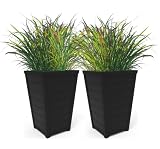
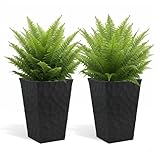
Midrange planters typically cost $30 to $80 each or $45 to $120 per pair. This tier often adds thicker resin walls, more convincing stone or wood-look finishes, larger capacities, and better outdoor suitability. A pair of 22-inch tapered resin planters priced around $48 is an example of the value proposition: coordinated scale and appearance without the weight of concrete.
Premium containers commonly start around $80 and can exceed $250 each. You are paying for higher-grade materials, hand-finished ceramic or metalwork, integrated irrigation, frost resistance, unusual dimensions, or stronger warranties. A $67 pair of tall, stone-look resin planters may offer more capacity and presence than a budget set, but it should still be judged by drainage, stability, and material specifications rather than the word “premium.”
Warranty, Delivery, and Assembly
Read the warranty before buying a large or expensive planter. A one-year limited warranty may cover manufacturing defects but exclude fading, cracking from freezing, wind damage, or misuse. For outdoor containers, look for clear language about UV exposure, weather, and structural failure. Keep the receipt and photograph the planter when it arrives.
Delivery matters because bulky planters can be awkward even when they are lightweight. Check the package dimensions, boxed weight, number of pieces, and whether the shipment is delivered to a doorstep or carried farther. Inspect resin, ceramic, and fiberglass containers within the retailer’s return window for cracks, dents, chipped rims, and warped bases.
Assembly is usually minor, but do not assume it is unnecessary. Some tall planters arrive in multiple sections, require a drainage plug to be installed, or include an insert that reduces soil volume. Verify whether tools are needed and whether the planter can be assembled securely without leaving gaps where water collects. A decorative face planter, such as a resin head design priced around $20, may require no assembly but is usually better suited to a small nursery pot or indoor display than to a large outdoor planting.
Spec Checklist
| Spec | Budget | Mid | Premium |
|---|---|---|---|
| Typical price | $10–$40 | $40–$120 | $120–$300+ |
| Common size | 8–12 inches | 14–24 inches | 18–36+ inches |
| Capacity | 1–4 gallons | 4–15 gallons | 10–30+ gallons |
| Material | Plastic or thin resin | UV-rated resin, fiberglass, ceramic | Thick fiberglass, metal, stone, high-quality ceramic |
| Drainage | One hole or plug | Multiple holes or a removable insert | Engineered drainage or self-watering system |
| Empty weight | 1–8 pounds | 5–25 pounds | 15–80+ pounds |
| Warranty target | 30 days to 1 year | 1–3 years | 3–10 years, depending on material |
Red Flags
- No interior dimensions: Exterior height alone does not tell you how much soil the plant will receive.
- No drainage information: “Indoor/outdoor” does not automatically mean the pot has a drainage hole.
- Unusually thin walls: Excessive flexing can signal poor durability, especially in large planters exposed to sun and wind.
- A narrow base on a tall pot: This increases the chance of tipping, particularly after planting a tall or leafy specimen.
- Unclear material claims: Terms such as “stone effect” or “wood look” describe appearance, not composition.
- Missing boxed weight: A very large planter may be difficult to return or move once delivered.
- Reviews focused only on appearance: Look specifically for comments about cracking, fading, drainage, wobbling, and water retention.
FAQ
How much bigger should a planter be than the current pot?
For many plants, choose a container 2 to 4 inches wider than the current root ball or nursery pot. Move up more gradually for slow-growing plants and avoid dramatically oversized containers unless the plant is a fast-growing shrub or tree.
Do all outdoor planters need drainage holes?
Most outdoor plants benefit from drainage, especially in regions with heavy rain. A hole-free container can work as a decorative cover for a nursery pot, but it requires careful watering and should not be treated as a conventional planting pot unless the manufacturer provides another drainage method.
Are lightweight resin planters stable enough for a porch?
They can be, provided the base is broad and the planter is protected from strong wind. For tall designs, use the manufacturer’s recommended ballast without blocking drainage. Consider the mature plant’s height and foliage, since a top-heavy plant can make an otherwise stable pot easier to tip.
What is the most important specification to check first?
Check the interior planting dimensions and drainage before color or finish. Those two details determine whether the planter is suitable for the plant and whether it can be used safely in your intended location. After that, compare weight, stability, weather resistance, warranty, and price.